
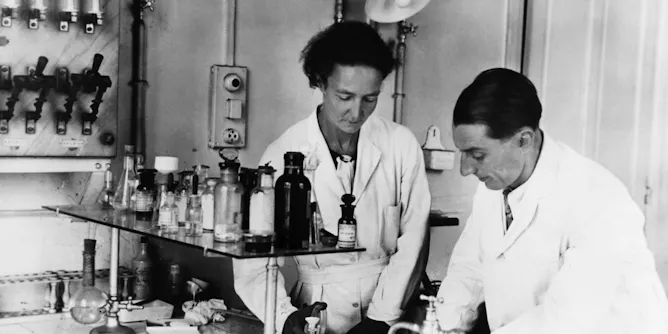
Marie Curie’s daughter Irene continued her family’s Nobel legacy by discovering artificial radioactivity.
Articles on Nobel Prize
Displaying 21 - 40 of 270 articles

From rising global temperatures to the fast-warming Arctic, early climate models predicted the changes half a century ago.

Eventually, I found his famous novels in a souvenir shop in his home town that mostly sold skin-care products.
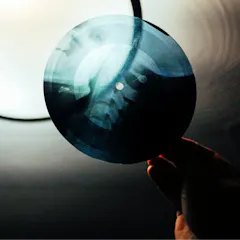
The bizarre, homemade technology became a way to skirt censors in the Soviet Union – and even played an indirect role in its dissolution.
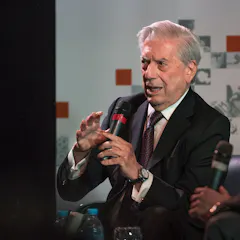
The Peruvian Nobel prize-winning author was intensely committed to his craft.
A reliance on foreign students for academic research has allowed the US to ignore flaws in its domestic tech worker pipeline, a scholar argues.
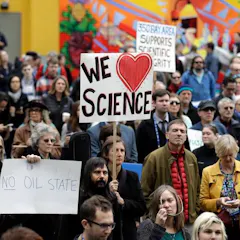
Universities and research are the target of unprecedented attacks in the US, threatening academic freedom. Scientists have created the “Stand up for Science” movement.
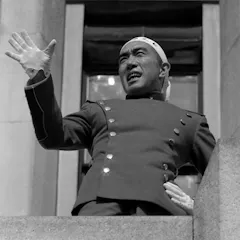
The life and death of acclaimed writer Yukio Mishima is a cautionary reminder of the complex, sometimes dangerous relationship between creativity and fanaticism.

A century ago, physicists laid the foundations of quantum mechanics. One of them, Louis de Broglie, disavowed a famous theory. Why?
How can including them change our understanding of AI?
We’ve only just scratched the surface of what AI can achieve in science.
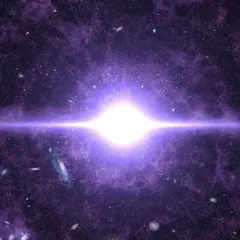
Can we really understand what happened at the beginning of the universe?
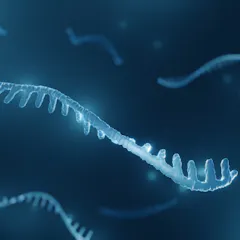
Victor Ambros received half of the Nobel Prize for his work on microRNAs. Here he talks about the teamwork – and the nematodes – that made the discovery possible.
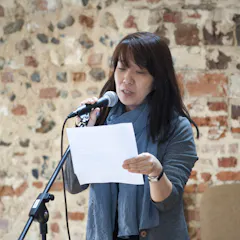
Working with Han Kang, I experienced a writer who respected translation as its own process of writing.
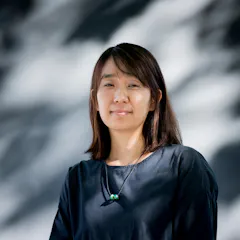
Han Kang’s poetry and short stories are just as innovative and important as her novels.
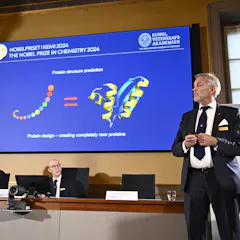
AI will feature in future Nobel prizes as scientists exploit the power of this technology for research.
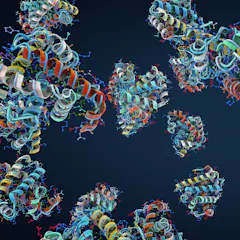
The prize honors innovation at Google DeepMind and in academia. Three researchers share the award for using machine learning to predict proteins’ 3D shapes and design the molecules from scratch.
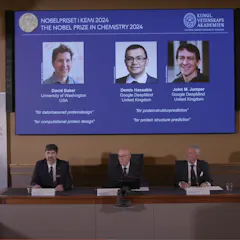
Using computers to design and predict protein structures will revolutionise biochemistry.
Two researchers whose work has led to the AI revolution won the 2024 Nobel Prize in physics. A materials physicist explains statistical mechanics, the physics field behind their discoveries.

The Nobel Prize shows that the field of artificial neural networks – and the deep learning AI revolution the technology unleashed – owe as much to physics as biology and computer science.
Top contributors
-

Emeritus Robert Reford Professor and Professor of Medicine, McGill University
-
Professor of Nuclear Physics, Michigan State University
-
Laureate Professor Emeritus, The Peter Doherty Institute for Infection and Immunity
-
Professor and Lincoln Professor of Ethics in Public Affairs, Arizona State University
-
Chancellor's Professor of Medicine, Liberal Arts, and Philanthropy, Indiana University
-
Professor of Chemistry, Connecticut College
-
Professor of Science Communication and Chemistry, University of Hull
-
Professor of Writing and Literature, Deakin University
-
Professor, Monash University
-
Lecturer in African and African Diasporan Literature, University of Lagos
-
Senior Lecturer in Economics, Cardiff University
-
Head of School for Physics, University of Sydney
-
Emeritus Professor, Brunel University of London
-
Professor at Division of History of Ideas and Sciences, Lund University
-
Distinguished Professor Emerita of Creative Practice, Faculty of Arts and Design, University of Canberra