

Surviving in the wild is no small feat for animals, especially ones like Jimothy, with rare conditions And yet he persevered to viral celebration, thanks to an adaptable brain and a caring mother.
Articles on Neuroscience
Displaying 21 - 40 of 856 articles

A study in mice reveals how pregnancy hormones influence the brain’s reward system, helping explain why newborns become a mother’s priority.

Returning a tennis serve depends on one of the brain’s most remarkable abilities: predicting the future.

Two experts explain why staying focused, especially in our modern world, can be so hard.

We act fast on the basis of our predictions but learn most when we get it wrong, according to a new brain-scan study.

The fog new parents feel is real. But is it just sleep deprivation or is more going on?

Driving is a complex task, neurologically speaking. Two experts explain what driving does to your brain, and how you can stay alert on the road.

Some mornings it can feel like we’ve had a busy night of dreaming.

There’s a difference between using a tool to assist you, and using one to replace cognitive effort.

AI models that power self-driving cars work great in clear conditions, but turn blind in fog or at night.
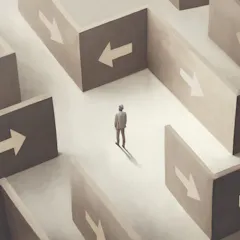
Habit helps take the mental load off figuring out how to get somewhere. But relying on the familiar can make it harder to adapt to changes to your route and to find better ones.

That strange buzzing in your feet at heights isn’t fear, it’s your nervous system doing something quietly remarkable.

In adolescence, reading stimulates cognitive development and critical thinking.

Hiking to a breathtaking view or losing yourself in the roar of a crowd. A neuroscientist explains why awe can feel transformative – and improve your mental health.

Do people have a natural aversion to putting in the effort or wasting effort?

Understanding why people born blind never develop schizophrenia could transform how we think about and treat one of medicine’s most baffling conditions.
There is a deeper side to the brain which weaves your memories, goals, beliefs and emotions into a continuous sense of self.

Your brain doesn’t run out of space – it runs out of attention. The science of why two people can live the same moment and remember it very differently.

There’s a lot going on in your brain all the time. To power your imagination, the neurons need some silence.

Your brain isn’t just looking – it’s predicting. Here’s why that means you can stare straight at something and still not see it.
Top contributors
-

Professor of Clinical Neuropsychology, University of Cambridge
-
Penn State
-
Postdoctoral Research Associate, Cognitive Neuroscience, University of Cambridge
-
Senior Lecturer (Adjunct), Nutritional neuroscientist, Adelaide University
-
Head of Developmental Psychobiology Lab, Deakin University
-
Postdoctoral Researcher in Cognitive Neurosciences, The University of Queensland
-
Senior Research Fellow, Uehiro Centre for Practical Ethics, University of Oxford
-
Professor of Anatomy, University of Bristol
-
Professor Emeritus of Cognitive NeuroImaging, Aston University
-
Professor of Cognitive Neuroscience, Bangor University
-
Senior Research Fellow, The Perron Institute for Neurological and Translational Science, and Faculty of Health Sciences, Curtin University
-
Associate Professor of Family & Community Medicine and Pediatrics, retired, University of California, San Francisco
-
Professor of Behavioral Neuroscience, University of Richmond
-
Lead, Cognition and Consciousness Imaging Group, Division of Anaesthesia, University of Cambridge
-
Associate Professor in Clinical Psychology and Neuropsychology, Trinity College Dublin