

New research on what attracts blood-feasting flies to blue objects could help minimise the impacts of those insects on people and animals.
Articles on Neural networks
Displaying 21 - 40 of 68 articles

In the future, our computer may be able to produce long-term forecasts in areas such as climate change, bushfires and financial markets – while being cheaper and more accessible than supercomputers.

Metaphorical black boxes shield the inner workings of AIs, which protect software developers’ intellectual property. They also make it hard to understand how the AIs work – and why things go wrong.
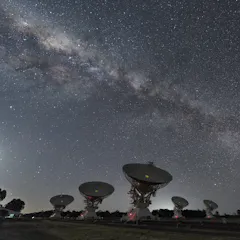
Artificial intelligence tools are making waves in almost every aspect of life, and astronomy is no different. An astronomer explains the history and future of AI in understanding the universe.
Many of the pioneers who began developing artificial neural networks weren’t sure how they actually worked - and we’re no more certain today.

If your dog is struggling with anxiety, their brain could be wired differently. Understanding these differences can help our furry best friends.

There won’t be an easy tech fix for the questions about authorship raised by ChatGPT and other text generators.
Artificial intelligence has arrived. But what is it, exactly – and what’s behind some of the most splashy AIs we have encountered to date?
A lump of cells could be given the legal status of a person, or remain a property.

We’ve seen AI systems writing texts that are indistinguishable from human texts. Some are even rendering impressive 3D artworks from short text inputs. But it doesn’t mean they can ‘think’ like us.
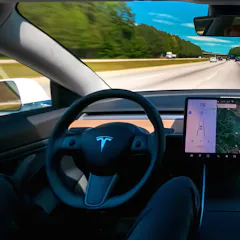
Our research on a recent Australian court case shows how experts and lawyers can overcome opaque AI technology. But regulators could make it even easier, by making AI companies document their systems.
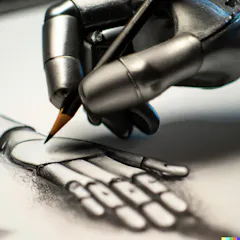
New software that can generate images and text on command may deliver ‘good enough’ creativity in advertising, copywriting, stock imagery and graphic design.
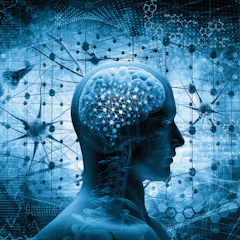
Emotions play a key role in many types of spontaneous thoughts. Even microemotions — which are often fleeting and unconscious — can affect thoughts and influence attention.
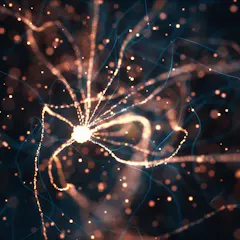
Understanding when and how neurons die is an important part of research on neurodegenerative diseases like Lou Gehrig’s, Alzheimer’s and Parkinson’s diseases.
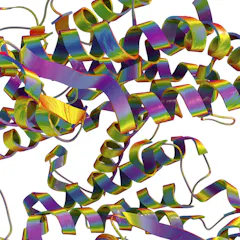
Using a form of artificial intelligence called deep neural networks, researchers can generate new proteins from scratch without having to consult nature.
Machine learning systems can now aid human intuition to create mathematical conjectures and proofs.
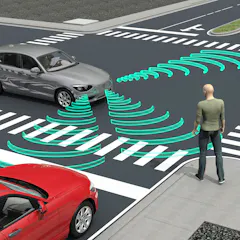
The public holds self-driving cars to incredibly high safety standards – and we’re working to meet them.
In a series of experiments, Australian researchers showed how machines can find vulnerabilities in human decision-making and exploit them to influence our behaviour.
Artificial intelligence is supported by an infrastructure of hardware and software that is growing increasingly present in our lives, yet remains hidden in plain view.
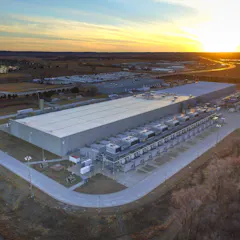
Training neural networks burns through a lot of energy. As the AI field grows, it’s working to keep its carbon foot print from growing with it.
Top contributors
-

Senior Research Fellow in AI Accountability, Queensland University of Technology
-
Principal Research Fellow at AI and Cyber Futures Institute, Charles Sturt University
-
University Distinguished Professor of Astronomy, University of Arizona
-
Assistant professor, University of Chicago
-
Professor of Mathematics, Electrical and Computer Engineering, Biochemistry and Molecular Biology, Michigan State University
-
Senior Clinical Research Fellow, Department of Psychiatry and Faculty of Philosophy, University of Oxford
-
Postdoctoral Research Fellow, The University of Queensland
-
Assistant Professor of Geography, Michigan State University
-
Research Fellow, Robotics & AI, Queensland University of Technology
-
Researcher, Human-Machine Interaction, The MARCS Institute, Western Sydney University
-
Distinguished professor, Texas A&M University
-
Professor of Physical Chemistry & Director of Centre for Computational Science, UCL
-
Lecturer, Public Policy and Law, Monash University
-
Professor of Artificial Intelligence, University of Hertfordshire
-
Senior Research Fellow, Horizon Digital Economy, UnBias, University of Nottingham