

Bacteria use strategies similar to artificial neural networks to use the past to adapt to the future.
Articles on Artificial neural networks
Displaying all articles
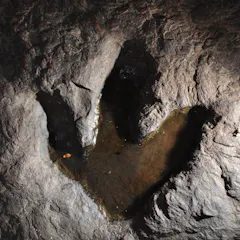
Dinosaur footprints are not perfect snapshots of the feet that made them. AI techniques from photon science can help identify their owner.
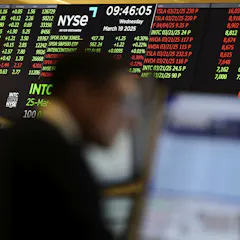
Eliminating AI safeguards can increase uncertainty for financial institutions and, in a worst-case scenario, increase the risk of systemic collapse.
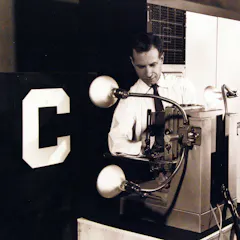
The psychological study of the mind was crucial to the creation of AI – and will remain an essential part of the technology’s future.

The Nobel Prize shows that the field of artificial neural networks – and the deep learning AI revolution the technology unleashed – owe as much to physics as biology and computer science.
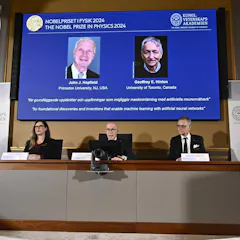
John Hopfield and Geoffrey Hinton, the 2024 Physics Nobel laureates, developed computer systems that can memorise and learn from patterns in data.
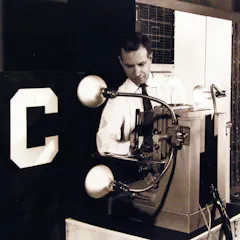
Enthusiasm for the capabilities of artificial intelligence – and claims for the approach of humanlike prowess –has followed a boom-and-bust cycle since the middle of the 20th century.
Technological approaches could help reduce the carbon impact of artificial intelligence systems.
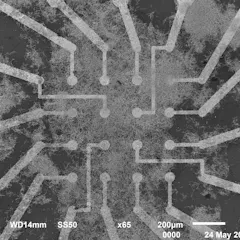
A tangle of silver nanowires may pave the way to low-energy real-time machine learning.

Computer-based neural networks can learn to do tasks. A new type of material, called a mechanical neural network, applies similar ideas to a physical structure.

We’ve seen AI systems writing texts that are indistinguishable from human texts. Some are even rendering impressive 3D artworks from short text inputs. But it doesn’t mean they can ‘think’ like us.

The miniature brains of honeybees were able to understand the concepts of odd and even, despite only having 960,000 neurons (compared to 86 billion in humans).
The knowledge produced in designing and developing artificial neural networks may provide new insights into how our brains work.
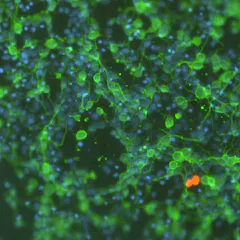
Finding out more about how the brain works could help programmers translate thinking from the wet and squishy world of biology into all-new forms of machine learning in the digital world.
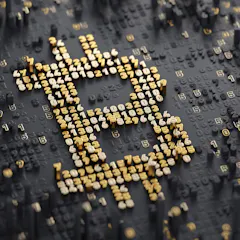
Bitcoin trading is difficult to predict, but artificial neural networks may be able to discern patterns.
Top contributors
-

Associate Professor, Department of Physiology, Monash University
-
Professor of Quantum Physics and Australian Research Council Future Fellow, RMIT University
-
Professor of Physics, University of Sydney
-
PhD student, University of Sydney
-
Professor of Bioengineering and Neurosciences | Founding Director, Center for Engineered Natural Intelligence | Associate Director, Kavli Institute for Brain and Mind, University of California, San Diego
-
Research Fellow, School of Biological Sciences, Monash University
-
PhD Student in Mechanical and Aerospace Engineering, University of California, Los Angeles
-
Lecturer, Computer Science, Loughborough University
-
PhD Candidate in Cognitive Neuroscience, The University of Melbourne
-
Philosopher of Mind, Neuroscience, Cognitive Science, and AI, Washington University in St. Louis
-
Professor, Finance, University of Guelph
-
Researcher and analyst, Monash University
-
Lecturer in Vertebrate Biology, Research Centre in Evolutionary Anthropology and Palaeoecology, Liverpool John Moores University
-
Assistant professor, Montreal Neurological Institute and the School of Computer Science, McGill University
-
Senior Research Fellow in AI Accountability, Queensland University of Technology