

Development in known hazard zones is creating untenable risks for communities around the world. Here’s how Nepal and the global community can build back differently.
Articles on Nepal earthquake 2015
Displaying 1 - 20 of 41 articles

Disasters always bring an influx of aid money to communities. It must be spent wisely to avoid mistakes and ensure long-term recovery.
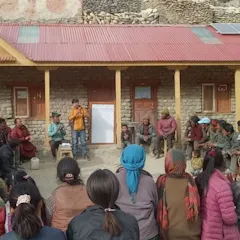
During the COVID-19 crisis, some medical students at school in Pokhara, Nepal, went to rural Himalayan villages to teach about the virus. Others go home to challenge social inequities.
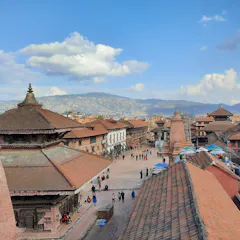
Bhaktapur suffered 300 deaths, 2,000 wounded and over 30,000 houses damaged in the 2015 earthquake. Heritage restoration has become crucial to community recovery.

Nepal’s past dealing with multiple disasters, including the aftermath of its civil war and the massive earthquake of 2015 may have helped the country prepare for the current COVID-19 crisis.

With the enhanced capabilities of today’s robots and drones, recent examples from China and Thailand and ongoing research show that they have the potential to help us navigate disasters.

Nepal’s capital city was devastated by the 2015 earthquake, but rebuilding heritage sites has been fraught with difficulties.

It’s understandable to want to shield children from the impacts of disasters. But research suggests that they should be given a voice in disaster planning and a role in reducing the risks.

Pregnant women and new mothers who feel totally powerless are taking their own lives in increasing numbers in Nepal. More mental health training for local midwives is needed.
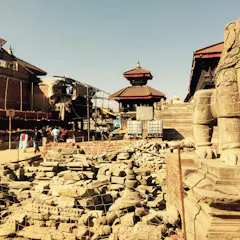
Reconstruction progress in Nepal has been painfully slow. Building code compliance and better urban planning are a must – but inequitable access to resources undermines recovery.

Two years after the second earthquake rocked Nepal in 2015, the recovery efforts have been stalled by political instability and money mismanagement.
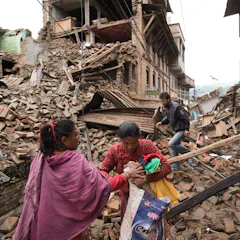
Over 8,500 were killed in the 2015 Nepal earthquake, so how is the country coping?
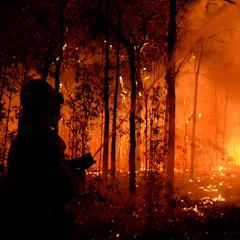
When disaster strikes, more people than ever are turning to social media to find out if they’re in danger. But Australian emergency services need to work together more to learn what works to save lives.

Hayley Saul and Emma Waterton were in the Langtang valley in Nepal when the massive earthquake hit. Dallas Rogers spoke to Hayley and Emma about their subsequent rescue and the everyday Nepalese hero.
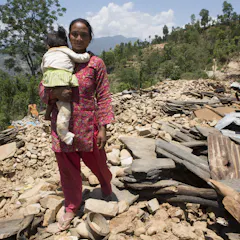
New research shows the earthquake that struck central Nepal in April this year was only a partial rupture of the fault line, meaning another strong quake could be due in future.
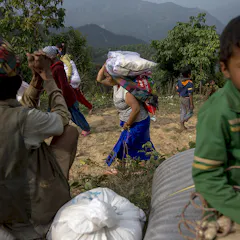
When disaster strikes, billions of dollars are spent on food and supplies, with little accounting of whether relief groups bought the right things or what impact they had.

While some operators have prematurely suggested it’s safe for tourists to return, Nepal’s recovery from the earthquake has barely begun. In the longer term, though, tourism will be vital to this process.
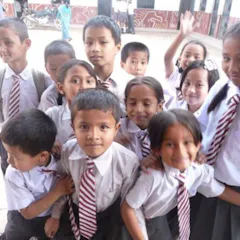
Almost 24,000 classrooms were damaged or destroyed in Nepal’s April earthquake.
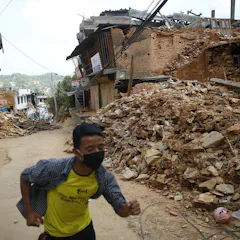
The magnitude 7.3 earthquake that hit Nepal this week should be classed as an aftershock rather than a second earthquake.

Politics in Nepal will hinder relief and recovery efforts following the earthquake and its aftershocks. But look at it the other way around. Could the disaster help to resolve political problems?
Top contributors
-

Professor, Geodynamics Unit, Jawaharlal Nehru Centre for Advanced Scientific Research
-
Emeritus Professor, School of Public Health, Queensland University of Technology
-
Assistant Professor, School of Earth and Ocean Sciences, University of Victoria
-
Professor in Earth Sciences, Nanyang Technological University, Singapore, and Emeritus Professor of Mineral Physics, University of Cambridge
-
Associate Professor, Department of Anthropology and School of Public Policy & Global Affairs; Ivan Head South-North IDRC Chair, University of British Columbia
-
Senior Lecturer Above the Bar, University of Canterbury
-
Associate Professor in International Development & Convenor of Master of Developent Studies, UNSW
-
Redmond Barry Distinguished Professor Emeritus, The University of Melbourne
-
Associate Professor, College of Medicine, University of Florida
-
Lecturer in Political Economy and Methodology, University of Essex
-
-
Professor, DRR expert, University of Dhaka
-
Professor of Disasters and Health, UCL
-
Associate Professor and Director, Center for Refugee and Disaster Response, Johns Hopkins University
-
Postdoctoral research associate, University of York