
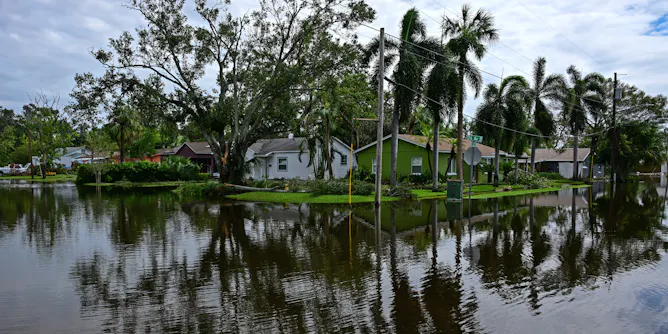
Florida’s current approach to insurance is forcing those who can least afford it to bear the cost of the climate crisis. But different approaches are available.
Articles on Disaster relief
Displaying 1 - 20 of 83 articles
Post-disaster reviews show NZ repeats the same warnings. Breaking the cycle means stronger laws, clearer responsibilities and greater funding.
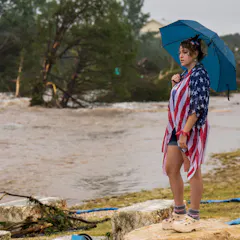
After a natural disaster, survivors often suffer from prolonged trauma for years to come, particularly in places where mental health services are few and far between.
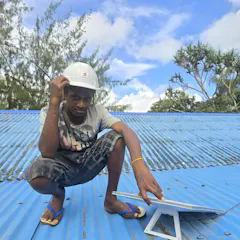
The popular satellite internet service is helpful for education and disaster relief in remote island communities.

Large organizations often partner with local nonprofits that are uniquely positioned to mobilize quickly, leveraging their deep understanding of community needs and established trust with residents.
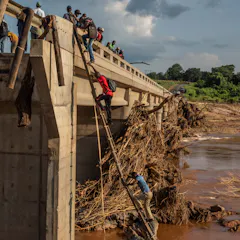
Getting aid to countries before the storm or drought hits is one response increasingly being used to limit the damage.
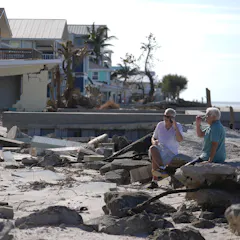
FEMA’s recovery work after Helene and Milton has been hampered by misinformation. Here’s what the agency actually does to help people displaced by disasters.
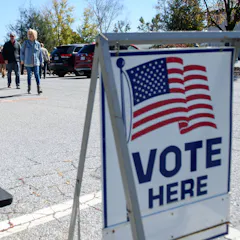
As Florida and North Carolina change voting rules because of the hurricanes, they might face legal challenges – and open the doors to false claims of election fraud.

In 1935, a hurricane devastated the Florida Keys, killing over 400 people, many of them World War I veterans. Ernest Hemingway joined the relief efforts – and became enraged at government inaction.

Disaster relief requires cooperative, healthy relationships between the president, federal agencies and state, local and tribal governments. But with politicians in the mix, trouble can happen.

Health and wellbeing are greatly affected by extreme weather events. New research into how people and systems responded after Cyclone Gabrielle shows how we can react better to future emergencies.
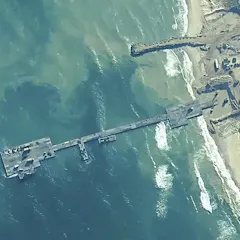
A pre-World War II US Navy plan for a modular floating platform has developed into a key lifeline in Gaza and at disaster sites around the world.

The North Queensland floods remind us of the need to build community resilience to disasters – during the event, in the immediate aftermath and beyond.
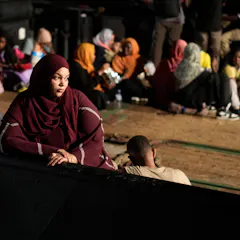
Research shows that young girls can be pushed into marriage in refugee camps or during national disasters.
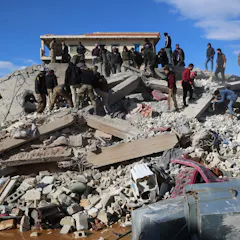
A scholar who visited Syria after the earthquake observes that as the war has dragged on, a humanitarian organization she’s researched for 10 years has branched out.
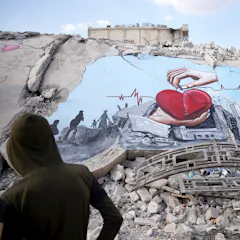
Food, shelter and medical supplies are important but not the only things that help people get back on their feet.
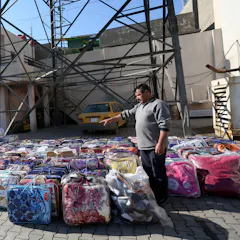
Damascus is putting politics above its people as it hinders the international aid response.
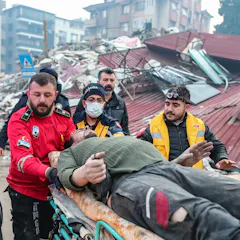
The window of survival after an earthquake is narrow and there are three top priorities for aid workers.
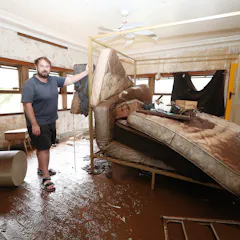
The long delays in housing displaced flood victims point to the need to develop a permanent reserve of temporary housing to be available wherever and whenever disaster strikes.
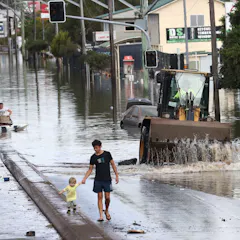
Natural disasters are driving up insurance costs. The Australian government’s plan to drive them down won’t help much.
Top contributors
-

Furman Public Policy Scholar, New York University
-
Professor of Public Administration, Binghamton University, State University of New York
-
Eugene M. Isenberg Chair in Integrative Studies, UMass Amherst
-
Director, Program on Resilient Communities, Harvard University
-
Fellow, Harvard Humanitarian Initiative, Harvard University
-
PhD candidate in African & African Diaspora Studies, The University of Texas at Austin
-
Principal Investigator FiRES Project (SNSF Consolidator Grant), ETH Zürich, Switzerland // Honorary Associate Professor, University of Wollongong, Australia.
-
Professor of International Relations, The University of Queensland
-
Professor of Electrical, Computer and Biomedical Engineering, University of Hartford
-
Honorary Associate Professor, Australian National University
-
Senior Research Fellow, ETH Zurich
-
Visiting Assistant Professor of Information Sciences and Technologies, Rochester Institute of Technology
-
Professor of Information Sciences and Technologies, Rochester Institute of Technology
-
Assistant Professor, Internal Medicine, University of South Florida
-
Professor of Anthropology, University at Albany, State University of New York