

With extreme weather and glacier melt predicted to increase, neighbouring nations will need to act together to prevent deaths.
Articles on Nepal
Displaying 1 - 20 of 105 articles
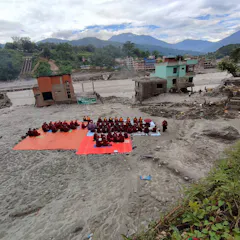
Development in known hazard zones is creating untenable risks for communities around the world. Here’s how Nepal and the global community can build back differently.
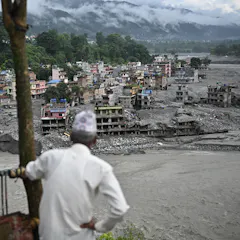
At least 119 countries have asked for aid from the fund set by major greenhouse gas emitting nations four years before the deadly Nepal flood. It has paid zero claims.

Almost one in seven jobs in Nepal rely on tourism. Travellers need to consider these things before planning a return to Nepal.

Around half of the glacier ice in the Himalayas (equivalent to about two billion Olympic swimming pools) could melt by the end of this century.

Disasters always bring an influx of aid money to communities. It must be spent wisely to avoid mistakes and ensure long-term recovery.

As storms, wildfires, and floods strike in ever-closer succession, an architect with disaster risk science expertise explains why resilience is built between hazards, not during them.
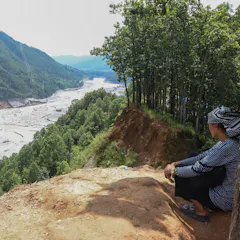
Khalte’s residents survived one disaster – but were left vulnerable to the next.
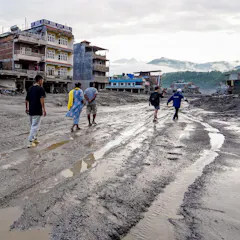
How do you warn people downstream about fast-moving hazards that can change form and cross borders?
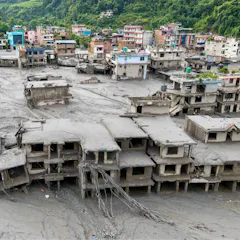
A geologist explains how thawing permafrost and melting ice are increasing the risk of destructive floods in the Himalayas and other high mountain regions around the world.
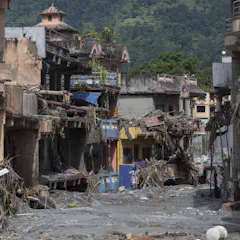
Early warnings and shared data will move only as fast as Beijing’s security concerns allow.
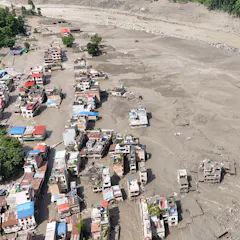
Glacier melt is partly responsible for the disaster along the border with Tibet and Nepal. An expert explains why this is a growing issue for the world.

A catastrophic flash flood ripped through local villages and has claimed hundreds of lives.
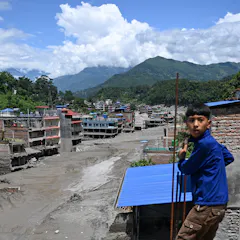
Could more lives be saved if people were trained to act immediately when a flood warning arrives? I believe the answer is yes.
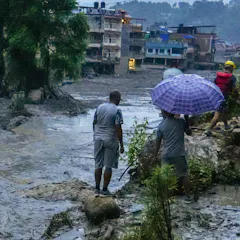
One disaster can create the conditions for the next.
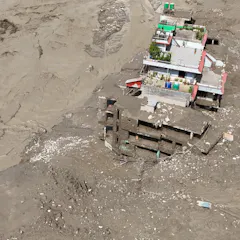
A group of 50 Himalayan hazard experts is providing rapid analysis of the event. Here’s what they’ve found so far.

What responsibilities do governments, researchers, humanitarian organizations, and corporations have for the conditions that repeatedly turn hazards into human catastrophes?
The honey is being exported without the knowledge of the honey harvesters that keeps consumers safe.

Early evidence suggests this was not an ordinary rain-driven flash flood. So what caused it?
Researchers designed a new way of collecting data about snowfall in the Himalayas which is much more accurate than the ones used before.
Top contributors
-

Adjunct Professor of Earth Science, University of Silesia in Katowice
-
Post Doctoral Research Associate at St. Edmund's College, University of Cambridge; British Antarctic Survey
-
-
Instructor, Global Governance, Wilfrid Laurier University
-
Research scientist, University of Hohenheim
-
Associate Professor, Department of Anthropology and School of Public Policy & Global Affairs; Ivan Head South-North IDRC Chair, University of British Columbia
-
Assistant Professor, School of Earth and Ocean Sciences, University of Victoria
-
Professor, Geodynamics Unit, Jawaharlal Nehru Centre for Advanced Scientific Research
-
Postdoctoral Researcher, Research Network on Women, Peace and Security, McGill University
-
Associate Professor in Tourism and Geography, Hainan University
-
Adjunct Research Fellow, School of Design and the Built Environment, Curtin University
-
Professor of Sociocultural Anthropology, Washington University in St. Louis
-
Senior Research Fellow and Lecturer in Environmental Management, University of Manchester
-
Professor Emerita of Criminology, UNSW
-
Associate professor Disaster Management and structural Engineering