
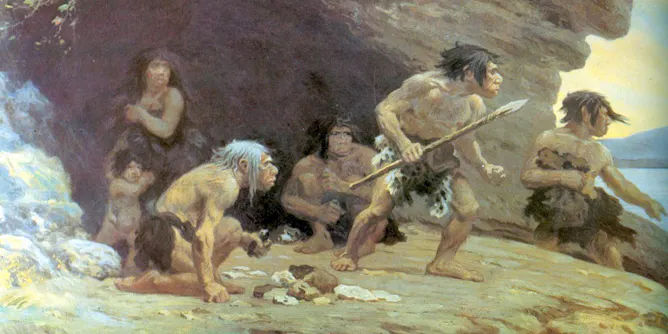
Did Neanderthal military superiority delay our migration out of Africa?
Articles on Neanderthals
Displaying 61 - 80 of 120 articles
These findings represent the earliest evidence for Homo sapiens on the Arabian Peninsula, and demonstrates the importance of Arabia for understanding human prehistory.

The invention of the humble bag was a game changer. Without it, we’d still be running in the woods with our hands full.
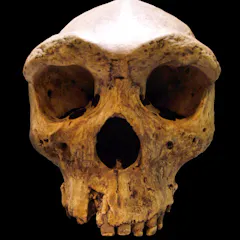
Early humans in Africa may have interbred with a ghost population that likely split from the ancestors of humans and Neanderthals between 360,000 and 1.02 million years ago.

Neanderthals living in a cave in southern Siberia made distinctive stone tools that can be traced to their ancestral homeland in eastern Europe — an intercontinental journey of more than 3,000 km.
20 years ago, who could predict how much more researchers would know today about the human past – let alone what they could learn from a thimble of dirt, a scrape of dental plaque, or satellites in space.

300,000 years ago, there were lots of different species of human. Now it’s only us – and we’re probably the reason why.

Denisova Cave in Siberia has a rich fossil history of early humans - and deposits of droppings from hyenas, wolves and even bears, according to a new analysis of the cave’s dirt floor.

Armed conflict in Syria has been a disaster for the area’s cultural heritage. A displaced archaeologist describes what’s being lost.

New research outlines how the ancestors of modern humans interbred with several archaic human groups on the passage from Africa to Australia.
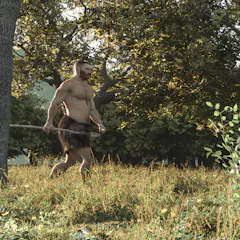
New research suggests humans spread to Europe at least 50,000 years earlier than previously thought.
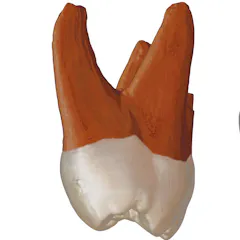
A Neanderthal tooth was discovered in Serbia. This finding helps to fill gaps in the human fossil record of this important geographical region.

New studies reveal when the Denisovans and their Neanderthal cousins occupied a cave in southern Siberia. It’s the only site known to have been inhabited by them and by modern humans.
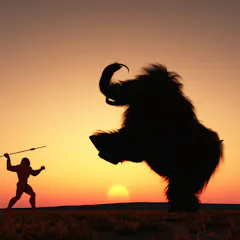
A new study suggests Neanderthals may have lived in woodlands rather than tundras, meaning they were most likely sprinters.
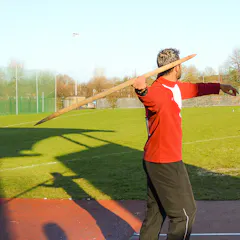
The first systematic study of the ballistics and accuracy of prehistoric spears suggests Neanderthals could kill at a distance.

The teeth from two Neanderthal children and a relatively modern human child reveal their exposure to seasonal changes during their early life.
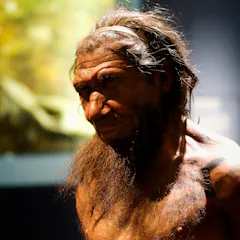
Nimble-fingered Neanderthals went about their daily business in a similar way to modern humans.
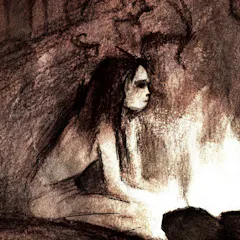
Ancient DNA in a 50,000+ year old bone tells us that two species of early humans did produce offspring together.

Aboriginal Australians have effectively been on their country for as long as modern human populations have been outside of Africa. We have a limit as to how long ago that was: around 50,000 years.
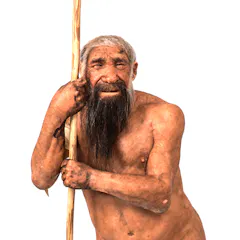
Neanderthals used spears as hunting weapons by throwing or thrusting, according to a new study.
Top contributors
-

Honorary Associate Professor, UNSW
-
Archéologue et chercheur au CNRS, Auteurs historiques The Conversation France; Université de Toulouse
-
Director, ARC Centre of Excellence for Australian Biodiversity and Heritage (CABAH), University of Wollongong
-
Professor in the Department of Archaeology, Durham University
-
Senior Research Associate in Translational Genomics, University of Oxford
-
Senior Lecturer in Paleontology and Evolutionary Biology, Life Sciences at the University of Bath, University of Bath
-
Emeritus Professor, Department of Archaeology, Classics and History, University of New England
-
Professor in Geochronology and Geochemistry, Southern Cross University
-
Associate Professor of Archaeology, Griffith University
-
Distinguished Professor, Charles Sturt University
-
Professor, University of Wollongong
-
Professor in the Australian Research Centre for Human Evolution & Griffith Centre for Social and Cultural Research, Griffith University
-
Associate Professor in Earth Sciences, University of Adelaide, University of Wollongong
-
Archéologue et chercheuse en anthropologie, Aix-Marseille Université (AMU)
-
Associate Professor of Anthropology, Binghamton University, State University of New York