
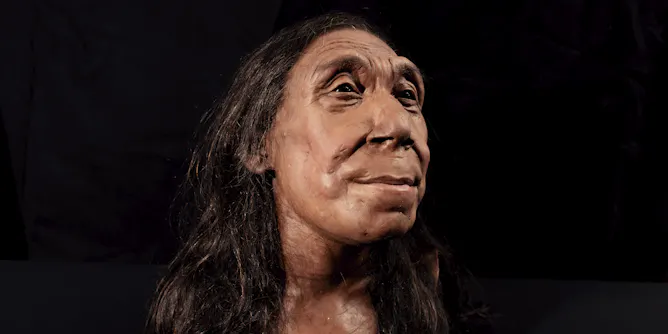
Scientists can’t yet tell how soft tissue overlayed bones, so this reconstruction is inevitably based on artistic licence.
Articles on Neanderthals
Displaying 21 - 40 of 120 articles
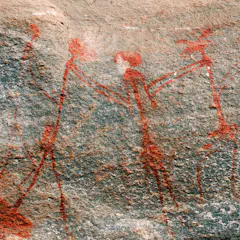
Neanderthals and humans may have been equally smart and skilled, but some evidence points to humans living in larger groups.
A new discovery is shedding more light on the overlap between the two species of human, despite the challenges of exploring this distant time

Genetic analysis of two skull fragments dating back almost 40,000 years shows that our species colonised Europe from the east and interbred with our Neanderthal cousins.
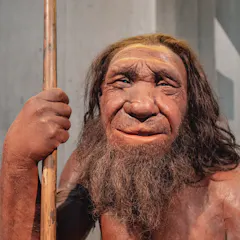
What could the extinction of Neanderthals tell us about our own species? An archaeologist explains in The Conversation Weekly podcast.

Meet the archeologist who is overhauling our understanding of early human history.
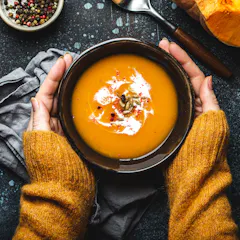
Archaeologists speculate the first soup might have been made by Neanderthals.
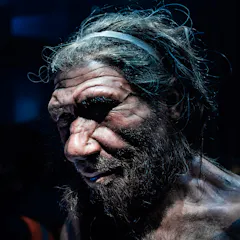
The analysis could help us understand behavioural differences between the two groups of humans.
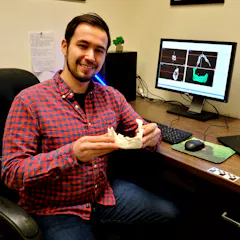
Scientists had figured a fossil found in Spain more than a century ago was from a Neandertal. But a new analysis suggests it could be from a lost lineage of our species, Homo sapiens.

This whirlwind tour of social history describes how infectious diseases have shaped humanity at every stage. It suggests reducing inequality will give us our best chance of surviving future plagues.
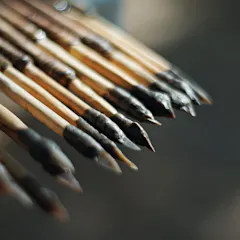
In 2022 we detailed the discovery of 1,500 stone points in France’s Madrin cave. Experiments now show that they could were used as arrowheads, pushing back evidence of archery in Eurasia by 40,000 years.

It makes sense that a world of individuals used art to explore identity.
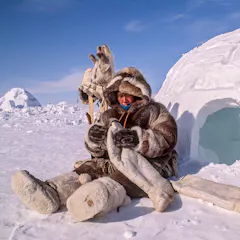
Hate winter? The answer may lie in our evolutionary history.
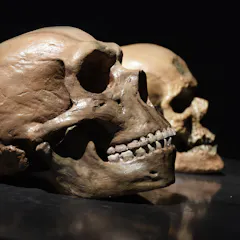
The way human brains develop is special – but not quite as special as you’d like to think, if we consider Neanderthals as well.
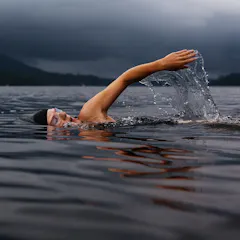
Neanderthals living in Italy swam confidently and In early Egyptian, Greek and Roman images people are shown swimming overarm. But today, only one in four people in low income countries can swim.

Humanity carries traces of other populations in our DNA – and a new study shows how one of these ancestors has influenced the immune systems of modern Papuans.
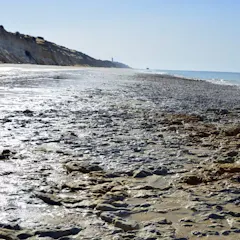
The first Neanderthal footprints from the Iberian Peninsula discovered last year may have belonged to other members of the genus ‘Homo’.
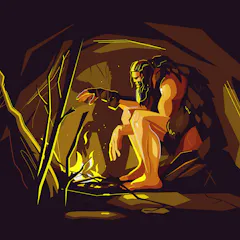
New study shows Neanderthals and Homo sapiens had a taste for sharp and bitter food.
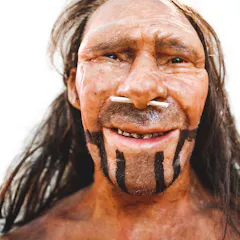
Neanderthals were wiped out by chance changes in the environment. The rise of Homo sapiens wasn’t inevitable.

Only insects populations can compare to rising human numbers.
Top contributors
-

Honorary Associate Professor, UNSW
-
Archéologue et chercheur au CNRS, Auteurs historiques The Conversation France; Université de Toulouse
-
Director, ARC Centre of Excellence for Australian Biodiversity and Heritage (CABAH), University of Wollongong
-
Professor in the Department of Archaeology, Durham University
-
Senior Research Associate in Translational Genomics, University of Oxford
-
Senior Lecturer in Paleontology and Evolutionary Biology, Life Sciences at the University of Bath, University of Bath
-
Emeritus Professor, Department of Archaeology, Classics and History, University of New England
-
Professor in Geochronology and Geochemistry, Southern Cross University
-
Associate Professor of Archaeology, Griffith University
-
Distinguished Professor, Charles Sturt University
-
Professor, University of Wollongong
-
Professor in the Australian Research Centre for Human Evolution & Griffith Centre for Social and Cultural Research, Griffith University
-
Associate Professor in Earth Sciences, University of Adelaide, University of Wollongong
-
Archéologue et chercheuse en anthropologie, Aix-Marseille Université (AMU)
-
Associate Professor of Anthropology, Binghamton University, State University of New York