
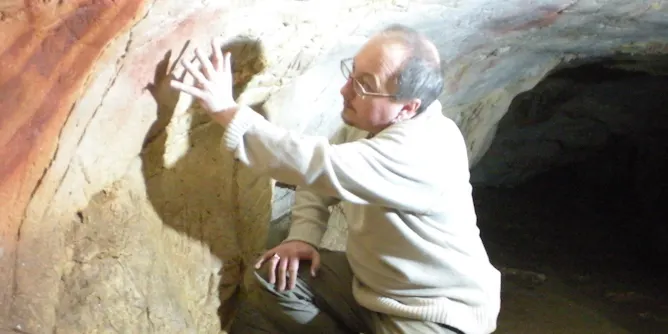
Figurative art may derive from Neanderthal hand prints and the hunter’s keen eye for perceiving animals.
Articles on Neanderthals
Displaying 81 - 100 of 120 articles
It’s time we changed our stereotype of the brutish, thuggish Neanderthals, and instead start viewing them with the respect they really deserve.

New tools add to an emerging view of the past as a turbulent “Game of Thrones” style scenario, with distinct early human ancestors living in Eurasia before Homo sapiens arrived.
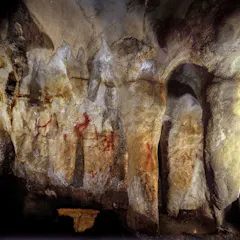
Neanderthals, rather than modern humans, created the world’s oldest cave paintings.
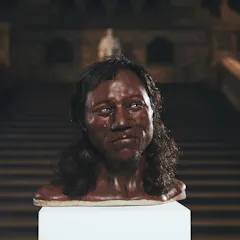
The first British people were black – and other interesting findings made possible by genomic sequencing.

New discoveries are changing archaeologists’ ideas about the origins of our own species and our migration out of Africa. This fossil pushes Homo sapiens’ African exodus date back by 50,000 years.

Ritual feasting emerged around the time humans were beginning to farm. It came to play an important role in societal bonding, much as it does today.
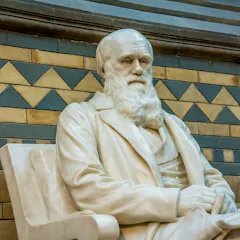
Rather than castigate those who deny evolution, it is more useful to consider their arguments to help science explain it better
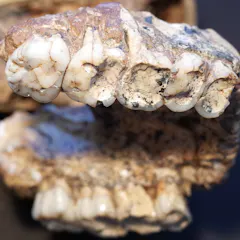
Diet and disease leave characteristic marks on our teeth which can reman for millions of years.
The early human ‘Cockney pearly kings and queens’.

How do scientists figure out when evolutionary events – like species splitting away from a common ancestor – happened? It turns out our DNA is a kind of molecular clock, keeping time via genetic changes.
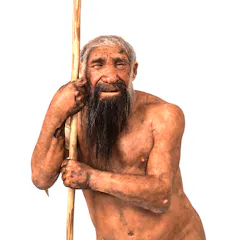
A new study estimates the nutritional value of human flesh and challenges the belief that prehistoric humans engaged in cannibalism just to fill their stomachs.
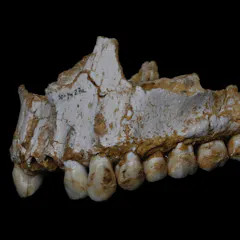
Neanderthals had a very varied diet based on what foods were available to them where they lived. They also knew what to eat when they were sick.

The way early humans learned to handle food could explain why the majority of people today are right handed.
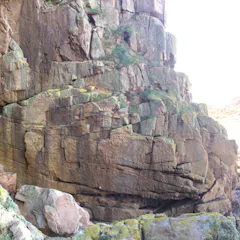
Excavations have shown that early humans were frequent visitors to the same coastal area over tens of thousands of years.
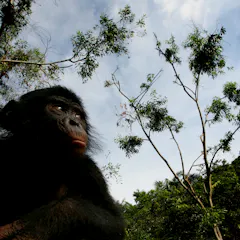
The two species mated 500,000 years ago, leaving a genetic mark to this day. This knowledge could help save them from extinction.
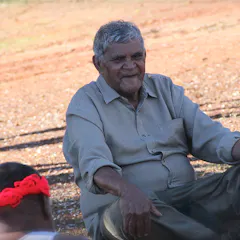
New research into how early humans spread across the world settles several long-running debates.
Human population groups worldwide are highly homogeneous genetically. They are in fact 99.5% similar and their anatomical features vary in an uncorrelated fashion over the landscape.
Humans evolved in Africa, spread across the world, and then it gets messy. Luckily advances in genetic sequencing have helped us track the complex history of human migration.
A new study is rewriting our understanding of archaic humans and how they may have interacted with early humans.
Top contributors
-

Honorary Associate Professor, UNSW
-
Archéologue et chercheur au CNRS, Auteurs historiques The Conversation France; Université de Toulouse
-
Director, ARC Centre of Excellence for Australian Biodiversity and Heritage (CABAH), University of Wollongong
-
Professor in the Department of Archaeology, Durham University
-
Senior Research Associate in Translational Genomics, University of Oxford
-
Senior Lecturer in Paleontology and Evolutionary Biology, Life Sciences at the University of Bath, University of Bath
-
Emeritus Professor, Department of Archaeology, Classics and History, University of New England
-
Professor in Geochronology and Geochemistry, Southern Cross University
-
Associate Professor of Archaeology, Griffith University
-
Distinguished Professor, Charles Sturt University
-
Professor, University of Wollongong
-
Professor in the Australian Research Centre for Human Evolution & Griffith Centre for Social and Cultural Research, Griffith University
-
Associate Professor in Earth Sciences, University of Adelaide, University of Wollongong
-
Archéologue et chercheuse en anthropologie, Aix-Marseille Université (AMU)
-
Associate Professor of Anthropology, Binghamton University, State University of New York