
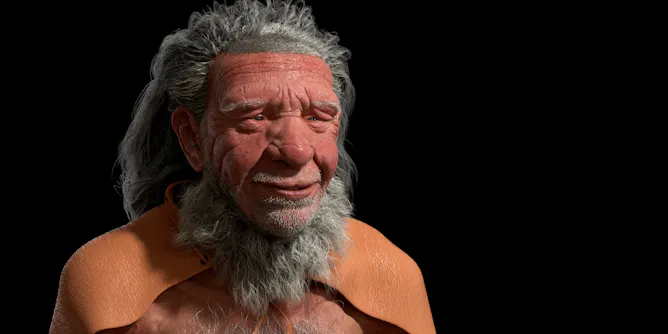
Zinc in their bones reveal that these early humans were top of the food chain.
Articles on Neanderthals
Displaying 41 - 60 of 120 articles

Ancient DNA from Neanderthal fossils in southern Siberia reveals a small community with close family ties – including a father and his teenage daughter.
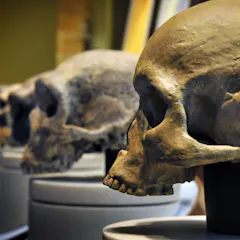
Ancient DNA helps reveal the tangled branches of the human family tree. Not only did our ancestors live alongside other human species, they mated with them, too.
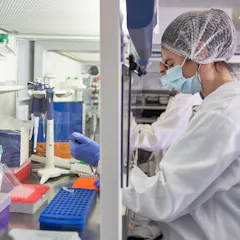
Thousands of ancient genomes have been sequenced to date. A Nobel Prize highlights tremendous opportunities for aDNA, as well as challenges related to rapid growth, equity and misinformation.
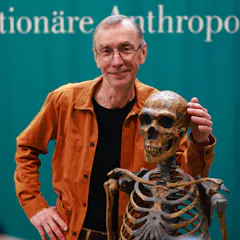
The Nobel Prize in physiology or medicine for 2022 has been awarded to Svante Pääbo, whose discoveries have been pivotal to the way we understand our evolutionary history.
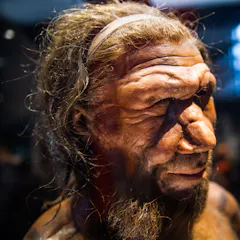
You may have heard science has reconsidered its view of Neanderthals but did you know human hybrid species played a key role in our evolution?
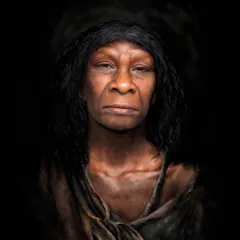
Here’s what we can learn from our closest extinct relatives.
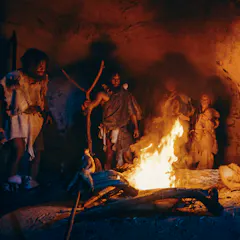
Around 200,000 years ago, people were living who were as intelligent as us.

The mysterious Denisovans left DNA traces in populations across Southeast Asia and Australasia, but until now no physical signs of their presence outside Eurasia had been found.
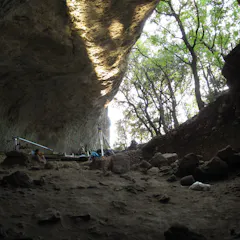
Stone artifacts and a fossil tooth point to Homo sapiens living at Grotte Mandrin 54,000 years ago, at a time when Neanderthals were still living in Europe.
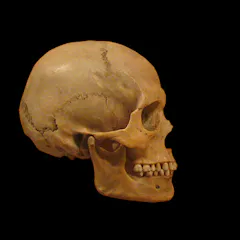
What looks like a bright, sharp dividing line between humans and other animals is really an artefact of extinction.
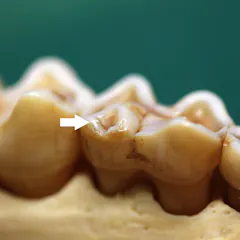
The genus Paranthropus stands out in our human family tree because of their massive back teeth, but new techniques suggest we should throw out the hypothesis they mainly ate hard seeds and nuts.
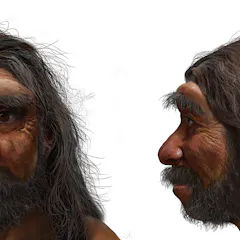
A new analysis of a ‘lost’ skull rewrites the recent family tree of the human species, showing our closest relatives lived in China.
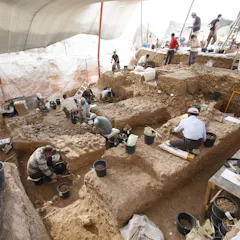
The 140,000-year-old skull fossils are leading to more questions than answers. Also found was the oldest intact campfire ever found in the open air.

Our research has also uncovered major long-term changes in ancient animal populations at Denisova Cave, and has provided the first direct evidence of Homo sapiens having lived there.
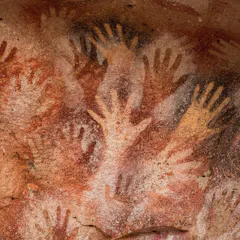
It’s possible that low oxygen levels in caves produced hallucinations – but that doesn’t explain the majority of prehistoric art.
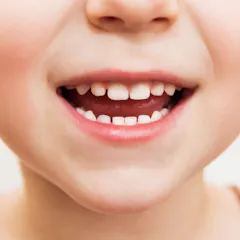
Like rings in tree trunks, the layers of our teeth carry a detailed record of our growth — and reveal lead contamination is common.

Genes that control blood type and are involved in inflammation have been associated with more severe disease.
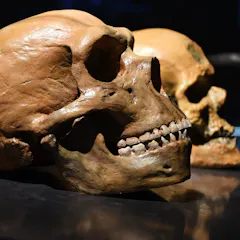
Neanderthal-human hybrid brains grown in the lab give fascinating insights into evolution.

A war with Neanderthals makes a compelling narrative but the evidence is limited is best.
Top contributors
-

Honorary Associate Professor, UNSW
-
Archéologue et chercheur au CNRS, Auteurs historiques The Conversation France; Université de Toulouse
-
Director, ARC Centre of Excellence for Australian Biodiversity and Heritage (CABAH), University of Wollongong
-
Professor in the Department of Archaeology, Durham University
-
Senior Research Associate in Translational Genomics, University of Oxford
-
Senior Lecturer in Paleontology and Evolutionary Biology, Life Sciences at the University of Bath, University of Bath
-
Emeritus Professor, Department of Archaeology, Classics and History, University of New England
-
Professor in Geochronology and Geochemistry, Southern Cross University
-
Associate Professor of Archaeology, Griffith University
-
Distinguished Professor, Charles Sturt University
-
Professor, University of Wollongong
-
Professor in the Australian Research Centre for Human Evolution & Griffith Centre for Social and Cultural Research, Griffith University
-
Associate Professor in Earth Sciences, University of Adelaide, University of Wollongong
-
Archéologue et chercheuse en anthropologie, Aix-Marseille Université (AMU)
-
Associate Professor of Anthropology, Binghamton University, State University of New York