

People restoring Africa’s ecosystems need climate services that combine forecasts with Indigenous knowledge and information about land, water and livelihoods.
Articles on nature-based solutions
Displaying 1 - 20 of 43 articles
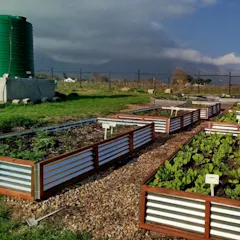
A test case in Franschhoek, South Africa has used natural filtering of polluted water to produce 50,000 litres a day that is safe for irrigation.
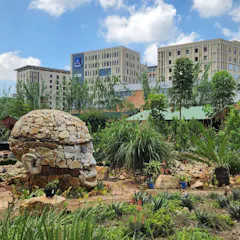
Parks do more than cool cities. They also help people work together to cope with climate change, but only if local communities help design, manage and care for them.
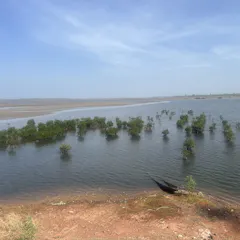
Nature-based solutions like mangrove restoration are key to climate action, but weak monitoring can overstate carbon storage, creating ‘ghost carbon’.

Ethiopian communities are cheaply filling destructive gullies with soil, stones and branches and replanting them to stop erosion and restore farmland.
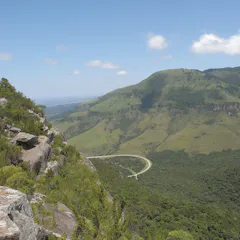
Carbon capture projects could provide the funds needed to restore land degraded by commercial farming and forestry.
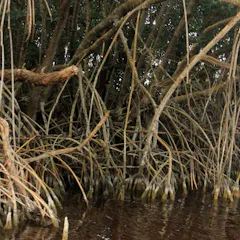
Mangroves offer natural protection against flooding. Without them, communities are left vulnerable.
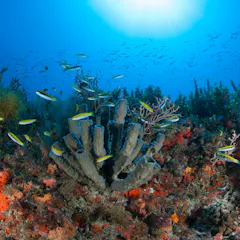
Where risk rises, returns have to rise too. Where ecosystems are protected, financing becomes cheaper.
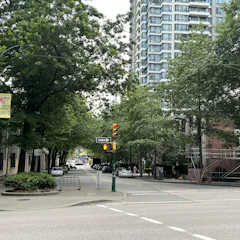
Incorporating nature-based solutions can help cities meet both their development and climate change goals.

South Africa’s G20 presidency is working on getting communities ready to survive disasters.
Natural infrastructure can be restored in ways that reduce both flood risk and the effects of drought.
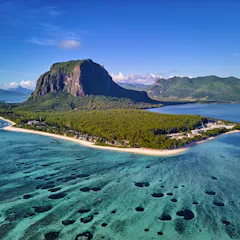
Global warming and droughts have caused Mauritius to run low on water. It needs hundreds of millions of dollars to build new reservoirs.

Restraining rivers through stop banks and channels transfers and heightens flood risks downstream. Allowing them to roam free limits flooding and delivers other ecological benefits.
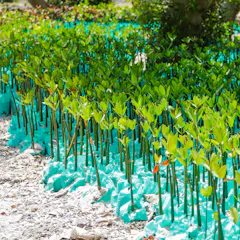
Universities in Senegal and South Africa are now teaching the skills of setting up nature-inspired projects to deal with some of the problems of climate change.
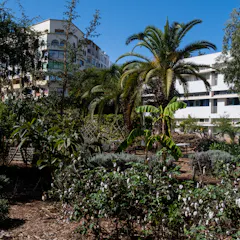
Using nature to solve environmental damage caused by humans can work on a local level, but can nature-based solutions be scaled up enough to address climate change?

Biodiversity loss, climate change and pollution do not happen in isolation, but proposed solutions too often fail to account for this. Two major reports point the way forward.
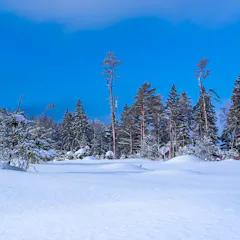
Tree planting can help address the climate and biodiversity crises – but only in the right circumstances.

We are turning ever more nature into a product we buy and sell.
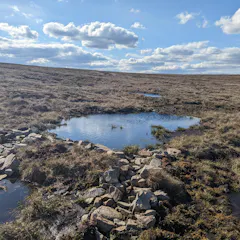
Peat restoration is an important nature-based solution that can mitigate climate change and will be an essential part of reaching the UK’s legally binding emissions targets.
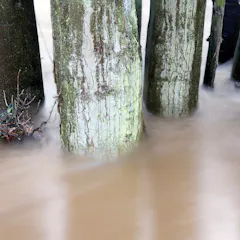
Trees act like sponges because their roots help soil to absorb water, plus trunks are a natural barrier to floodwaters.
Top contributors
-

Adjunct Assistant Professor in Global Change Ecology, Aarhus University
-
Professor in Natural Sciences, Bangor University
-
Researcher in Nature-based Solutions, University of Oxford
-
Professeur adjoint, hydrodynamique côtière et fluviale, Institut national de la recherche scientifique (INRS)
-
Research Associate in Water and Environmental Engineering, Queensland University of Technology
-
Affiliate Professor, Geography, Planning and Environment, Concordia University
-
Senior Lecturer, Environmental Soil Science, RMIT University
-
Researcher in Nature-based Solutions, University of Oxford
-
Professor of Biodiversity, Smith School of Enterprise and Environment and Department of Biology, University of Oxford
-
Distinguished Professor of Climate Science, Simon Fraser University
-
Professor of Geology, University of Michigan-Dearborn
-
PhD candidate, Africa Center of Excellence for Climate Smart Agriculture and Biodiversity Conservation. His research focuses on transfromative change pathways (Data science for climate resilience, Geography, Biodiversity, and Urban mobility), Haramaya University
-
Research Project Manager at the Alliance Bioversity and International Center for Tropical Agriculture, CGIAR and Associate Professor of Production Ecology and Resource Conservation, CGIAR
-
Professor of Political Science, University of British Columbia
-
Assistant Professor of Strategy and Sustainability, University of The Fraser Valley