
Charities have no right to keep stolen money they receive as donations, even if they didn’t know it was stolen.
Articles on Museums
Displaying 41 - 60 of 308 articles

Advances in imaging, text recognition and machine learning are transforming what can be done with collections of plants and fungi in herbaria and museums globally.
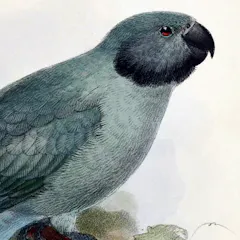
Two specimens at a museum in Cambridge are the only physical evidence this bird ever existed.
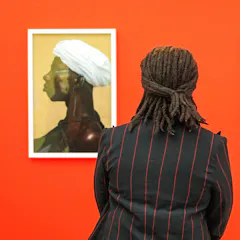
In her new book, Akinkugbe explores the way art history is taught, and the exclusion of blackness from mainstream art spaces.

The UK must find better ways to assess value for money when it comes to culture – otherwise valuable projects could miss out on funding.

Learners understood human evolution better after interactive workshops at a museum.
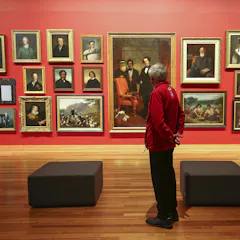
Museum exhibits only tell part of what happened in the past. Visitors need to consider what is being included – and what is being left out.

Measurement standards underlie most fields of science – without them, researchers couldn’t compare the results of different studies.

Can a new database of 3D bone scans help solve the mystery of the elusive ngudlukanta?

Canada’s Cultural Property Export and Import Act alone won’t guarantee that HBC artifacts intended for auction don’t wind up in private collectors’ hands or dispersed globally.

This engaging exhibition tells the story of the Thames and London through time.
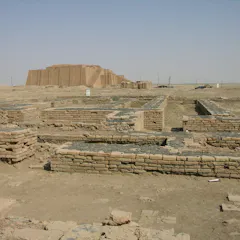
A collection of artefacts collected 2,500 years ago in modern-day Iraq reveal the forgotten world of Mesopotamia, home to many world firsts – including beer production.
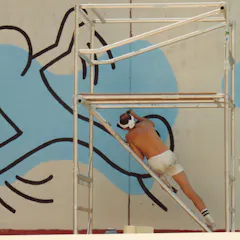
Because the US government has rarely offered full-throated support for the arts, there’s a long tradition of innovation, adaptation and collective action among American artists.
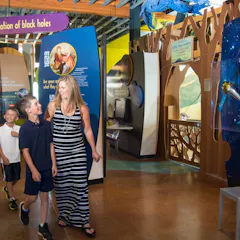
The consequences of shutting down the Institute of Museum and Library Services would be particularly dire for smaller museums and rural museums.

Around the world, museums are grappling with the question of what to do with human remains. This includes lifelike copies of those who may have died traumatically.
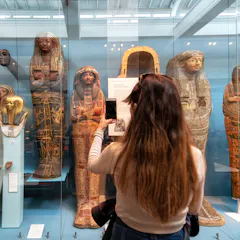
Even with the best of intentions, restitution is not a fast process.

Every field has its own standard for what data gets recorded for specimens archived in a museum collection, which can make research difficult.
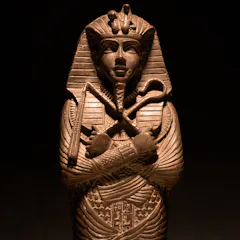
Welcome to ‘sensory heritage’, the study of how we engage with objects from the past besides what they look like.
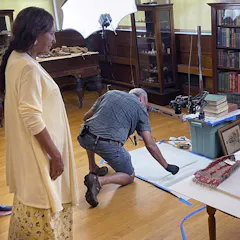
Repatriation is now a legal responsibility, but also a matter of human rights, an anthropologist writes.

Canadian media theorist Marshall McLuhan’s ideas shaped museum curation through his friend, designer Harley Parker, in the 1960s.
Top contributors
-

Professor of Public Humanities and Director of the ANU Humanities Research Centre, Australian National University
-
Assistant Director of the University Museum of Zoology, Cambridge, University of Cambridge
-
Ruth Coulter Heede Professor of Art History, Case Western Reserve University
-
Honorary Professor, Edith Cowan University
-
Professeur de Marketing, EDHEC Business School
-
Associate Research Professor of Anthropology, University of Colorado Denver
-
Lecturer, The University of Queensland
-
Associate Professor in Ancient History, Macquarie University
-
Eminent Scholar and Professor of Economics Emeritus, Auburn University
-
Postdoctoral research fellow, RMIT University
-
Director, Centre for Cultural Materials Conservation, The University of Melbourne
-
Lecturer, University of Glasgow; University of Nigeria
-
Lecturer in School of Art History and Art Education, UNSW
-
Senior Lecturer School of Art History and Art Education, UNSW
-
Senior Curator of Australian and First Nations Art, National Gallery of Victoria, The University of Melbourne