

Pollen, algae, insects, radiolarians – each unique microfossil holds clues to how Earth has changed over millions of years. Combining AI with digital scanners helps researchers piece it all together.
Articles on Microfossils
Displaying all articles
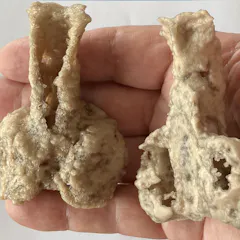
For 135 years, there’s been just a single species belonging to this group. Now, a second has been discovered in western Queensland.

Palaeontologist don’t just dig up dinosaur bones – they study the whole history of life on Earth, and uncover clues about its future too.

Earth’s climate system is connected across hemispheres. When the Atlantic Meridional Overturning Circulation weakens and Europe cools, warming in New Zealand and southern mid-latitudes accelerates.

Fossil evidence of how the earliest life on Earth came to be is hard to come by. But scientists have come up with a few theories based on the microbes, viruses and prions existing today.
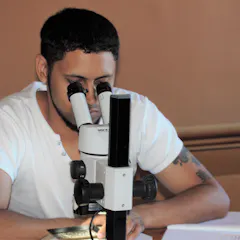
Microfossils offer up an array of information to scientists, like the time periods in which they lived and how environments have changed.
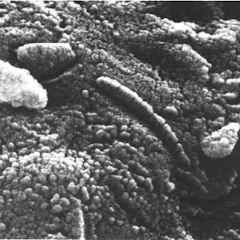
New research shows how rock features that look like fossilised microbes can form without life.
Top contributors
-

Lecturer in Environmental Geoscience, The University of Melbourne
-
PhD candidate in Sedimentology, University of the Western Cape
-
Senior Lecturer, North-West University
-
Associate Professor in Marine Geology, The University of Queensland
-
Palaeoclimatologist, Australian Antarctic Division
-
Senior Lecturer in Geology, University of Aberdeen
-
Chief Investigator in Antarctic environmental science, Monash University
-
Senior Lecturer in Physical Geography, Te Herenga Waka — Victoria University of Wellington
-
Professor Emeritus of Microbiology, University of Connecticut
-
Departmental Visitor, Materials Physics, Research School of Physics, Australian National University
-
Research Geologist and Curator of Paleobotany, Smithsonian Institution
-
Postdoctoral Research Fellow in Natural History, Smithsonian Institution