
A key current in the Atlantic may be slowing down. But changes deep below the waves don’t generate obvious visual narratives.
Articles on AMOC
Displaying all articles
New evidence shows a major climate shift ‘within a lifetime’ 13,000 years ago.
An important ocean circulation system is slowing down faster than expected.
A report warns that coral reefs may have reached their tipping point, and ice sheets, ocean currents and the Amazon are at growing risk. But, what does that actually mean?
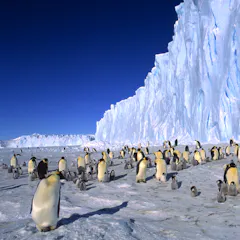
The vast ice of Antarctica has long seemed impregnable. But sudden changes are arriving – from shrinking sea ice to melting ice sheets and slowing ocean currents.

Sea spray content in a stalagmite sheds light on how ocean currents in the Gulf Stream have changed in the past.

Scientists are increasingly worried about a potential slowdown of the major Atlantic ocean current. Now we know it would affect the Southern Hemisphere
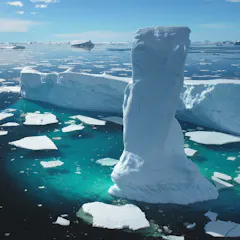
New research shows melting ice is causing the Atlantic Meridional Overturning Circulation (AMOC) to slow down, with widespread consequences for the world’s climate and ecosystems.

New finding adds uncertainty to projections of how the climate will change in future.

Earth’s climate system is connected across hemispheres. When the Atlantic Meridional Overturning Circulation weakens and Europe cools, warming in New Zealand and southern mid-latitudes accelerates.
If the ocean circulation, known as AMOC, shuts down, it would be a climate disaster, particularly for Europe and North America. New research shows why that might not happen as soon as some fear.
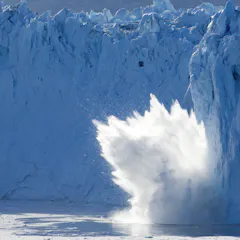
Scientists now have a better understanding of the risks ahead and a new early warning signal to watch for.

Oceanographic systems vary over years, decades and centuries.

If proven correct, the Danish scientists’ scenario could mean the end of life in Europe as we know it.
Recent headlines around the supposed impending collapse of the Atlantic currents remind us of the importance of avoiding sensationalism in facing global warming.
Expect more extremes and a range of ‘surprises’ to exacerbate the climate emergency.
The collapse of the Atlantic meridional overturning circulation would profoundly alter the anatomy of the world’s oceans and climate. New research explores the consequences.
Top contributors
-

Professor, Climate Change Research Centre, UNSW
-
Director of the ARC Centre of Excellence for Our Future Oceans and Scientia Professor in Oceanography, UNSW
-
Postdoctoral Research Fellow in Paleoceanography, UCL
-
Professor in physics of ice, climate and earth, University of Copenhagen
-
Chief Investigator in Antarctic environmental science, Monash University
-
Professor in statistics, University of Copenhagen
-
PhD Candidate, UNSW
-
Professor, School of Earth and Ocean Sciences, University of Victoria
-
Senior Lecturer in Physical Geography, Te Herenga Waka — Victoria University of Wellington
-
Climate Model Specialist, Utrecht University
-
Professor of Earth System Science, UCL
-
Professor of Earth and Environmental Sciences, Columbia University
-
Senior Lecturer, North-West University
-
Associate Professor, UNSW
-
Palaeoclimatologist, Australian Antarctic Division