

Language, culture and brain development all contribute to ‘childhood amnesia’.
Articles on Memory
Displaying 321 - 340 of 416 articles

Manchester downright refuses to commemorate the 1996 IRA bombings – it’s a bold political statement.

The navigation tactics of certain Australian ants could point the way to helping driverless cars find their way around.
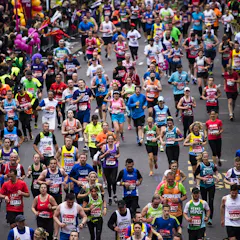
Running causes new brain cells to grow. But why does this happen? What is the evolutionary advantage?

We come across dishonest acts in our day-to-day lives. Perhaps we commit them as well. But, guess what? Most of us care so much about being moral that we tend to forget our unethical behavior.
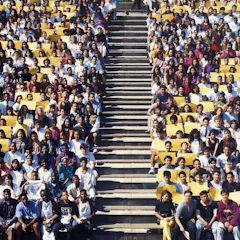
Evolutionary psychology could explain why the memories and friendships formed during these years seem more vivid, potent and meaningful than those from any other stage of life.

How often has your own mother forgotten your name? Does she ever cycle through the names of each of your siblings – and perhaps even the family pet – before getting to yours?
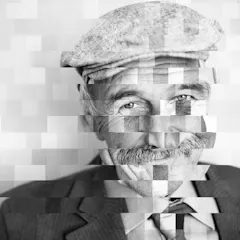
Different parts of our brains process different things, like the facial features, voices and the gait of people we know. But it takes memory to weave them all together into a single picture.

Brain imaging study shows that we forget the context in which a traumatic event take place which could be crucial to avoiding negative loops.
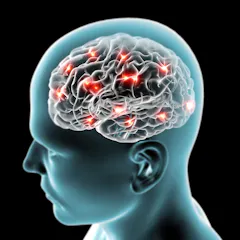
The theory of antimemories could help explain many cognitive problems in the brain such as autism and schizophrenia.
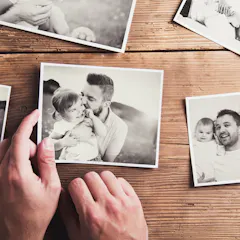
People lose their memory in many different ways. A neuropsychologist explains the lingo.

Memories help you gloss over those ugly bits with minimum fuss.

Our memory and attention are at their peak only at certain times during the day. Why would the timing of test not affect students’ performance?

Snapping and sharing photographs has never been easier. But being inundated with images can have a host of unintended consequences, from heightened anxiety to impaired memory.

Memory has become prosthetic – outsourced to the internet. But remembering, not forgetting, is the enemy of creative reinvention.

Could the not-too-distant future hold “brain chip” technologies that we could all use to enhance our memories to the point of perfection? Not so fast: there are big benefits to forgetting.

As well as being a favourite seasonal fruit, a bioactive compound found in cherries is showing promising effects for brain health.

Magda Szubanski’s engaging debut memoir, Reckoning, is an exercise in precisely that: reconciling the past. It is also a celebration of the life and career of one of our greatest comedians.
In the years after a traumatic news event, we’re prone to confuse things we saw on TV with what we witnessed in person.
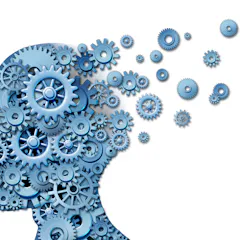
The modern world’s effect on our ability to remember has got an ugly name. But digital amnesia is not a one-way street. Technology may be helping us to remember more than it has caused us to forget.
Top contributors
-

Senior Lecturer (Adjunct), Nutritional neuroscientist, Adelaide University
-
Head of Developmental Psychobiology Lab, Deakin University
-
Professor of Educational Psychology, University of Wollongong
-
Associate Professor in Cognitive Science, Western Sydney University
-
Professor of Psychology, Lafayette College
-
Associate professor, University of Sydney
-
Professor of Music Psychology, Durham University
-
Pro Vice-Chancellor (Research Performance and Development) and Professor of Cognitive Science, Macquarie University
-
Professor of Clinical Neuropsychology, University of Cambridge
-
Professor of Anatomy, University of Bristol
-
Reader in Psychology, Aston University
-
Senior Lecturer, The University of Melbourne
-
Professor of Cognitive Psychology, City St George's, University of London
-
Senior Lecturer in Psychology, City St George's, University of London
-
Professor, Neuropsychology, University of Westminster