

We know that smoking and drinking is bad for your memory, but combined, they’re so much worse.
Articles on Memory
Displaying 301 - 320 of 416 articles

Which objects would you choose to tell the story of your life?

What’s going on in the brain when something seems familiar but we don’t know why.

The Florey Institute’s Dr Jee Hyun Kim explains how the different aspects of memory work and why attention is the most important element of improving your memory in this long-form comic explainer.

The effects of long-term tobacco smoking on our mental faculties such as memory and concentration are only now becoming known.

Known as the reminiscence bump, memory scientists are hotly debating what causes it.

Results of the first large-scale study to specifically investigate the musical features that might increase the ‘earworminess’ of a song.

An intense night of study won’t help you remember information in the long-term – and the stress of revising under pressure will likely impact on your sleep and thus your exam performance.
With current modes up against their limits, we need new data storage solutions. Tiny defects in diamonds’ atomic structure might turn them into a new medium for memory.

A single session of football heading can temporarily impair memory. So what does that mean for children with developing brains?
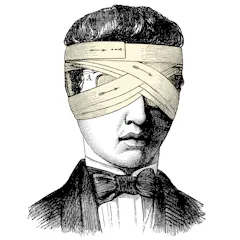
The myth that a blow to the head can both cause and cure amnesia – a common one on TV and in the movies – may have begun during the 19th century.

Our memories provide us with insight into events, knowledge of the world around us and influence our actions and behaviours – forming important aspects of our personality.

How an ancient Aboriginal memory technique may uncover the meaning behind archaeological sites across the globe are revealed in a new book, The Memory Code.

We may feel like flashbulb memories of dramatic events are more accurate than ordinary memories, but are they really? An experiment begun Sept. 12, 2001 sheds light.

No longer dismissed as an undesirable negative trait to be avoided, humor is having a heyday among experimental psychologists.

If you care for or know someone with dementia, they’ve probably asked you “what are we doing today?” “who are you?” or “when are we going home?”

Jason Bourne’s overall pattern of forgetting and then retrieving memories is a better plot device than representation of real-world memory loss and recovery.

Men and women experience autism differently, which shows something revealing about where autistic characteristics may come from.

Environment plays an important role in how you remember things.

Social media is creating an archive that will shape the way we see our past.
Top contributors
-

Senior Lecturer (Adjunct), Nutritional neuroscientist, Adelaide University
-
Head of Developmental Psychobiology Lab, Deakin University
-
Professor of Educational Psychology, University of Wollongong
-
Associate Professor in Cognitive Science, Western Sydney University
-
Professor of Psychology, Lafayette College
-
Associate professor, University of Sydney
-
Professor of Music Psychology, Durham University
-
Pro Vice-Chancellor (Research Performance and Development) and Professor of Cognitive Science, Macquarie University
-
Professor of Clinical Neuropsychology, University of Cambridge
-
Professor of Anatomy, University of Bristol
-
Reader in Psychology, Aston University
-
Senior Lecturer, The University of Melbourne
-
Professor of Cognitive Psychology, City St George's, University of London
-
Senior Lecturer in Psychology, City St George's, University of London
-
Professor, Neuropsychology, University of Westminster