
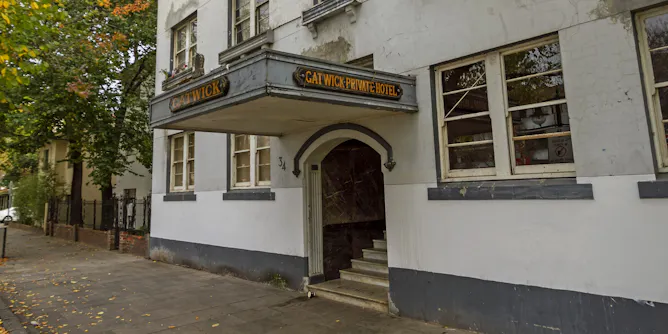
When wealth accumulation becomes the driver of urban regeneration, residents who already have little or no say in the future of our cities are further marginalised by gentrification.
Articles on Melbourne
Displaying 201 - 220 of 270 articles
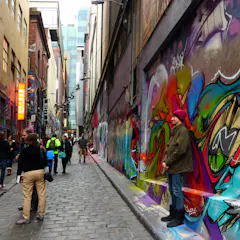
Melbourne’s street art has an international reputation and may be a very valuable tourist attraction. But the city remains ambivalent about the activities that have created its ‘laneway galleries’.
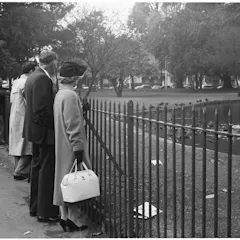
Melbourne is a product of British colonial planning policies to control public access and movement in Australian cities. This legacy still influences the use of public spaces today.
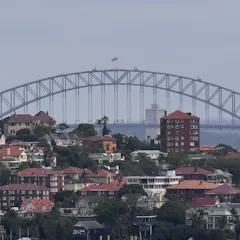
Data on housing supply in Australia’s capital shows that while it’s increasing in areas with lots of jobs, house prices are too high for those who might want to move for work.
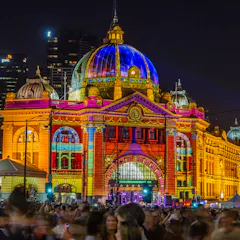
Melbourne may be the self-proclaimed music capital of Australia, but industry data suggests Sydney may have the upper hand. Meanwhile the UN recognises Adelaide as the country’s only city of music.
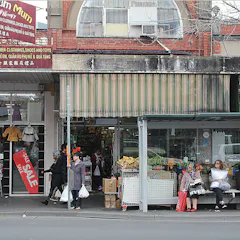
Must the aggressive, homogeneous global pattern of development take its course in Melbourne’s long-standing multicultural suburb of Footscray?

Not only has income inequality in Australia grown over the past two decades, rich and poor are also more segregated in terms of where they live in the big cities.

Our big cities increase incomes faster than population growth, but most residents miss out on the extra income growth. Creating multiple centres of activity may help make bigger better for everyone.

This universal symbol of love has proven remarkably divisive.

Some say homelessness creates squalor in our cities. But Hosier Lane — the most Instagrammed spot in Melbourne — thrives partly due to homeless street artists.
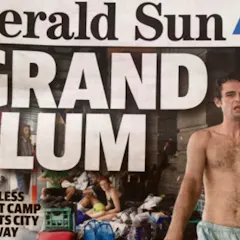
Bans are ineffective when used against populations that have nowhere else to go. Importantly, research shows that punitive approaches to the homeless cost more than supported housing strategies.

The Melbourne suburb of Richmond is prime inner-city real estate, but the community is paying a price for redevelopment that jars with the existing neighbourhood.
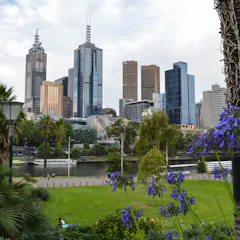
The increasing global focus on essential services and public space as a key combination for successful city-making is relevant to fast-growing Australian cities too.

Australia’s city foodbowls are an important part of the nation’s food supply, but they’re under increasing pressure from growing populations.
Melbourne ranks as the World’s Most Liveable City. But does that tell us what people really love? Lovability is a new approach to city metrics.
Travelling to work can require as much water as you use at home.
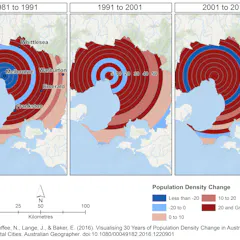
Many factors have influenced population density change in Australian cities over the past 30 years. Melbourne has led the way in inner-city rebirth as a way to help manage future growth.
If the sharing economy is here to stay, planners and designers must respond with imagination to spread the positive effects of the tourism economy for the benefit of residents as well as tourists.
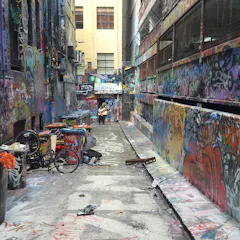
Businesses have traded on graffiti and the air of edginess that draws visitors to Melbourne’s laneways. But they draw the line at sharing space with the homeless, whose right to the city is denied.

Eye-tracking technology helps us understand how people interact with their environment. This can improve policy and design, but can also be a tool for surveillance and control.
Top contributors
-

Research associate, The University of Melbourne
-
Professor, Director of Research, Nursing and Midwifery, Monash University
-
Senior Research Fellow, Healthy Liveable Cities Group, Centre for Urban Research, RMIT University
-
Professor of Biostatistics and Epidemiology, Adelaide University
-
Professor of Urban Planning, The University of Melbourne
-
Professor, Director Australian Urban Observatory, Centre for Urban Research, RMIT University
-
Associate Principal Research Fellow, Burnet Institute
-
Senior Lecturer in Urbanism, University of Sydney
-
Housing Policy Researcher, Expert Advisor, Housing Assessment Resource Tools and Adjunct Professor, L’Université d’Ottawa/University of Ottawa
-
Chair in Epidemiology, Deakin University
-
Adjunct professor, School of Media and Communications, RMIT University
-
Associate Professor in Food Systems, The University of Melbourne
-
Senior Lecturer in Journalism, Monash University
-
Professor of Nursing and Health Services Research, University of Newcastle
-
Professor of International Planning, Centre for Urban Research, RMIT University