
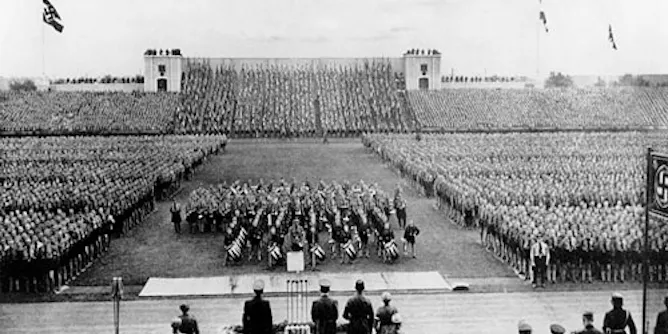
Imagine cities competed to eliminate hunger, poverty, unemployment, crime and greenhouse emissions, and to offer housing and transport for all. Don’t scoff – urban planning was once an Olympic event.
Articles on Melbourne
Displaying 221 - 240 of 270 articles
It’s a project that creates benefits for Melbourne’s western suburbs and the state as a whole. But the inner-city elite don’t like it and recent experience suggests their opinion holds sway.
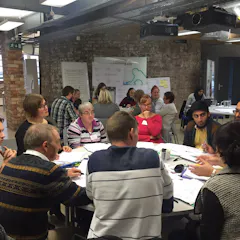
A citizens’ jury has been working to refresh the Future Melbourne strategy. It’s part of a broader shift from government decision-making for communities to decision-making with communities.

Bigger cities increase wages, output and innovation, but also problems of congestion and pollution. Congestion charges can minimise these problems by dramatically improving traffic flows.
With four weeks to go there is still much uncertainty in this election campaign. But, so far, the Greens would be pleased with their performance.

Feeding Melbourne generates over 900,000 tonnes of edible food waste every year, enough to feed more than 2 million people.
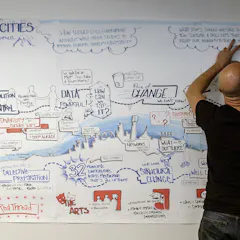
The Resilient Melbourne Strategy, adopted this month, marks a shift towards “whole-of-city” thinking.
Australia’s Smart Cities Plan largely conveys a limited role for people: they live, work and consume. This neglects the rich body of work calling for better human engagement in smart cities.

One person’s high density may be another’s sprawl; the same tall building may be experienced as oppressive or exhilarating; a “good crowd” for one can be “overcrowded” for another.

Victoria’s volcanic plains offer fertile ground for grasslands teeming with wildflowers. But that same fertility has also made the plains a tempting target for grazers and growers, and developers too.
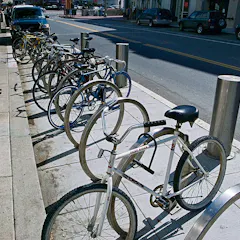
Pro-bike policies can boost local business. In one Melbourne case study, the average hourly retail spending from six bikes was $97.20 compared to $27 from one car occupying an equivalent space.
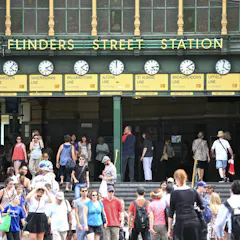
Governance of metropolitan Melbourne is fragmented among 31 city councils. All levels of government need to work towards creating a metropolitan authority to meet the challenges of a growing city.
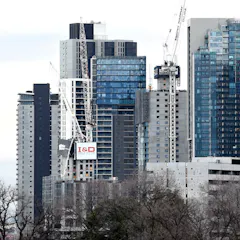
Some common misapprehensions remain about who needs affordable housing and how those needs might be met.
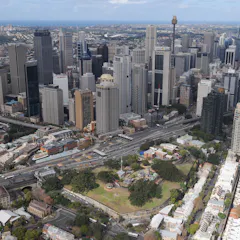
We need to move away from thinking about the skyscraper as an “icon”. Instead, we should be asking how the tall building – which will always “stand out” – can also “fit in” to cities.

Richard Lowenstein’s 1986 film Dogs in Space was a punk circus/social document that alienated many. But on the film’s 30th anniversary, it seems the world has caught up with it and a new audience of fans has emerged.
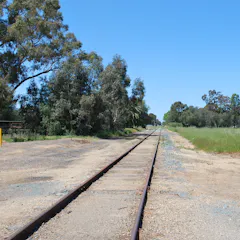
A fast rail link between Sydney and Melbourne was first proposed in 1984. So why haven’t we done it yet?

If smart cities run on big data and algorithms that channel only ‘relevant’ information and opinions to us, how do we maintain the diversity of ideas and possibilities that drives truly smart cities?

An experiment providing interactive games for orang-utans is showing the potential for digital technology to enrich the lives of zoo animals.

Despite its long idle, Melbourne’s desalination plant plays a vital role in providing water in a drying climate.
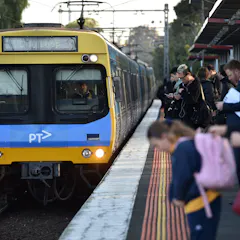
Where you live affects your health and life expectancy. This makes it possible to map health outcomes against train stations, so that you can readily see the inequalities across cities like Melbourne.
Top contributors
-

Research associate, The University of Melbourne
-
Professor, Director of Research, Nursing and Midwifery, Monash University
-
Senior Research Fellow, Healthy Liveable Cities Group, Centre for Urban Research, RMIT University
-
Professor of Biostatistics and Epidemiology, Adelaide University
-
Professor of Urban Planning, The University of Melbourne
-
Professor, Director Australian Urban Observatory, Centre for Urban Research, RMIT University
-
Associate Principal Research Fellow, Burnet Institute
-
Senior Lecturer in Urbanism, University of Sydney
-
Housing Policy Researcher, Expert Advisor, Housing Assessment Resource Tools and Adjunct Professor, L’Université d’Ottawa/University of Ottawa
-
Chair in Epidemiology, Deakin University
-
Adjunct professor, School of Media and Communications, RMIT University
-
Associate Professor in Food Systems, The University of Melbourne
-
Senior Lecturer in Journalism, Monash University
-
Professor of Nursing and Health Services Research, University of Newcastle
-
Professor of International Planning, Centre for Urban Research, RMIT University