

The Flinders Street incident, in which a car was driven into pedestrians on a busy Melbourne street, underscores the need for new ways to design cities to protect pedestrians from vehicle attacks.
Articles on Melbourne
Displaying 181 - 200 of 270 articles
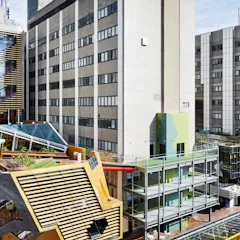
European ideas of the campus as a place apart shaped Australia’s “sandstone” universities. Now universities are adopting urban regeneration strategies, bringing the city to the campus and vice versa.

With an ever-increasing cost to extract dwindling raw materials, it’s time to look at cities as urban mines. We’re developing the tools to do that.
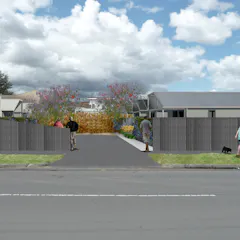
An innovative collaboration between government, a non-profit group and philanthropists has found a way to provide urgently needed housing on land that would otherwise be left vacant for years.

Traditionally, new communities first get hard infrastructure – schools, hospitals, transport – and ‘soft’ social infrastructure comes later. Liveability and public health suffer as a result.

A decade after Toronto produced the first Vitals Signs report, community foundations in Melbourne and other cities are using these reports’ up-to-date data to inform their decisions.
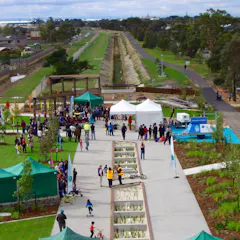
Tree plantings are making a visible difference to Melbourne’s west. It’s the result of a collaborative model of greening, one that Australian cities need to apply more widely.
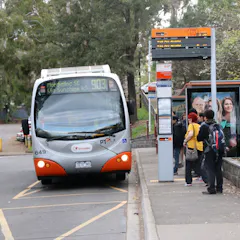
No matter whether competitive tendering or negotiation is used, operators that do not meet clear and transparent service benchmarks should be shown the door.

There is more to bike-share schemes than first meets the eye. As they grow in global popularity, the economic models behind them become increasingly diversified.
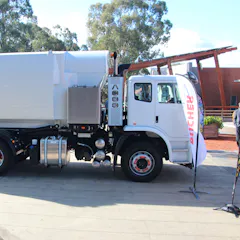
A local council goes for hydrogen. A state government goes for lithium and mirrors. They are taking punts on technology. What are the risks?
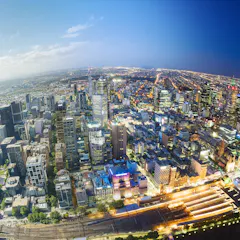
The neediest suburbs get a much poorer deal in Sydney than in Melbourne. A new study provides a suburb-by-suburb breakdown of state investment, including what facilities and services have been funded.
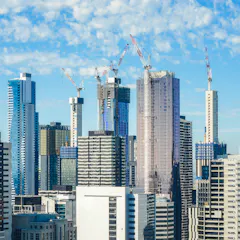
Melbourne has seen tens of thousands of new apartments constructed over recent years, and apartment brands are flourishing. We can see striking typographic similarities with another economic frenzy: the 1870s cattle boom.
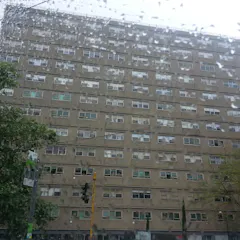
Even where communities are mixed, many inner-city families go to extraordinary financial and geographic lengths to ensure their children do not go to school with children from ‘the flats’.
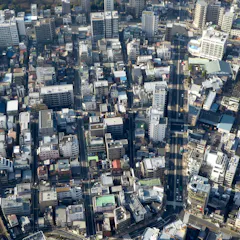
Tokyo has experienced extraordinary population growth but is among the world’s most liveable cities. Just how has it managed the pressures of growth?

From Cate Blanchett to David Williamson, some of Australia’s most well known theatre artists have performed at La Mama, which celebrates its 50th birthday this year.
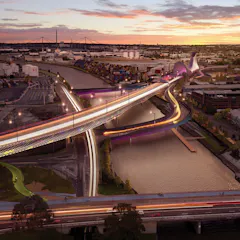
Melbourne’s proposed road project relies on assumptions that inflate estimates of the traffic the new link will carry – but other choices about the future of transport are open to us.
Census data shows there is income inequality between, but also within, regions of Australia.
A rail link is a big step towards transforming transport access and land use in ways that will enable a much bigger city to remain liveable. And Melbourne can learn from Sydney about this.

What we buy has defined who we are since the Gold Rush. In the 1850s and 1860s, people communicated their social status by buying stuff - dinner sets, junk jewellery - and throwing their old things away.

Why can’t the state fund an ongoing program of upgrading, replacing and building public housing? On the evidence to date, private developers aren’t doing a better job of it.
Top contributors
-

Research associate, The University of Melbourne
-
Professor, Director of Research, Nursing and Midwifery, Monash University
-
Senior Research Fellow, Healthy Liveable Cities Group, Centre for Urban Research, RMIT University
-
Professor of Biostatistics and Epidemiology, Adelaide University
-
Professor of Urban Planning, The University of Melbourne
-
Professor, Director Australian Urban Observatory, Centre for Urban Research, RMIT University
-
Associate Principal Research Fellow, Burnet Institute
-
Senior Lecturer in Urbanism, University of Sydney
-
Housing Policy Researcher, Expert Advisor, Housing Assessment Resource Tools and Adjunct Professor, L’Université d’Ottawa/University of Ottawa
-
Chair in Epidemiology, Deakin University
-
Adjunct professor, School of Media and Communications, RMIT University
-
Associate Professor in Food Systems, The University of Melbourne
-
Senior Lecturer in Journalism, Monash University
-
Professor of Nursing and Health Services Research, University of Newcastle
-
Professor of International Planning, Centre for Urban Research, RMIT University