

The short answer: It’s complicated – and depends, in part, where you live.
Articles on Medical research
Displaying 41 - 60 of 243 articles

The lessons students learn from dissecting donor bodies go beyond anatomy – and they try to pay that gift forward.

After decades of effort to reduce discrimination in the workplace, a cultural change may be happening that will enable people to move past their unconscious biases.
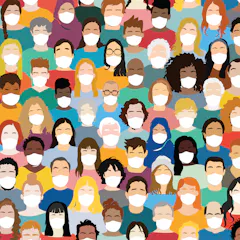
Medicine works better when the treatments are tailored to fit each individual person’s biology and history. A first step is increasing diversity in clinical trials, but the end goal is precision medicine.
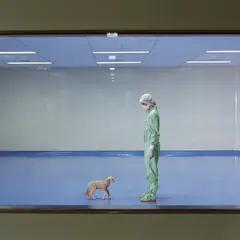
Guidelines and regulations weigh the medical and health benefits of animal research with researchers’ ability to ensure humane care of their subjects from start to finish.

Growing cells we can use to produce blood is key to life-saving therapies after cancer treatment – this device has taken us a step closer.

A new screening tool to help study reviewers identify what’s fake or shoddy in research may be on the horizon. And everyday people can apply some of the same critical analysis tools.

The first thing Australian medical research needs is more money. The second thing is making funding allocation less of a lottery.

The key to supporting science innovation is funding and shaping it at its earliest stages, while innovative ventures are still housed within universities — and even before the ventures are founded.

Authors writing for Nature journals will also need to separate sex and gender data, so it can’t just be lumped in with other results.

The heart used in the first pig-human transplant was infected with a pig virus. This reveals that using other species as organ donors may not provide a solution for organ shortages.

Genes and environments almost always combine to influence our risk of diseases. Research in twins has helped us understand how.
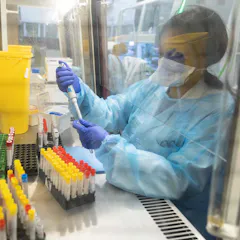
Careful lab work will complement public health data as researchers worldwide focus on omicron, asking questions about contagiousness, severity of disease and whether vaccines hold up against it.

Emotive claims, like COVID vaccination being unethical or coercive, are more likely to be shared on social media. But we can fight back.

Our knowledge of the human body, which is mostly inferred from what is observed in males, may not always hold true for females.

Nigeria’s academic community is mourning the death of virology professor and leading researcher, David Olufemi Olaleye.

More funding is needed to galvanise
Nigeria’s health system as medical research is not well funded.

Discovery of a new antibiotic compound from a Nigerian environment is good news for researchers in this field.
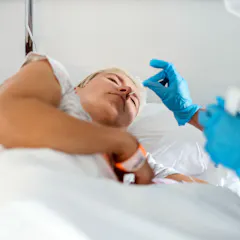
How investigation into long COVID will help us create treatments.

I was motivated to improve the outcome for women with ovarian cancer by my experience as a junior doctor in London in 1985. But 36 years on, the results aren’t what we’d hoped.
Top contributors
-

Chief Executive, CSIRO
-
Emeritus Robert Reford Professor and Professor of Medicine, McGill University
-
Visiting Professor UNSW, UNSW
-
Senior Lecturer in Ethics and Professionalism, Adelaide University
-
Professor of Health Economics, Duke-NUS Medical School
-
Associate Professor, Public Health Ethics, School of Population Health, UNSW
-
Chancellor, Monash University
-
Secretary-General, International Human Frontier Science Program Organisation; Emeritus Professor, Monash University, Monash University
-
Professor of Clinical Neuropsychology, University of Cambridge
-
Principal Research Fellow, Australian Research Centre in Sex, Health and Society, La Trobe University
-
Professor and Chair, Department of Immunology, Monash University
-
Senior Research Fellow; Rheumatology Research Group, Centre for Inflammatory Diseases, Monash University
-
Professor of Statistics, Queensland University of Technology
-
Geneticist and Group Leader, The John Curtin School of Medical Research, Australian National University
-
Associate Professor, Epidemiology, Deakin University