
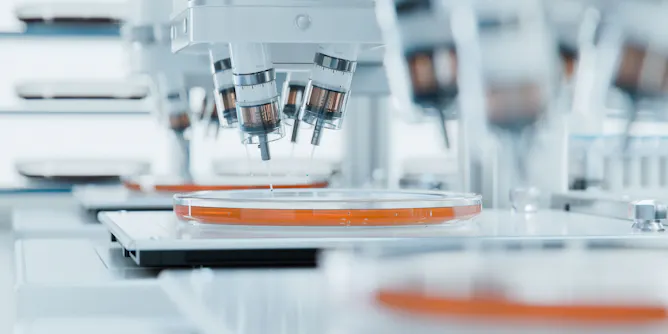
Custom implants and grafts made with a patient’s own cells can greatly reduce the risk of rejection.
Articles on Medical research
Displaying 21 - 40 of 242 articles
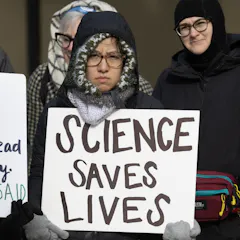
The majority of the 23 states disproportionately affected by the cuts are red states.

Half of Australians who visit their GP for knee pain will get an X-ray. But new research shows this route of diagnosis may do more harm than good.

These three examples of statistical mistakes have had major consequences for our health and shopping habits.

You might have heard that eating too many eggs will cause high cholesterol levels, leading to poor health. But what does the latest science say?

Understanding the number and origin of animals entering a country is important to control the health and ecological problems imported wildlife can bring.

Households that relied on groundwater and rainwater consumed 381–406 grams more sugary drinks per week than those with access to a piped water system.

A new study in mice suggests fasting could increase the risk of cancer. Yet previous research has said the opposite. Here’s what to make of these conflicting findings.

If only there were a simple and effort-free way to defy the ravages of time. But as is so often the case, the real-world significance of these findings falls a fair way short of the hype.

Dr Michael Mosley was one of the latest and greatest in a long line of self-experimenting pioneers.
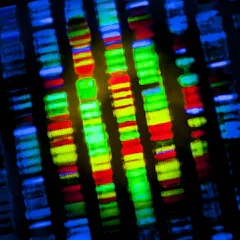
Genomic research stands to help develop new medical treatments – and we need donations of lots of data for this to work. But people don’t want data on their genes to be exploited for profit.

Ozempic generated A$21 billion of sales in 2023 alone. So how was it developed? And how are its new competitors, Mounjaro and Zepbound, different?

Montréal is home to one of the world’s largest brain banks, the Douglas-Bell Canada Brain Bank, where discoveries about different neurological and psychiatric diseases are made.
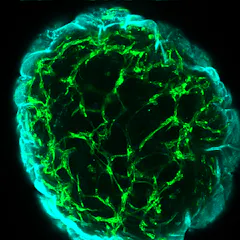
Organoids — clusters of specialized cells designed to mimic organs — enable researchers to study biological processes and the effects of drugs.

Horseshoe crabs play a unique role in medicine, but they’re also ecologically important in their home waters along the Atlantic coast. Can regulators balance the needs of humans and nature?

As well as the important ethical reasons for minimising animal use in research, the reality is sometimes animals just aren’t that good at predicting human responses.

The Medical Research Future Fund should prioritise areas where Australia has a comparative advantage.
The drug has been hailed as a ‘turning point’ in Alzheimer’s treatment. But keep in mind the trial only included participants with early or mild disease. And while it slowed decline, it’s not a cure.

This latest research provides hope for people whose symptoms are harder to treat.

The short answer: It’s complicated – and depends, in part, where you live.
Top contributors
-

Chief Executive, CSIRO
-
Emeritus Robert Reford Professor and Professor of Medicine, McGill University
-
Visiting Professor UNSW, UNSW
-
Senior Lecturer in Ethics and Professionalism, Adelaide University
-
Professor of Health Economics, Duke-NUS Medical School
-
Associate Professor, Public Health Ethics, School of Population Health, UNSW
-
Chancellor, Monash University
-
Secretary-General, International Human Frontier Science Program Organisation; Emeritus Professor, Monash University, Monash University
-
Professor of Clinical Neuropsychology, University of Cambridge
-
Principal Research Fellow, Australian Research Centre in Sex, Health and Society, La Trobe University
-
Professor and Chair, Department of Immunology, Monash University
-
Senior Research Fellow; Rheumatology Research Group, Centre for Inflammatory Diseases, Monash University
-
Professor of Statistics, Queensland University of Technology
-
Geneticist and Group Leader, The John Curtin School of Medical Research, Australian National University
-
Associate Professor, Epidemiology, Deakin University