

3D woven baskets are geometrically sophisticated, with some incredible properties that engineers can use to design materials and technology.
Articles on Materials science
Displaying 21 - 40 of 99 articles
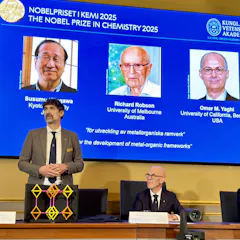
Just a gram of these tiny crystals can have an internal surface area as big as a soccer field. A materials expert explains the almost magical chemistry of MOFs.

Richard Robson was struck by an idea in 1989. Decades later, his story shows the importance of fundamental science.

7 distinct types of silk allow different spider species to build webs with various jobs – including to catch prey, tether themselves and protect their eggs.

Researchers compared the environmental footprints of several techniques used to make magnetic nanoparticles.

Mustard gas exposure is dangerous and traumatic – scientists are coming up with ways to detect its presence in the environment.

Some mushrooms are sturdier than others, but it isn’t necessarily because of their chemistry – it’s how the filaments that make them up are arranged.
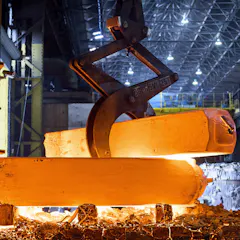
Materials science might seem very technical, but as a scientific discipline, it has led to many shifts in society over the past few centuries.
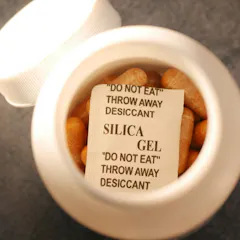
Preventing mould, decay and saving your phone after dropping it in water. What else can desiccants do?

Chemical manufacturing is an energy-intensive industry. A team of chemists is designing a technique that could power the necessary reactions with sunlight or LEDs.
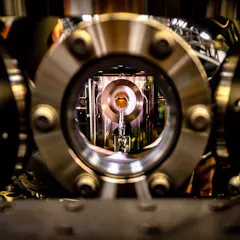
Quantum computers are getting closer and closer to being useful in the real world.

Engineers came up with a set of tests to make sure reclaimed asphalt pavement resists skidding and sliding when wet.

It’s a common hack, but it can easily fail you – here’s why.

The decades-long struggle to find a permanent place to dispose of nuclear waste will continue, probably for many years to come.
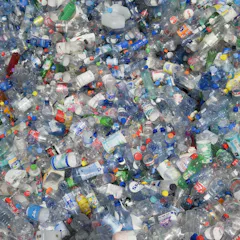
Pyrolysis breaks down plastic and generates potentially useful oil − but it’s not a silver bullet for the planet.
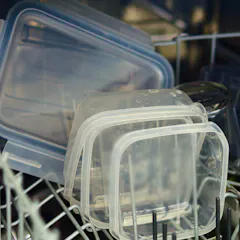
It’s a first-world problem, but it sure is annoying.

Crystals are supposed to be hard and brittle. But when we make them bendy, they help reveal the secrets of how elastic materials work.
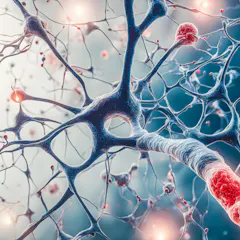
Addressing the harmful chemical processes that accompany blunt force trauma to the brain can reduce the risk of long-term disability.
Discovering new materials could drive forward areas such as green technology and advanced electronics.

Just 2 layers of materials commonly used in biomedical labs can mimic the electrical properties of human skin.
Top contributors
-

Director & Associate Professor of Sports Product Design, University of Oregon
-
Ph.D. Candidate in Chemical Engineering, University of California, Riverside
-
Professor of Advanced Technology Transitions, Arizona State University
-
Assistant Professor of Chemical and Biological Engineering, University of Colorado Boulder
-
Senior Industry Research Fellow, Future Industries Institute, Adelaide University
-
Professor of Geosciences, Franklin & Marshall College
-
Royal Academy of Engineering Chair in Emerging Technologies - Intelligent & Resilient Ocean Engineering, University of Southampton
-
ARC Laureate Professor in Chemistry, The University of Melbourne
-
Professor of Mechanical Engineering and Biology, Adjunct Professor of Physics, Georgia Institute of Technology
-
Associate Professor of Mathematics and Statistics, University of South Florida
-
Professor and Canada Research Chair in Quantum Materials Discovery, University of Winnipeg
-
Assistant Professor of Materials Science and Engineering, North Carolina State University
-
Associate Professor of Mechanical Engineering- Materials and Solid Mechanics, University of Maryland, Baltimore County
-
James R. Rice Distinguished University Professor of Engineering, University of Michigan
-
PhD Student in Solid Mechanics, Brown University