

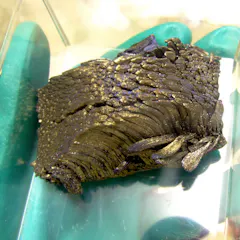
We know how to stop solid minerals converting to a liquid state mid voyage – so why does it still happen?
Articles on Materials science
Displaying 81 - 99 of 99 articles
A geologist explains the basics about these elements, which are crucial for modern electronics.

World Cup jerseys have to please players, national officials, FIFA rulemakers and – perhaps most importantly – fans who buy them to show support for their teams.

‘Bendable concrete’ is not an oxymoron. Mimicking designs found in nature, engineers are making concrete that gives under stress without shattering – an advance that could improve US infrastructure.

Less-toxic hair dye would be a great invention. But discounting the risks that come with nanoparticles could undermine other efforts to protect human health and environmental from their effects.

No longer in fanciful coats or button-down shirts with neckties, Olympians compete in uniforms specially designed and engineered for maximum performance.

Highly engineered composite materials let skis ride smoothly, carve neatly and turn quickly – for top athletes and regular consumers alike.

Advanced materials that seem like they come from Star Trek are becoming reality today.
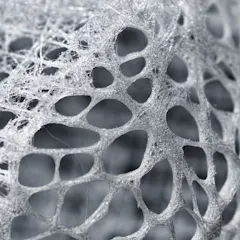
Bio-inspiration takes cues from natural structures that do certain things very effectively. One example: the strong but flexible fibers that sea sponges use to anchor themselves to the ocean floor.
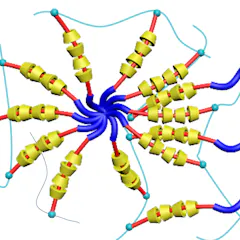
Research on molecular machines won last year’s Nobel Prize in chemistry. Now scientists have figured out a way to get these tiny molecules to join forces and collaborate on real work on a macro scale.

Coating paper with an inexpensive thin film can allow users to print and erase a physical page as many as 80 times. That reduces both the cost and the environmental effects of paper use.

How do a frog’s tongue and saliva work together to be sticky enough to lift 1.4 times the animal’s body weight? Painstaking lab work found their spit switches between two distinct phases to nab prey.

Plan to develop long-lasting supercapacitors would provide a faster, safer alternative to lithium batteries.

Tragedies involving building collapses prompt structural engineers to figure out what happened, and how to prevent it from recurring.
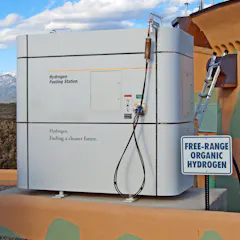
Modifying chemicals’ molecular properties can make ‘splitting’ hydrogen from water more efficient.
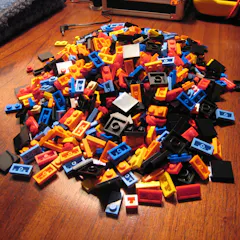
Molybdenum disulphide, hexagonal boron nitride and other materials yet to be discovered will be used to build the electronics of the future.
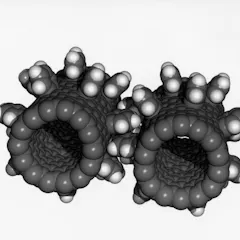
One of the great technological challenges of this century is to design novel items and then make them – and have the results match the intent.
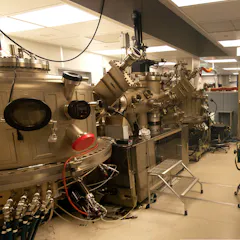
As we reach the limits of what can be done with silicon, the search for new and improved superconductors is on.
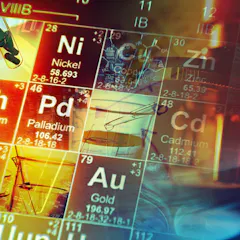
Our civilisation is built on chemistry, and the science has a bright future, with the launch of a new Decadal Plan that will steer the science into the future.
Top contributors
-

Director & Associate Professor of Sports Product Design, University of Oregon
-
Ph.D. Candidate in Chemical Engineering, University of California, Riverside
-
Professor of Advanced Technology Transitions, Arizona State University
-
Assistant Professor of Chemical and Biological Engineering, University of Colorado Boulder
-
Senior Industry Research Fellow, Future Industries Institute, Adelaide University
-
Professor of Geosciences, Franklin & Marshall College
-
Royal Academy of Engineering Chair in Emerging Technologies - Intelligent & Resilient Ocean Engineering, University of Southampton
-
ARC Laureate Professor in Chemistry, The University of Melbourne
-
Professor of Mechanical Engineering and Biology, Adjunct Professor of Physics, Georgia Institute of Technology
-
Associate Professor of Mathematics and Statistics, University of South Florida
-
Professor and Canada Research Chair in Quantum Materials Discovery, University of Winnipeg
-
Assistant Professor of Materials Science and Engineering, North Carolina State University
-
Associate Professor of Mechanical Engineering- Materials and Solid Mechanics, University of Maryland, Baltimore County
-
James R. Rice Distinguished University Professor of Engineering, University of Michigan
-
PhD Student in Solid Mechanics, Brown University