
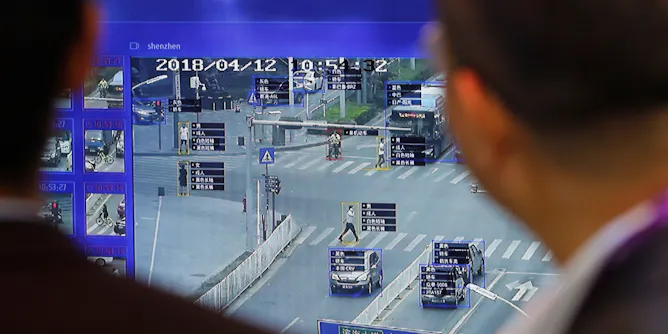
Even governments in democracies with strong traditions of rule of law find themselves tempted to abuse these new abilities.
Articles on Mass surveillance
Displaying 21 - 40 of 48 articles
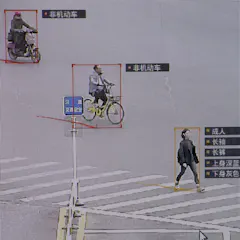
AI can help make government more efficient – but at what cost? Citizens’ lives could be better or worse, based on how the technology is used.
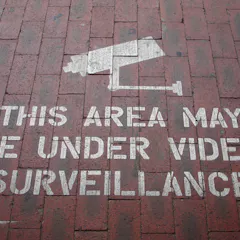
Surveillance often results in people who are homeless being the target of enforcement measures. But a new study in Cairns shows surveillance can also be used to achieve more positive social outcomes.
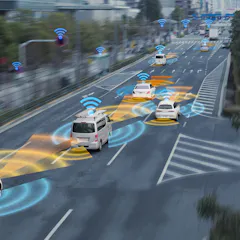
Far from setting us free, autonomous vehicles are set to enable new forms of surveillance and oppression.

The government’s Snoopers’ Charter didn’t permit blanket indiscriminate data retention, the Court of Appeal recently ruled. I strongly disagree.
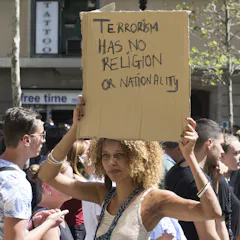
A scholar asks: If two acts of violence kill similar numbers of people, have similar effects on victims and communities, and spread fear and terror, should they not be seen as equally abhorrent?
What governments and companies think they know about us – whether or not it’s accurate – has real power over our actual lives.

UK politicians are planning very different approaches to data privacy, security and surveillance.

In the 10 years since Google Street View launched, the platform has provided ample fodder for artists, who have used it to comment on surveillance, poverty and gentrification.

Yes, Big Brother is almost definitely watching. Here, five tips for researchers on keeping you and your sources safe.
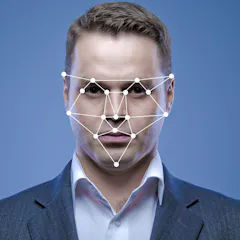
Computers are getting better at identifying people’s faces, and while that can be helpful as well as worrisome. To properly understand the legal and privacy ramifications, we need to know how facial recognition technology works.
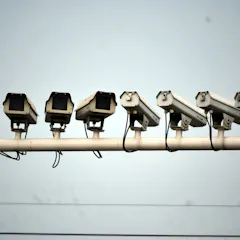
After more than 20 years and millions of cameras, UK’s first attempt to regulate CCTV cameras may be too little too late.

The public must prepare to stand up for a free press, and against online censorship and surveillance.

Global media systems cannot effectively contribute to social progress until opportunities not just for access, but also for active participation, are more widely shared.

The Snooper’s Charter has cleared parliament, but there might still be a way to stop the government collecting all our internet histories.

Capitalism has become focused on expanding the proportion of social life that is open to data collection and processing – as if the social itself has become the new target of capitalism’s expansion.

Hangzhou is hosting the G20 summit and China is anxious to present a positive picture of the country to the world, but the official attitude to non-compliant citizens isn’t helping.

Theresa May has been the longest-serving home secretary since the 19th century, but her tenure is distinctive for other reasons, too.
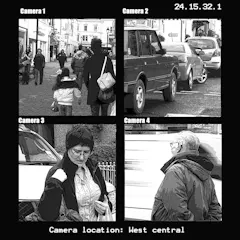
What kind of society do our so-called “Western and networked democracies” count as normal if humans are constantly objectified, monitored and profiled?
The rush to grant more surveillance powers doesn’t reflect what actually keeps us safe.
Top contributors
-

Lecturer and Teacher, Department of Politics and International Relations, Cardiff University
-
Assistant researcher, University of Sydney
-
Professor of Media, Communications and Social Theory, London School of Economics and Political Science
-
Professor and Director, Centre for Research into Information, Surveillance and Privacy, University of Stirling
-
Professor of Criminology and Head of Department for Sociology, Social Policy and Criminology, University of Southampton
-
Professor of Global Legal Studies, Birmingham Law School, University of Birmingham
-
Assistant Professor of Performance and Communication Arts, St. Lawrence University
-
Professor of Global Media and Politics, Goldsmiths, University of London
-
Lecturer, Arts, Design & Architecture, UNSW
-
Professor of Law, Wayne State University
-
Assistant Professor of Digital Communication, The University of Texas at San Antonio
-
Professor of Culture and Economy, Loughborough University
-
Assistant professor, University of Zurich
-
Fellow for Cyber-security and Internet Governance, School of International and Public Affairs, Columbia University
-
Senior Lecturer in Psychology, Manchester Metropolitan University