
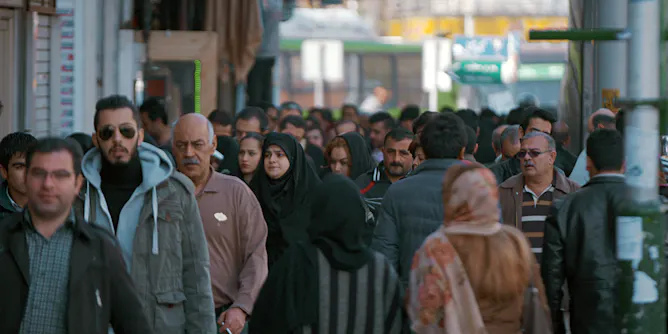
Informant culture is so embedded in everyday Iranian life that there are common Persian terms to describe it.
Articles on Digital surveillance
Displaying 1 - 20 of 28 articles

How people talk about data privacy can overcome – or reinforce – their skepticism that things can change.

Smartphones may be indispensable to modern life, but they’re also perfect tools for spying on their owners. Anyone looking to avoid being tracked – like, say, militant groups – tends to ditch them.
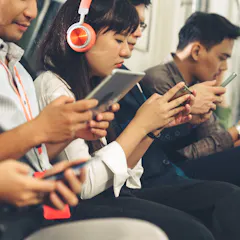
State surveillance of citizens is growing all over the world, but it is a fact of daily life in China. People are developing mental tactics to distance themselves from it.
At a time of increasing unease about the checks and balances for the use of AI, some African countries are spending more on harmful surveillance of their citizens.

The electronic monitoring and surveillance of employees is on the rise as growing numbers of people switch to hybrid and at-home work.

The vast majority of people alive today are subject to tracking through a number of overlapping and entrenched surveillance systems.

Facial recognition technology has set us on a path to mass surveillance – but it’s not too late to change course.

Proctoring software is a symptom of a bigger problem: universities see themselves as businesses and students as customers.

American women are deleting period trackers after the end of Roe v. Wade, but evading digital surveillance will be almost impossible without changes to privacy regulations.
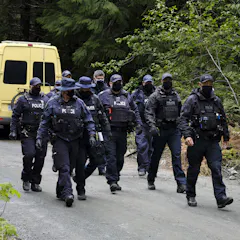
In recent years, Indigenous land defenders have lived under increasing police and state surveillance while far-right, conspiratorial movements have not.

Mass data collection and surveillance have become ubiquitous. For marginalized communities, the stakes of having their privacy violated are high.
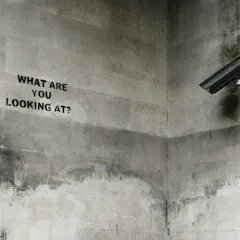
Once analysts gain access to our private data, they can use that information to influence and alter our behaviour and choices. If you’re marginalized in some way, the consequences are worse.
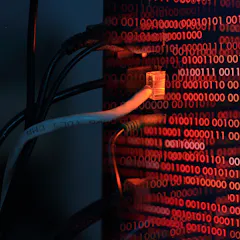
It’s reported the Pegasus spyware can capture a user’s keystrokes, intercept communications, track their device and tap into their camera and microphone.

Innovative border control technologies may be great for governments cracking down on migration — but they could further disadvantage groups that are already vulnerable.

The massive increase in internet-connected devices will create an informal surveillance network that could be used to target protestors and activists.
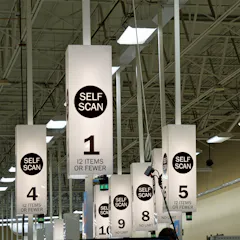
To curb opportunistic shoplifting, supermarkets want you to know you are being watched. But they’re also hoping for self-reflection.

The COVIDSafe app hasn’t come out of nowhere. The promises of ‘smart city’ data collection may be seductive, but we must always weigh up what we’re being asked to give up in return.

The Australian National University is turning to digital proctoring to replace the role of a walking invigilator. But who watches the proctor, what are the risks, and what data will be collected?
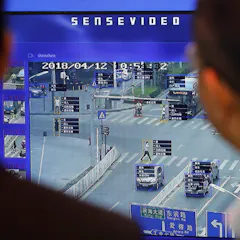
Even governments in democracies with strong traditions of rule of law find themselves tempted to abuse these new abilities.
Top contributors
-

Reader in Cyber Security, University of Kent
-
Professor of Cyber Security Practice, Edith Cowan University
-
Lecturer in Networking and Security, Glasgow Caledonian University
-
Senior Researcher in Human Rights, University of Essex
-
Professor of Law, Wayne State University
-
Assistant researcher, University of Sydney
-
Senior Lecturer, Curtin Law School, Curtin University
-
Professor, School of Journalism and Communication, Chinese University of Hong Kong
-
Associate Professor, School of Law, University of Wollongong
-
Digital Research Fellow, Institute of Development Studies
-
Responsible Technology Policy Specialist - Human Technology Institute, University of Technology Sydney
-
Policy Lead on Technology, Cybersecurity and Democracy, Leadership Lab, Toronto Metropolitan University
-
Doctoral researcher in Cyber Security, University of Oxford
-
Professor of Urban Geography, University of Sydney
-
Project Officer, Human Rights Centre, University of Essex