

The sudden proliferation of Flock cameras and abuses has led to a response from Florida lawmakers, but they have stopped short of regulating this technology and its uses.
Articles on Government surveillance
Displaying 1 - 20 of 30 articles
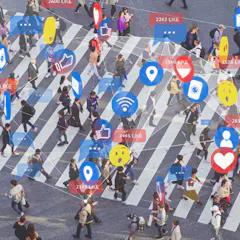
A privacy researcher breaks down how your phone reveals your location, how that data is collected and sold, and how the government gets ahold of it – by simply buying it.
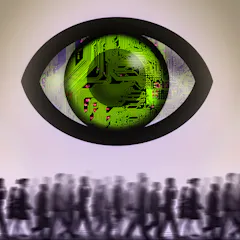
ICE’s dragnet is expanding across social media, putting everyone’s digital lives into the realm of border and immigration enforcement.
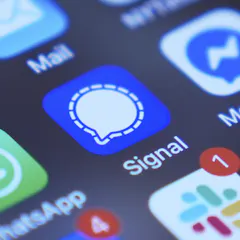
The perennial tug-of-war between government interests and individual liberties is playing out in the battle over encrypted messaging. Technology tilts the field toward individuals.

Under the guise of efficiency and fraud prevention, the federal government is breaking down data silos to collect and aggregate information on virtually everyone in the US.

State surveillance of citizens is growing all over the world, but it is a fact of daily life in China. People are developing mental tactics to distance themselves from it.

As Martin Luther King Jr. gained national prominence, the FBI launched several investigations to prove that King and his radical allies were communist sympathizers and a danger to America.

A digital ID will only work if people are allowed to keep control of their data.

Ottawa used the old War Measures Act when it wanted sweeping powers to deal with extraordinary events. Prime Minister Justin Trudeau has mused about using the newer Emergencies Act during the pandemic.

China’s social credit system has been described as a ‘dystopian nightmare straight out of Black Mirror’ but many citizens think it will help fight fraud and bring about a better society.

Surveillance software that identifies people from CCTV is eroding human rights and democracy.

ParentsNext requires places like libraries and public pools to monitor parents’ attendance at activities. This undermines their role as spaces of inclusion and support.

Even governments in democracies with strong traditions of rule of law find themselves tempted to abuse these new abilities.
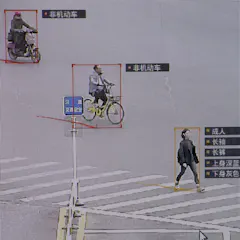
AI can help make government more efficient – but at what cost? Citizens’ lives could be better or worse, based on how the technology is used.
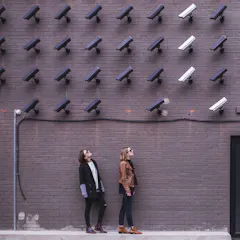
If left unchecked, invasions of privacy enabled by technology could put every human right at risk, and on a scale that would be truly terrifying.

Virtual private networks help citizens around the world evade state surveillance – how long until more governments take action?

This is not the first time Mexico’s government has been accused of spying on and harassing citizens whose activities it finds inconvenient.
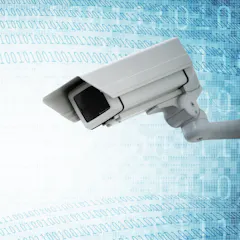
What governments and companies think they know about us – whether or not it’s accurate – has real power over our actual lives.

As searches of smartphones and other digital devices at US borders become more common, can research and computer science help protect travelers’ privacy?

The public must prepare to stand up for a free press, and against online censorship and surveillance.
Top contributors
-

Ph.D. Candidate in Geography and Assistant Director at the Center for Refugee Studies, Indiana University
-
Professor of Global Politics and Cybersecurity, UCL
-
Professor of Computer Science, Elon University
-
Lecturer in Networking and Security, Glasgow Caledonian University
-
Fellow for Cyber-security and Internet Governance, School of International and Public Affairs, Columbia University
-
Professor of Psychology, Indiana University of Pennsylvania
-
Professor of Political Science, University of Miami
-
Senior Lecturer in Communication and Media, University of Sydney
-
Senior Lecturer in Human Rights, Constitutional Law and Legal Theory, University of Wollongong
-
Senior Lecturer, School of Law, University of Surrey
-
Assistant Professor of Digital Communication, The University of Texas at San Antonio
-
Professor of Information, University of Wisconsin-Madison
-
Adjunct Assistant Professor Political Science, and Fellow at the Balsillie School of International Affairs, University of Waterloo
-
George Bemis Professor of Law and Professor of Computer Science, Harvard University
-
Executive Director, Arizona State University