
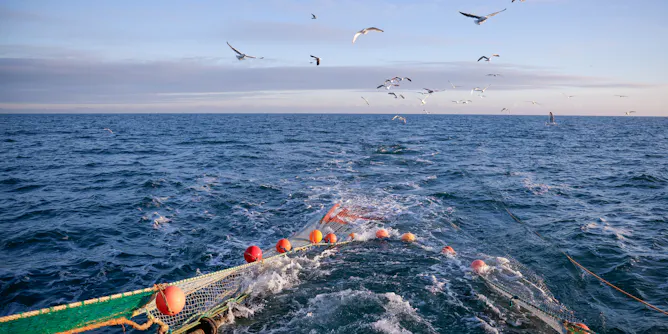
Amid renewed debate over bottom trawling, decades of marine research suggest the balance between fishing and conservation needs revisiting.
Articles on Marine science
Displaying 1 - 20 of 55 articles
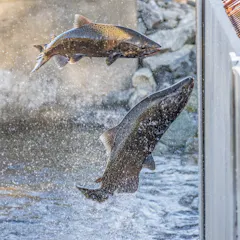
Salmon have faced a boom-bust cycle for years. Making their recovery last longer will require some big changes, including how hatcheries produce fish.
Tiny seafloor creatures play a vital role in coastal ecosystems. New research suggests microplastics may now be interfering with that balance.
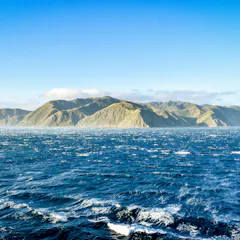
The oil shocks of the 1970s spurred marine energy innovation. Fifty years on, New Zealand still has vast untapped ocean power waiting to be harnessed.

Seashells are the skeletons of sea creatures – and they’re older than you might think.
Marine viruses attack cells, but the material that spills out helps fuels marine life around the world.
Historical maps and records from across Europe show just how much oyster beds and other marine habitats have changed over the centuries.
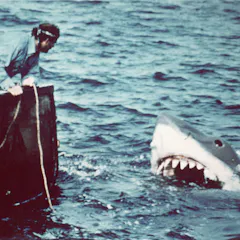
A shark expert whose own curiosity about these fascinating fish was sparked by the movie explains some of their unique features. Many discoveries came in the decades after ‘Jaws.’

Sharks easily consumed large, spiky sea urchins – sometimes in just a few gulps. See it for yourself, in our new Footage from the Field Series.
Tiny phytoplankton have an outsized influence on the entire ocean.

This knowledge is particularly important if we want to help reefs recover devastating events such as mass bleaching and cyclones.

The Titan disaster happened in international waters, in a commercially operated vessel, and with victims of different nationalities. Any details that emerge will likely be treated with sensitivity.
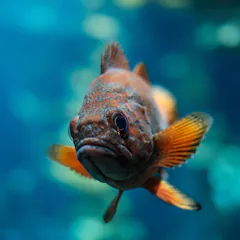
As the world gets hotter, fish are getting smaller. The future of aquatic ecosystems – and fisheries – could depend on understanding how and why it’s happening.
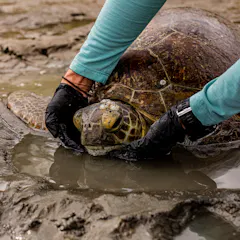
Floodwater carries dense clouds of sediment, choking the lush seagrass meadows on which these gentle grazers rely.
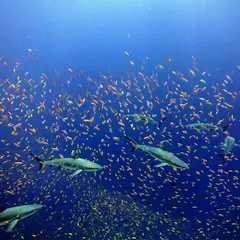
Sharks are much more severely threatened by humans than vice versa. A marine biologist explains how people can help protect sharks and why some strategies are more effective than others.
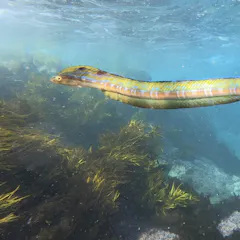
The photographs show how climate change is disrupting our marine ecosystems – sometimes in ways previously unknown to marine scientists.

Spider crabs form huge underwater piles, some as tall as a person. These fascinating crustaceans are on a risky mission – to get bigger.

The ocean is often considered a silent universe. But many recent studies highlight the importance of the soundscape for many marine species, both large and small.
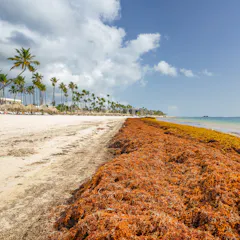
Rotting seaweed has plagued the Caribbean, Gulf of Mexico, US and West African coasts for a decade. So we’ve developed a new approach to turn what’s now rubbish into green electricity and fertiliser.

Australia’s ‘blue economy’ needs a strong basis in marine science.
Top contributors
-

Senior Curator of Marine Invertebrates, Museums Victoria Research Institute
-
Professor of Marine Science, University of Auckland, Waipapa Taumata Rau
-
Chair, National Marine Science Committee and Director, CSIRO National Collections and Marine Infrastructure, CSIRO
-
Chief Executive Officer, Australian Institute of Marine Science
-
Lecturer in Science and Society, James Cook University
-
Postdoctoral Fellow, The University of Texas at Austin
-
Associate Professor in Marine Biology, Swansea University
-
Assistant Professor of Marine Science, The University of Texas at Austin
-
Assistant Professor, School of Energy, Geoscience, Infrastructure and Society // CEO MarFishEco Fisheries Consultant Ltd, Heriot-Watt University
-
Postdoctoral research associate, University of Zurich
-
Professor, UNSW
-
Associate professor, University of Tasmania
-
Associate Professor, University of Sydney
-
Assistant Professor in Biological Oceanography, University of North Carolina Wilmington
-
Honorary Lecturer, University of Exeter