

Nowhere is safe from forever chemical pollution – not even the middle of the ocean. PFAS levels are on the rise in the world’s whales and dolphins.
Articles on Marine pollution
Displaying 1 - 20 of 52 articles
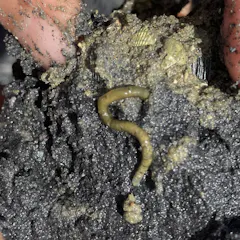
Tiny seafloor creatures play a vital role in coastal ecosystems. New research suggests microplastics may now be interfering with that balance.

The sex and age of an animal turn out to be stronger predictors than habitat for higher PFAS levels, suggesting they accumulate over a lifetime.

An exception for commercial ring-net fishing in some protected areas of the Hauraki Gulf means they don’t count towards the global goal of protecting 30% by 2030.
South Africa plans to ban plastic microbead particles that wash into the ocean and end up in the fish we consume. The ban may take two years to come into effect.
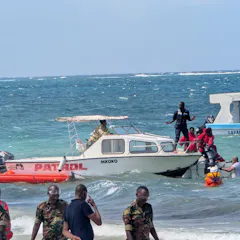
A security specialist in the Western Indian Ocean sees how countries work together to counter the threat of a massive oil spill.
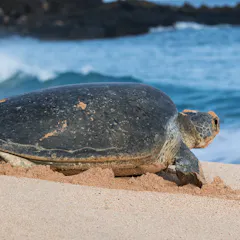
New research estimates that approximately 60 tonnes of plastic debris discarded in the ocean reside within female green turtles at any given time.
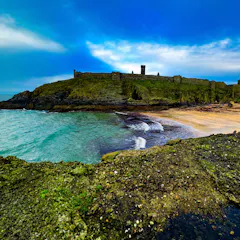
Biosphere status is ‘not a hallmark of perfection’, says island administration.
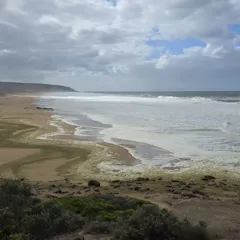
Sea foam is a health hazard. These bacterial smoothies can contain more harmful pathogens than a sewage treatment plant – and you wouldn’t go swimming in sewage.

New Zealand’s track record in domestic marine protection is woeful and its proposal to resume oil and gas licensing offshore has been criticised by Pacific island states.
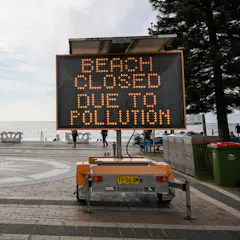
There’s a good chance the objects on Coogee beach are not, as some have suggested, tar balls. But in any case, they pose a potential risk and authorities are right to close the beach.

How much microplastic does a city produce? To find out, we looked at Brisbane’s Moreton Bay, where microplastics build up without being washed away
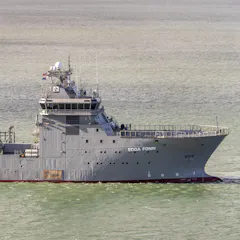
Damage from the loss of a New Zealand naval ship in Samoa can be limited if salvage and cleanup crews move fast. But the depth at which the ship now lies will be a challenge.

New research shows how marine debris from continents across the southern hemisphere threatens Antarctica’s remote coastline and unique marine ecosystems. Foreign organisms might be hitching a ride.
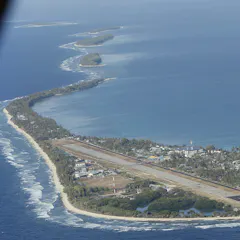
The ruling could be a legal game-changer for small island nations that are trying to hold developed nations to account for the impacts of their greenhouse gas emissions.
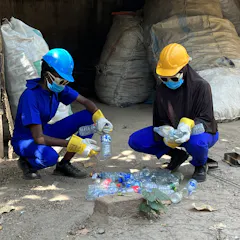
Banning single-use plastics in Nigeria is a step in the right direction. But its success will depend on provisions made for enforcement.

Researchers are finding alarming concentrations of persistent pollutants such as PFAS in Australian dolphins. These record-breaking levels are cause for concern.
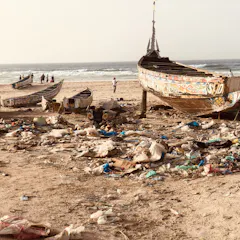
Initiating a circular economy can help coastal west African countries to address plastic pollution with a World Bank fund.
No place on Earth is free from pollution.
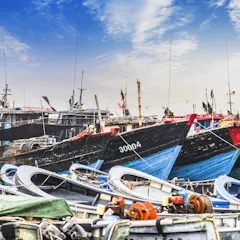
Every year, it’s estimated as many as 24,000 fishers die in fishing vessel accidents. That’s more than 10 times more lives claimed than on merchant ships, carrying cargo or passengers. Why?
Top contributors
-

Professorial Fellow, ARC Centre of Excellence for Coral Reef Studies, James Cook University
-
Lecturer in Biological Sciences, University of Wollongong
-
Associate professor, James Cook University
-
Professor in Law, University of Canterbury
-
Senior Lecturer in Ecology and Biogeography, Node & Stream Leader for ARC Centre of Excellence for Indigenous and Environmental Histories and Futures, University of Technology Sydney; Australian Museum
-
Senior Principal Research Scientist, Environment, CSIRO
-
Senior Principal Research Scientist, CSIRO
-
Assistant Professor of Ecology and Evolutionary Biology, University of Toronto
-
Lecturer in Ornithology, Charles Sturt University
-
Senior Lecturer, Ecotoxicology and Conservation Unit, Department of Zoology, Faculty of Science, University of Lagos
-
Professor of Marine Science, University of Auckland, Waipapa Taumata Rau
-
Professor of Marine Ecology, Te Kunenga ki Pūrehuroa – Massey University
-
Honorary Lecturer, University of Exeter
-
Phd Candidate, Evolution and Ecology Research Centre, UNSW
-
Founding Professor of the Minderoo-UWA Deep-Sea Research centre, The University of Western Australia