
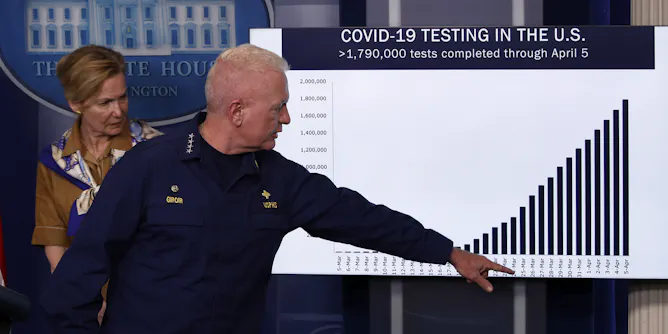
Visualizations can help you understand data better – but they can also confuse or mislead. Here, some tips on what to watch out for.
Articles on Maps
Displaying 61 - 80 of 99 articles
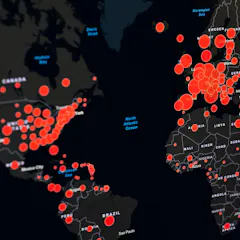
Maps shape our understanding of world events like the COVID-19 pandemic. Here’s how to make sure they don’t mislead you.

When primary school children in a disadvantaged part of Sydney were asked to map what they valued in the area, their choices were revealing and sometimes surprising.
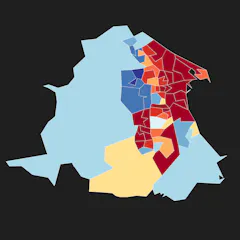
When mapping deprivation, using traditional boundaries can distort the data and distract readers from important information.

Despite many attempts, the Kurds have never won and kept their own nation – though, after World War I, they came close.
Take a look at the first high-resolution map of the US food supply chain.
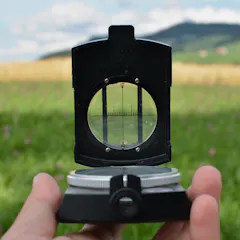
Recently, magnetic compasses at Greenwich pointed directly at true north for the first time in 360 years. This is currently happening in Western Australia too. But what does it mean?
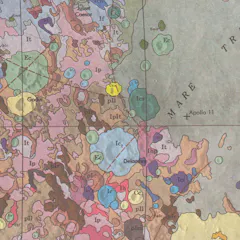
We have the Apollo missions to thank for a lot of our geological knowledge about the moon.
Maps that divide the world into ‘no-go’ and ‘safe’ zones has created a new politics of danger.
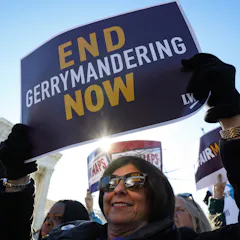
The US public is more aware than ever of partisan gerrymandering, and they’re pushing local governments to make reforms.
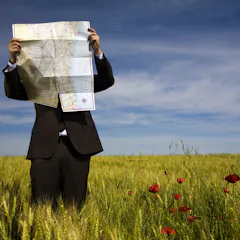
Google, Amazon and other powerful groups are renaming American cities and neighborhoods. That may make the area more appealing to newcomers – but, in many cases, residents aren’t happy.
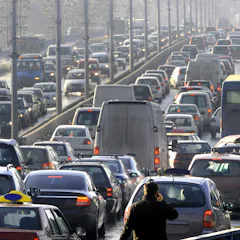
Childhood asthma cases caused by traffic pollution are on the decline. But children in some parts of the country are faring better than others.
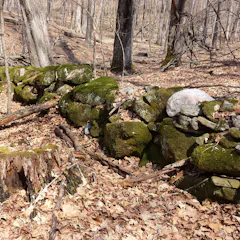
Scientific inspiration struck a geologist after many walks through the woods in New York and New England. These ruins hold the secret of where the compass pointed north when they were built centuries ago.
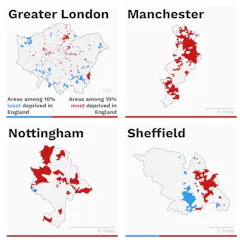
Inequality is one of the major issues of the modern age – but understanding where it happens is harder than you think.

Maps can show “the big picture” to lots and lots of people in an engaging and colourful way.
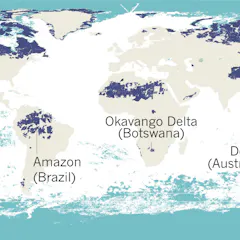
Zooming in on deforestation and other wild habitat loss can help us work out how best to protect wilderness.

If you want to really learn your way around a new place, paper maps still trump digital options.

It’s not just affecting areas in post-industrial decline – retail spaces are closing and losing value across England and Wales.
Without their devices, regular GPS users take longer to negotiate a route, travel more slowly and make larger navigational errors.

In 18 states, parents can choose to exempt their children from vaccines for nonmedical ‘philosophical’ or ‘personal belief’ reasons.
Top contributors
-

Professor of Geographic Information and Cartography, Department of Geography, UCL
-
Derek H. Alderman is a Friend of The Conversation.
Chancellor's Professor of Geography, University of Tennessee
-
Lecturer in Humanities, University of Tasmania
-
Lecturer in Digital Culture and Technology, King's College London
-
Assistant Professor Department of Geography & Sustainability, University of Tennessee
-
Reader in Cultural Geography and Communication, University of Westminster
-
Associate Professor at the ARUA Water Centre of Excellence Academic Manager, Institute for Water Research, Rhodes University
-
Professor in Urban Studies and Planning, University of Sheffield
-
Professor Emeritus of Ecosystem Science and Sustainability, Colorado State University
-
Associate Professor of Geography, University of Wisconsin-Stout Polytechnic
-
Lecturer in GIS, University of Southampton
-
Ecologist, Charles Darwin University
-
Co-founder, Wonder Labs, University of Wollongong
-
Professor of Conservation and Sustainable Livelihoods, Charles Darwin University
-
Scientific Advisor, Hungarian Academy of Sciences, Budapest