

Whatever the outcome at today’s caucus meeting, Christopher Luxon has been found wanting as a political leader. But so has Labour’s Chris Hipkins.
Articles on Maori
Displaying 1 - 20 of 98 articles

In this extract from his newly published essay collection, the author traces the imperial British origins of a quintessential Kiwi chore.

Legislation changing Treaty provisions within the law is due to be introduced before this year’s election, with legal challenges and protests likely.
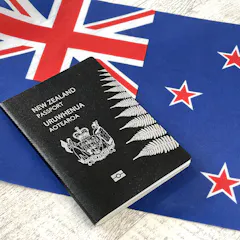
The US Supreme Court will soon rule on Donald Trump’s attempt to end automatic citizenship rights for people born in the US. It’s not a clear-cut issue in NZ either.

Debates over responsibility for past species loss generate heat but little light. Moving forward requires context, evidence and Indigenous knowledge.

NZ’s one-size-fits-all approach to managing type 2 diabetes is better in theory than practice for many patients.
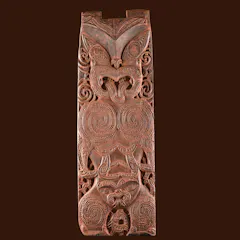
For the Te Aitanga-a-Hauiti, the Hinematioro Pou is the material presence of an ancestor.

With a major inquiry into online harms nearing its conclusion, NZ faces a pivotal decision about how boldly it wants to respond.

A new analysis of more than 10,000 first-time drink-driving cases reveals a troubling disparity.
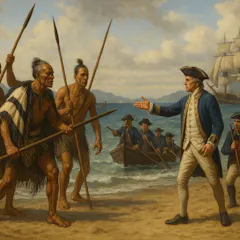
Generative AI is known to mirror sexist and racist stereotypes, but it also carries a colonial bias that is reinforcing outdated ideas about the past.

The hip-hop group is directing the world’s attention to Gaza. But it’s not the first Irish republican group to protest the oppression of another colonised peoples.

Social licence and consent are central to trust in state data systems. Changes to the way census information is gathered make this especially important for Māori.
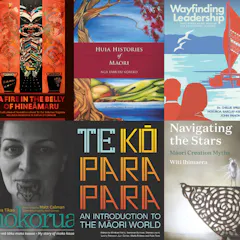
Māori have been writing about their experiences for two centuries. Here, the authors of a new book about that literary legacy pick ten of their must-read titles.
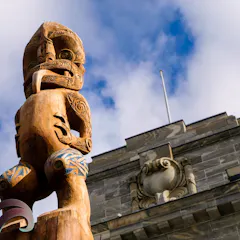
For as long as we’ve had democracies, majority rule has left some in the minority worse off. We need to be talking about what’s fair – not just what’s equal.
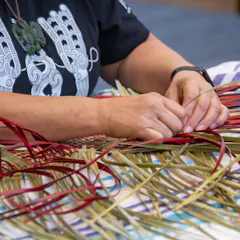
In 2024, two treaties were signed to protect the rights of Indigenous groups. But the second one, signed in November with little fanfare, is the one that could protect Māori knowledge and design.
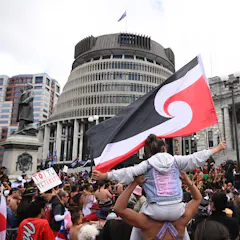
The Treaty Principles Bill pits two ideas about national identity against each other – egalitarianism and biculturalism. But are they really mutually exclusive?

The Hollywood Māui would have no chance against the Māui of Polynesia, whose biggest muscles were in his head and stomach.
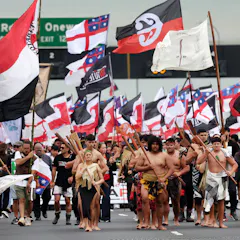
What is the ‘truth’ about colonialism and its modern relevance? This complex question is testing political consensus not only in New Zealand, but in other post-colonial societies too.
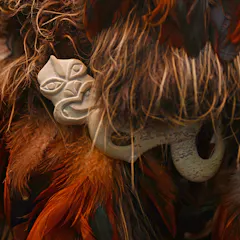
Shared values between Māori and Asian communities can reduce the cultural distance between New Zealand and the region. But the government needs to authentically embrace tikanga Māori to benefit.

Social investment policy involves intervening early to reduce the cost to the state from at-risk groups. But a purely fiscal approach to social welfare ignores the systemic causes of poverty and need.
Top contributors
-

Adjunct Professor, Stout Research Centre, Victoria University of Wellington and Auckland University of Technology, Professor of Political Science, Charles Sturt University
-
Professor of Law, University of Waikato
-
Professor of History, University of Otago
-
Senior Lecturer in Māori Language Revitalisation, Auckland University of Technology
-
Associate Professor in Law, Auckland University of Technology
-
Associate Professor, School of Health Sciences, University of Canterbury
-
Senior Researcher in Maori Studies, Te Kunenga ki Pūrehuroa – Massey University
-
Senior Lecturer and Programme Director - Comparative Tribal Constitutionalism Research Programme, The University of Melbourne
-
Professor of Race Relations, Health and Wellbeing, Te Kunenga ki Pūrehuroa – Massey University
-
Professor of Law, University of Waikato
-
Professor of Politics and Policy, University of Auckland, Waipapa Taumata Rau
-
Professor of Political Science, Te Herenga Waka — Victoria University of Wellington
-
Lecturer in Social Sciences, University of Auckland, Waipapa Taumata Rau
-
Lecturer in Māori Studies, Te Herenga Waka — Victoria University of Wellington
-
Associate Professor of Politics, Te Herenga Waka — Victoria University of Wellington