

The Turing test, first proposed in 1950 by Alan Turing, was framed as a test that could supposedly tell us whether an AI system could ‘think’ like a human.
Articles on Machine learning
Displaying 101 - 120 of 367 articles

Effective implementation of existing law can protect us from the risks posed by AI algorithms.

An AI model shows that building collapses in Lagos are location specific, and soil testing can help to check them.

AI poses a variety of ethical conundrums, but the NASA teams working on Mars rovers exemplify an ethic of care and human-robot teamwork that could act as a blueprint for AI’s future.
People can trust each other because they understand how the human mind works, can predict people’s behavior, and assume that most people have a moral sense. None of these things are true of AI.

The science of human consciousness offers new ways of gauging machine minds – and suggests there’s no obvious reason computers can’t develop awareness.
A new machine learning model can pinpoint anomalies in sports results – whether from match fixing, strategic losses or poor player performance. It could be a useful tool in the fight against cheating.

The seeds of the current commotion over AI were laid years ago.
Fraud was up 25% in the UK in 2021/22.

Air quality forecasting is getting better, thanks in part to AI. That’s good, given the health impact of air pollution. An environmental engineer explains how systems warn of incoming smog or smoke.
Giving AI any degree of executive control could be dangerous for humans.

To be useful in high-stakes situations, AI needs to understand cause and effect – and the limits of its knowledge.
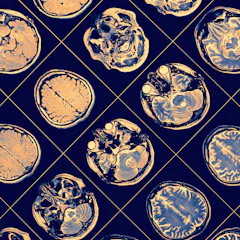
A machine learning algorithm was able to accurately predict those with preclinical Alzheimer’s disease based on their gut microbe composition.

Machine learning can spot patterns in patient data and help detect hepatitis B earlier, which could save lives.

Artificial intelligence looks like a political campaign manager’s dream because it could tune its persuasion efforts to millions of people individually – but it could be a nightmare for democracy.

Our new study demonstrates the enormous potential that machine learning has to help identify people with AS

Quantum machine learning models could help us create AI systems that are almost impenetrable by hackers. But in the hands of hackers, the same technology could wreak havoc.

Generative AIs may make up information they serve you, meaning they may potentially spread science misinformation. Here’s how to check the accuracy of what you read in an AI-enhanced media landscape.
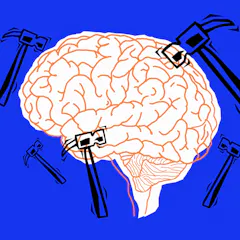
Pain has long been subjectively measured, leading to frustrations for patients and doctors alike. Identifying neural biomarkers of pain could improve diagnosis and lead to better treatments of chronic pain conditions.

Metaphorical black boxes shield the inner workings of AIs, which protect software developers’ intellectual property. They also make it hard to understand how the AIs work – and why things go wrong.
Top contributors
-

Senior Research Fellow in AI Accountability, Queensland University of Technology
-
Professor of Statistics and Professor of EECS, University of Michigan
-
Professor of Information Systems, Michigan State University
-
Professor in Robotics, Queensland University of Technology
-
Professor of Chemistry, Connecticut College
-
Professor of Artificial Intelligence, University of Bath
-
Research Assistant Professor of Industrial & Systems Engineering, University of Southern California
-
Professor of AI and Behavioral Data Science, University of Technology Sydney, University of Technology Sydney
-
Head of the Marketing Innovation and Distribution Program at EMLV, Pôle Léonard de Vinci
-
Professor of Computer Science, Queen Mary University of London
-
Professor of Marketing and Consumer Behaviour, Queensland University of Technology
-
Assistant Professor of Integrative Biology & Computer Science and Engineering, Michigan State University
-
Associate Professor of Law and Analytics, Georgia State University
-
Adjunct Senior Lecturer, Applied Ethics and CyberSecurity, Griffith University
-
Professor of AI, Research Group Leader, UNSW