
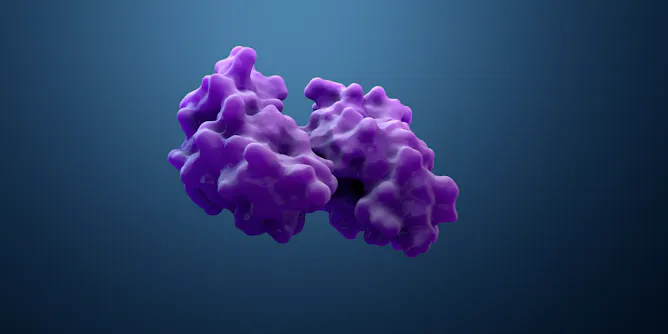
Enzymes significantly speed up the chemical reactions that keep you alive. Researchers are using AI to create new ones to tackle modern challenges.
Articles on Machine learning
Displaying 41 - 60 of 367 articles
Having AI models say how confident they are in their answers could help minimize inaccurate responses. Just don’t be overconfident about their confidence scores.
AI systems reflect human values. However, the human values embedded in AI are skewed to the utilitarian and away from the greater good.

Weather and climate models are both governed by the same physical processes. But that’s where most of the similarities end.
More efficient AI models may make research easier – and raise questions about the value of investments in huge datacentres.
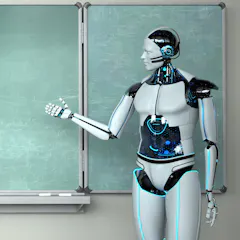
AI’s potential needs to be explored through experimentation. But this works best if managed under controlled environments.
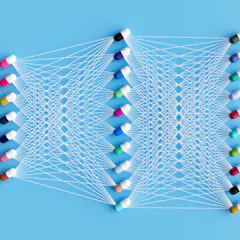
Researchers have applied AI to every step of the drug development process. But this might not be enough to design safe and effective drugs.

A narrower, more personalized ‘normal range’ could help doctors better diagnose and treat disease in individual patients.
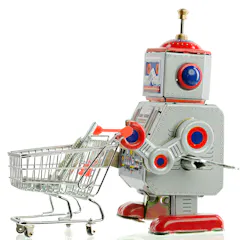
AI shopping agents are coming. They could hunt for deals, find the right items and even make purchases – if you trust them to ‘get’ you, protect your privacy and not coax you into buying too much.

Machine learning systems may make weather forecasts faster and cheaper – but climate projections still remain beyond their grasp.

AI systems can appear to be black boxes – often, even experts don’t know how systems reach their conclusions. The nascent field of “explainable AI” aims to address this problem.

A region’s climate is defined over periods of 30 years. In a world affected by global warming, we need new tools to improve these definitions.
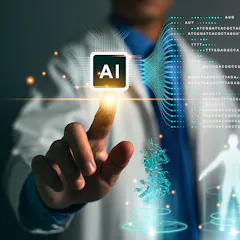
We’ve only just scratched the surface of what AI can achieve in science.
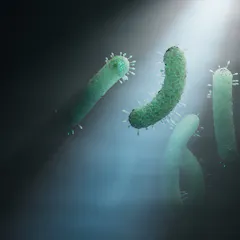
By analyzing the resistance genes and proteins of E. coli, researchers can optimize treatments to address both current and future antimicrobial resistance.
AI promises to accelerate scientific discovery, but if scientists aren’t careful public trust may be left behind.

Schistosomiasis is a neglected tropical disease that triggers specific immune responses in the body. Identifying those hidden immune signatures can help improve detection and treatment.
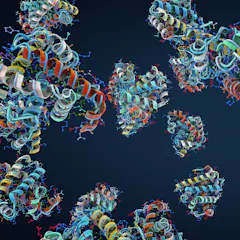
The prize honors innovation at Google DeepMind and in academia. Three researchers share the award for using machine learning to predict proteins’ 3D shapes and design the molecules from scratch.
Two researchers whose work has led to the AI revolution won the 2024 Nobel Prize in physics. A materials physicist explains statistical mechanics, the physics field behind their discoveries.

The Nobel Prize shows that the field of artificial neural networks – and the deep learning AI revolution the technology unleashed – owe as much to physics as biology and computer science.
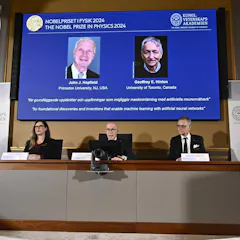
John Hopfield and Geoffrey Hinton, the 2024 Physics Nobel laureates, developed computer systems that can memorise and learn from patterns in data.
Top contributors
-

Senior Research Fellow in AI Accountability, Queensland University of Technology
-
Professor of Statistics and Professor of EECS, University of Michigan
-
Professor of Information Systems, Michigan State University
-
Professor in Robotics, Queensland University of Technology
-
Professor of Chemistry, Connecticut College
-
Professor of Artificial Intelligence, University of Bath
-
Research Assistant Professor of Industrial & Systems Engineering, University of Southern California
-
Professor of AI and Behavioral Data Science, University of Technology Sydney
-
Head of the Marketing Innovation and Distribution Program at EMLV, Pôle Léonard de Vinci
-
Professor of Computer Science, Queen Mary University of London
-
Professor of Marketing and Consumer Behaviour, Queensland University of Technology
-
Assistant Professor of Integrative Biology & Computer Science and Engineering, Michigan State University
-
Associate Professor of Law and Analytics, Georgia State University
-
Adjunct Senior Lecturer, Applied Ethics and CyberSecurity, Griffith University
-
Professor of AI, Research Group Leader, UNSW