

Text-to-image generators like DALL-E and Stable Diffusion portend a future where anyone with a computer can fake a photograph of just about anything.
Articles on Machine learning
Displaying 141 - 160 of 367 articles

The story of Meta’s latest AI model shows the pitfalls of machine learning – and a disregard for potential risks.

Artificial intelligence could help create transparency and consistency in the legal system – our model shows how.

From space to the outback, meteorite-tracking tools are building the knowledge we need to prepare for a future asteroid impact.

A type of computer chip that mimics both the skin and brain could pave the way for wearable devices that monitor and analyze health data using AI right on the body.

Predictive policing has improved in leaps and bounds and become increasingly automated thanks to big data, data mining and powerful computers.
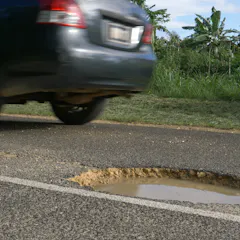
Potholes have appeared seemingly everywhere after the intense rains. They’re annoying and expensive to fix. But there may be a better way.

You need an AI and lots of data to work out whether there’s any foul play in a chess game.

AI art tools like DALL-E, Midjourney and Stable Diffusion are starting a revolution in the way art is made.

Scientists predict 56% of ‘data deficient’ species are probably at risk.

By tracking a meteorite found in Morocco back to its origin in an asteroid crater on Mars millions of years ago, scientists can learn more about how the planets formed.

Many approved drugs work on the body in ways that researchers still aren’t entirely clear about. Seeing this as an opportunity instead of a flaw may lead to better treatments for complex conditions.

A new AI tool that writes computer code on demand has programmers considering their future.
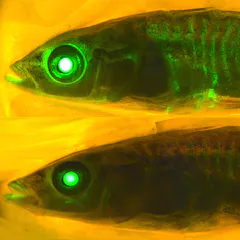
The AI AlphaFold can figure out the three-dimensional protein structure any string of amino acids will become. It has now exceeded its training by figuring out what makes some proteins glow.

A Google engineer claims one of the company’s chatbots has become sentient. Experts disagree, but the debate raises old questions about the nature of consciousness.

‘Vicootes’, ‘wa ch zod rea’ and other strings of gibberish seem to have special meanings to state-of-the-art AI models. What’s going on here?
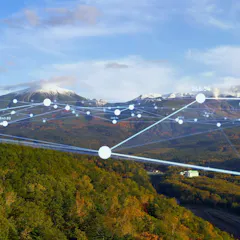
We can use AI to protect nature and human health. But first, we have to expand AI beyond being entirely human-centred.
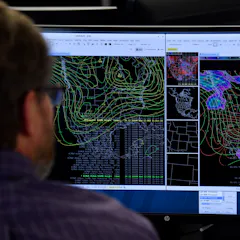
Would you trust a weather forecast made by a machine that had learned how weather systems behaved by reviewing thousands of past weather maps?

Our research on a recent Australian court case shows how experts and lawyers can overcome opaque AI technology. But regulators could make it even easier, by making AI companies document their systems.

Using machine learning, we analysed meaning and feeling in different translations of an ancient Hindu holy text.
Top contributors
-

Senior Research Fellow in AI Accountability, Queensland University of Technology
-
Professor of Statistics and Professor of EECS, University of Michigan
-
Professor of Information Systems, Michigan State University
-
Professor in Robotics, Queensland University of Technology
-
Professor of Chemistry, Connecticut College
-
Professor of Artificial Intelligence, University of Bath
-
Research Assistant Professor of Industrial & Systems Engineering, University of Southern California
-
Professor of AI and Behavioral Data Science, University of Technology Sydney
-
Head of the Marketing Innovation and Distribution Program at EMLV, Pôle Léonard de Vinci
-
Professor of Computer Science, Queen Mary University of London
-
Professor of Marketing and Consumer Behaviour, Queensland University of Technology
-
Assistant Professor of Integrative Biology & Computer Science and Engineering, Michigan State University
-
Associate Professor of Law and Analytics, Georgia State University
-
Adjunct Senior Lecturer, Applied Ethics and CyberSecurity, Griffith University
-
Professor of AI, Research Group Leader, UNSW