

People can have their own personal dialect based on their own linguistic and social experiences.
Articles on Linguistics
Displaying 81 - 100 of 457 articles
Like a lot of words used to describe women, ‘granny’ has taken on negative connotations - and it’s time to reclaim the word.

Our research found verbal imitation was rarer among autistic children.
Expressions can tell us a lot about the ways our language has developed over centuries.

The rise of corporate inclusivity might be responsible.
Laws may use complex syntax to indicate their special status, in much the same way magic spells use rhyme or archaic words.
There are many greetings that provide a unique glimpse into the culture of its speakers, reflecting different traditions and ways of acknowledging, respecting and honouring others.

Phrases like ‘climate crisis,’ ‘climate emergency’ or ‘climate justice’ might seem to escalate the urgency, but a large survey shows they don’t help and may actually hurt.

In political campaigns, certain words can sometimes land outsized blows. And in the 2024 presidential election, that word is “weird”.

Misunderstandings between autistic and neurotypical people often stem from mutual communication barriers.

You know that thing with the name? the whatsamajig? the whozeewhatzit?
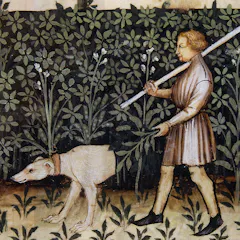
The origins of these words could tell us a lot about our ancestors and the cognitive strategies they used to name the things around them.

Research has disproven the saying ‘sticks and stones may break my bones but names will never hurt me’.
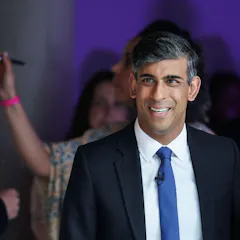
The use of ‘surrender’ calls the democratic process into question.

Humans aren’t the only animals that have names for each other − and studying animals that use names can teach researchers more about how human names evolved.
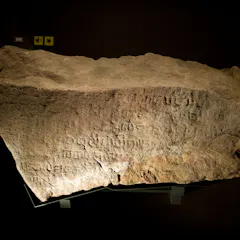
Despite its name, this sandstone slab is not a simple stone. It was once part of a monument, an ancient epigraph measuring three by three metres carrying about 50 lines of text.

Is one term less pathologising than another? Here’s what our new research found.
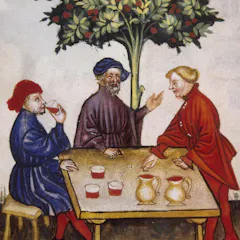
By 43AD, when southern Britain became a Roman colony under emperor Claudius, the island was populated by speakers of several Celtic languages.

Although not a true sign language, the use of sign in Dune can still teach us a lesson about the value of sign language.

Tower Hamlets’ recognition of Cockney as a “community language” celebrates the role that all English dialects play in shaping individual and community identities.
Top contributors
-

Professor of Linguistics, Monash University
-
Senior Lecturer in Linguistics, Monash University
-
Roger J. Kreuz is a Friend of The Conversation.
Associate Dean and Feinstone Interdisciplinary Research Professor, University of Memphis
-
Associate Professor in Linguistics, Macquarie University
-
Associate Professor in Sociolinguistics, University of Cambridge
-
Professor of Linguistics, University of York
-
Professor of Linguistics, University of Nevada, Reno
-
Senior Research Fellow of Linguistics, University of Colorado Boulder; Griffith University; University of New England
-
Professor of Linguistics and English, Florida International University
-
Associate Professor of Linguistics and Director of Language Lab, The University of Western Australia
-
Professor of English Language and Literature, University of Oxford
-
Francesco Perono Cacciafoco is a Friend of The Conversation.
Associate Professor in Linguistics, Xi'an Jiaotong-Liverpool University
-
Professor of Psychology, Cornell University
-
Maïa Ponsonnet is a Friend of The Conversation.
Researcher, Linguistics, Centre national de la recherche scientifique (CNRS)
-
Honorary Associate Professor in Writing, The University of Queensland