
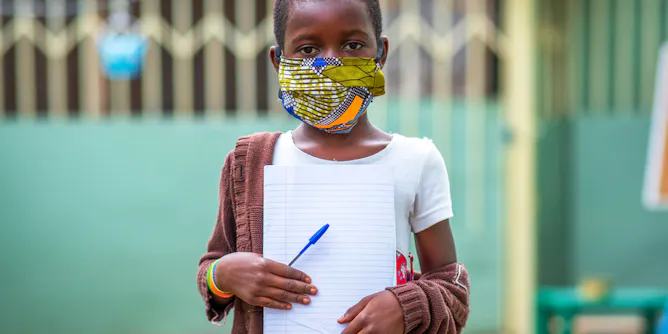
While COVID-19 has held back learning, the pandemic presents a historic opportunity to revamp education systems.
Articles on Learning
Displaying 161 - 180 of 407 articles

Recent research on Danish shows that not only is it hard for Danish children to learn their mother tongue, but adult Danes use their native language differently than speakers of other languages.

A playground is a great place for kids to exercise their bodies. But it’s also important to give kids opportunities to exercise their mind. Here’s how to do that.
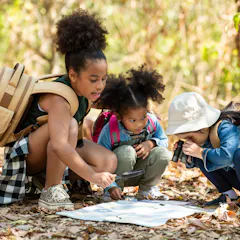
This year summer schools will have to figure out how to tend to the emotional and academic needs of students coming out of remote learning.
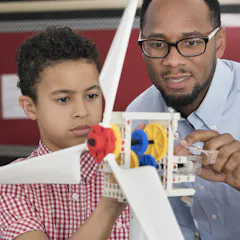
Applying cultural sensitivity in teaching STEM to Black students can help them engage in the sciences more.

A history professor describes how student-designed video games have transformed his classroom and provided a substitute for academic essays.

5 ways to use use what you know to bring new challenges within reach.

People tend to think of digital media as entertainment, so they devote less mental effort than when they’re reading a printed book.
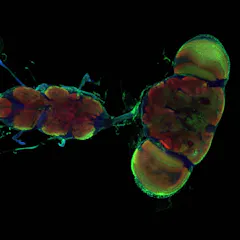
Adaptable neurons are tied to learning and memory but also to neurological disorders. By studying fruit flies, researchers found a mechanism that controls neuroplasticity.
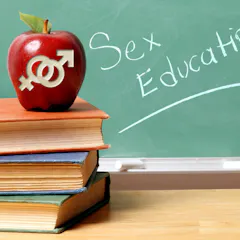
The inclusion of new topics in Ghana’s comprehensive sex education curriculum has split opinions among parents.

A lack of consistent mentorship models leads to a skills gap which affects the global competitiveness of Kenya’s students and graduates.

Napping in the afternoon can benefits both motor skills and your ability to recall facts.
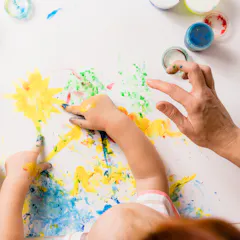
Taking part in creative activities with little ones can help bolster their communication, build their sense of self and even improve their health and wellbeing.

New research demonstrates that it is more difficult to learn something new if the information had been rewarded in the past. In fact, the higher the reward, the worse the future learning.

Receiving a pay raise will make you feel happier only if it was bigger than what you had expected. Why? Because it helps you learn.
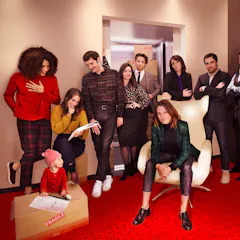
Watching a foreign film or TV show doesn’t automatically teach you the language – but there are ways to make it stick.

To concentrate best, we need to resist distractions. It can help to set some goals and check your progress as you study.

Many young people learn about the Holocaust in school, but their knowledge and understanding of the subject can be limited and based on inaccuracies and misconceptions.
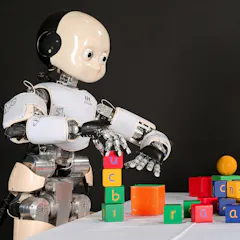
How could a software box have a subjective viewpoint of, and in, the physical world that humans inhabit?

With 52% of 15-year-olds now saying they read only if they have to, experts say a new way of teaching literacy is overdue.
Top contributors
-

Professor of Reading and Children’s Development, The Open University
-
Professor of Higher Education, Rhodes University, South Africa, Rhodes University
-
Research Scientist, African Population and Health Research Center
-
Director of the Learning, Instruction & Technology Lab and Professor of Educational Psychology, School of Education, The University of Queensland
-
Scientia Professor and Professor of Educational Psychology, UNSW
-
Deputy Director, ARC Centre of Excellence in Cognition and its Disorders, Macquarie University
-
Professor, Melbourne Graduate School of Education, The University of Melbourne
-
Professor of Early Childhood Studies, The University of Melbourne
-
Professor Emeritus, Swinburne University of Technology
-
Senior Lecturer, School of Education, Macquarie University
-
Professor of Education, Durham University
-
Associate Professor of Education, Charles Sturt University
-
Campus and Secondary Principal at the International School of Geneva's La Grande Boissière, Research Associate at the University of Geneva's department of Education and Psychology, Université de Genève, Université de Genève
-
Senior Lecturer (Adjunct), Nutritional neuroscientist, Adelaide University
-
Senior Lecturer in Education, Queensland University of Technology