
Students in an information technology unit were given a chance to learn from their mistakes to score higher marks. But only the motivated showed an improvement.
Articles on Learning
Displaying 201 - 220 of 407 articles

Could mating preferences, like females preferring males who sing complex songs, affect the evolution of learning? Insights from birds could have clues for how people learn throughout their lives.
Some animals, like rats, learn linguistic patterns better than humans can.

Play and learning are one and the same for Mbendjele children.

This is how to design schools for autistic children.
When it comes to reading, choosing the books your child reads, forcing them to read at certain times and asking them questions about their books are all big no nos.

The Ancient Greeks modelled a form of education that, in variants, has endured for centuries. But with climate change and globalisation, the world has changed, and the role of education with it.

To understand what we suspect, so far, about the way in which some people with autism may see the world, we need to examine how we use the bank of experiences we have stored in memory.

Taking everyday lessons outside can improve well-being and engagement, yet it is not as used as often as it could be.

Play video games and learn a language – a researcher explains why it might be possible.
Explicit instruction is a type of teaching model where students are shown what to do and how to do it.
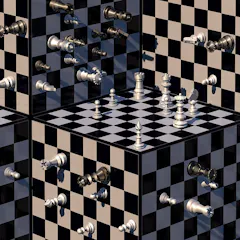
AlphaZero is a machine capable of defeating the most complex board games for the human mind, based only on its own learning experience, not on accumulated human knowledge.

Children in England are among the most tested and unhappiest in the western world.
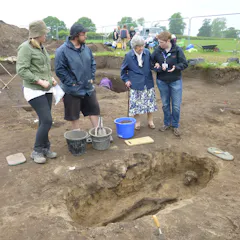
Learning is not just for young people – it can help older people lead fulfilling lives in their twilight years.

Data science is going to grow over the coming decades and requires trained graduates who can handle the work.
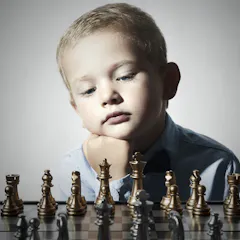
For a child to excel in a particular field, specific conditions are essential. A scholar of educational psychology explains what those conditions are.
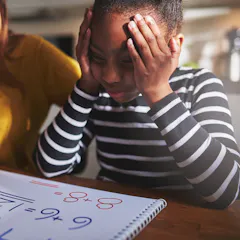
Finger counting and struggling to tell the time or use a calendar are all typical signs of dyscalculia – sometimes called ‘maths dyslexia’.
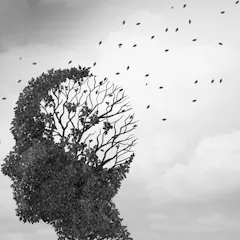
Research milestones in the study of memory may help us find solutions to memory disorders like Alzheimer’s or recovery from brain trauma.
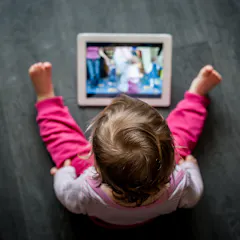
British three- and four-year-olds spend around four hours a day on screen time.
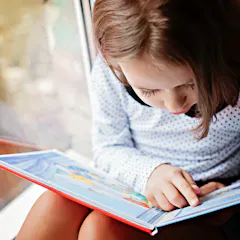
Children need the same information repeated to encode it permanently.
Top contributors
-

Professor of Reading and Children’s Development, The Open University
-
Professor of Higher Education, Rhodes University, South Africa, Rhodes University
-
Research Scientist, African Population and Health Research Center
-
Director of the Learning, Instruction & Technology Lab and Professor of Educational Psychology, School of Education, The University of Queensland
-
Scientia Professor and Professor of Educational Psychology, UNSW
-
Deputy Director, ARC Centre of Excellence in Cognition and its Disorders, Macquarie University
-
Professor, Melbourne Graduate School of Education, The University of Melbourne
-
Professor of Early Childhood Studies, The University of Melbourne
-
Professor Emeritus, Swinburne University of Technology
-
Senior Lecturer, School of Education, Macquarie University
-
Professor of Education, Durham University
-
Associate Professor of Education, Charles Sturt University
-
Campus and Secondary Principal at the International School of Geneva's La Grande Boissière, Research Associate at the University of Geneva's department of Education and Psychology, Université de Genève, Université de Genève
-
Senior Lecturer (Adjunct), Nutritional neuroscientist, Adelaide University
-
Senior Lecturer in Education, Queensland University of Technology