

Khanya College’s curriculum was quite different from the one taught at other universities of the time. Its students studied oral African literature and history alongside Western literature.
Articles on Learning
Displaying 261 - 280 of 407 articles

Digital textbooks might be less cumbersome. But a new series of studies finds that reading from screens can hamper our ability to process and retain information.

The affective domain - motivation, interest and values and their inter-relationships - forms an integral component in facilitating learners’ construction of physics knowledge.

For decades, African universities have placed greater focus on what they teach, rather than how they teach it. But the job market now demands graduates that have been taught to think, not regurgitate

Making education more like playing a game could dramatically improve learning.

University students sometimes retake courses they had previously failed. How well do they perform on their second attempt?

New research suggests otters’ learning ability could help captive animals to thrive in the wild.

We need to value compassion as well as cleverness.

They are learning from the moment they enter the world.

Going through the experience of regret can have a positive outcome.

Eye-tracking research reveals that children are likely to read new words faster and easier if they have heard the words before.

The transition from early learning parent involvement to primary school level often leads to less face time with school and teachers and more home-based support for children.

There are several ways to help children learn and be interested in maths – even the reluctant ones.
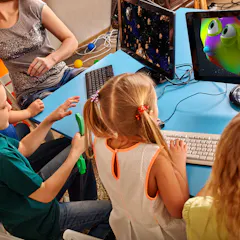
Video games have been helping kids to learn for years, here’s how.

Feel like something will be easy to remember? Your prediction may be influenced by how clearly the information was presented in the first place.
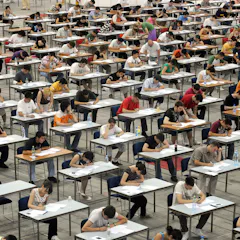
Assessment should be a part of teaching and learning at universities. It’s important because it will subvert exclusion and allow all students to take responsibility for their work.

A look at the issue of class sizes.

Competence is not a human trait. Let’s leave it for the robots.

Tinkering with the brain’s electrical field shows tantalizing promise for boosting memory, but it doesn’t always work. A new study offers one reason why.

The Victorians had some interesting solutions to the problem of telling children where our stuff comes from.
Top contributors
-

Professor of Reading and Children’s Development, The Open University
-
Professor of Higher Education, Rhodes University, South Africa, Rhodes University
-
Research Scientist, African Population and Health Research Center
-
Director of the Learning, Instruction & Technology Lab and Professor of Educational Psychology, School of Education, The University of Queensland
-
Scientia Professor and Professor of Educational Psychology, UNSW
-
Deputy Director, ARC Centre of Excellence in Cognition and its Disorders, Macquarie University
-
Professor, Melbourne Graduate School of Education, The University of Melbourne
-
Professor of Early Childhood Studies, The University of Melbourne
-
Professor Emeritus, Swinburne University of Technology
-
Senior Lecturer, School of Education, Macquarie University
-
Professor of Education, Durham University
-
Associate Professor of Education, Charles Sturt University
-
Campus and Secondary Principal at the International School of Geneva's La Grande Boissière, Research Associate at the University of Geneva's department of Education and Psychology, Université de Genève, Université de Genève
-
Senior Lecturer (Adjunct), Nutritional neuroscientist, Adelaide University
-
Senior Lecturer in Education, Queensland University of Technology