

Students gain up to 4kg in their first year at university and all the junk food on campus doesn’t help. Universities have a responsibility to make healthier foods available to students.
Articles on Junk food
Displaying 41 - 60 of 112 articles

If any other condition affected as many children and contributed to as many long-term health problems as obesity does, we would have had an action plan long ago. But it’s not too late to start.

The mixed messages around children, food and weight - not to mention sophisticated marketing - can leave parents perplexed. But there are ways to wade through it all and find healthy choices.

Food education in Australia tends to be patchy, and doesn’t fully met the present and future life needs of students and their families.

It’s not just a storm in a fruit cup – branding fuels our appetite for unhealthy foods.
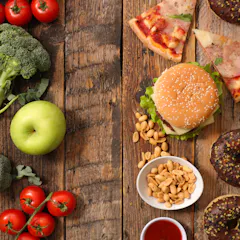
A report from the Australian Institute of Health and Welfare shows we’re eating less junk food than before, but still far too much.

The diabetes epidemic can be fought through new therapies, prevention programmes and effective junk food legislation.

Research shows eating foods with a lower glycaemic load, and more fruits and vegetables, will improve your complexion.

Social media platforms can identify children who are most interested in or vulnerable to junk food and its advertising.

France recently adopted NutriScore, a series of simple colour codes that will allow consumers to easily identify the healthiest foods. But some of the biggest food conglomerates are fighting back.

New data on soaring child obesity should not come as a surprise. The food industry spends billions marketing unhealthy foods in a global society where over-eating is seen as a character flaw.

Here’s what happened to a professor of genetic epidemiology’s ‘microbiome’ when he lived with the Hadza.

There’s an assumption that the poor eat more unhealthy fast food because it’s relatively cheap, leading some governments to try limit their access. Two researchers tested that assumption.

Junk food brands are blurring the line between advertising, entertainment and socialising.

No wonder we’re addicted to junk food. Neuroscience shows food packaging affects our enjoyment of these foods, and plays on the same brain processes as hard drug addiction.
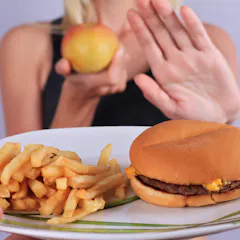
Junk food versus healthy food – why are we always blaming consumers for ‘bad’ food choices?

Research shows poorer black South Africans are disproportionately exposed to food-related advertising that promotes the consumption of fatty, unhealthy foods.

It doesn’t happen often that a multinational will blink when taken on by an individual. But a passionate campaigner’s successful crusade has shown how it can be done.

Healthy eating can still be delicious! Limit dietary blowout by going into the Christmas and holiday period with a plan.

A collaboration of Australia’s leading scientists, clinicians and health organisations announce ten priority policy actions needed for Australia to reach its health targets by the year 2025.
Top contributors
-

Professor of Public Health Policy, Deakin University
-
Senior Fellow, Faculty of Medicine, Dentistry and Health Sciences, The University of Melbourne
-
Professor of Health Promotion, Dalhousie University
-
Professor of Public Health, Deakin University
-
Director of Cancer Programs, Cancer Council NSW; PhD Candidate in Nutrition & Dietetics, University of Sydney
-
Senior Lecturer (Adjunct), Nutritional neuroscientist, Adelaide University
-
Professor of Health Psychology, University of Surrey
-
Honorary Professor, University of Wollongong
-
Professor of Genetic Epidemiology, King's College London
-
Adjunct Senior Research Fellow, Adelaide University
-
Accredited Practising Dietitian and Lecturer, Southern Cross University
-
Postdoctoral research fellow, Deakin University
-
Senior Lecturer in Environmental Sustainability, School of Life and Environmental Sciences, Faculty of Science, Engineering & Built Environment, Deakin University
-
Professor of Violence Prevention and Addiction Studies, Deakin University
-
Professor of Public Health Nutrition, University of Sydney