

Obesity remains a problem in Africa.
Articles on Junk food advertising
Displaying 1 - 20 of 49 articles

Without policy action and a coordinated global response, ultra-processed foods will continue to rise in human diets, harming health, economies. It’s time to act.

Being a sports fan has been shown to cultivate a sense of belonging. But what about all that sitting, snacking and drinking? And what does that mean for younger, health-conscious fans?

Companies are finding increasingly sophisticated ways to target children with advertising, particularly the unregulated ‘junk food’ industry.

A new report shows how ubiquitous unhealthy foods are, how aggressively they are promoted, and how hard it is to access healthy foods in places people spend time.

Children, busy parents and young people can be more easily swayed by unhealthy food ads. We found campaigns aimed at all of them.

The release of a parliamentary committee’s report on diabetes has again highlighted the need to improve Australians’ diets.

Our new study analysed the packages of around 8,000 food and drink products to understand the marketing techniques used.

This isn’t the first time a ban on junk food advertising has been floated. But there is are good reasons to support a new push.

Unlike some other countries, junk food remains inexpensive and easily accessible in Australia and is widely marketed to kids.

Our new research found some deals provided an astonishing 90% of the average recommended daily energy intake for adults.

Unhealthy foods are readily available and heavily marketed to us, especially at supermarkets.

The most effective strategy for reducing obesity will be tailored to each individual.

Despite repeated calls for an overhaul of New Zealand’s marketing regulations to protect children from exposure to ads for unhealthy products, successive governments have failed to act.

Our new study finds in Australian supermarkets, the lower the health star rating, the higher the discounts. The time is ripe for a national conversation about making discounts healthier.

If any other condition affected as many children and contributed to as many long-term health problems as obesity does, we would have had an action plan long ago. But it’s not too late to start.

Food education in Australia tends to be patchy, and doesn’t fully met the present and future life needs of students and their families.

It’s not just a storm in a fruit cup – branding fuels our appetite for unhealthy foods.
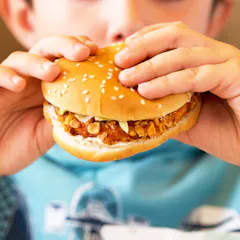
Social media platforms can identify children who are most interested in or vulnerable to junk food and its advertising.

No wonder obesity is a tough public health issue for governments to deal with. Our research has uncovered a range of barriers to tackling it, some more obvious than others.
Top contributors
-

Professor of Public Health Policy, Deakin University
-
Senior Fellow, Faculty of Medicine, Dentistry and Health Sciences, The University of Melbourne
-
Honorary Professor, University of Wollongong
-
Professor of Public Health, Deakin University
-
Director, Master of Business Administration Program (MBA); Co-Director, Better Consumption Lab, Deakin University
-
ARC Future Fellow and Sydney Horizon Fellow, School of Public Health, University of Sydney, University of Sydney
-
Director of Cancer Programs, Cancer Council NSW; PhD Candidate in Nutrition & Dietetics, University of Sydney
-
Professor of Public Health, The University of Melbourne
-
Associate Professor in Translational Medicine, University of Exeter
-
Visiting Fellow at Nossal Institute for Global Health, The University of Melbourne
-
Professor, Public Health Policy, The University of Queensland
-
Senior Lecturer, UNSW
-
Professor, Centre for Economics and Neuroscience, University of Bonn
-
Professor of Health Psychology, University of Surrey
-
Professor of Law, University of Liverpool