

Communities have been laying the groundwork for offshore energy projects for years and counting on the jobs and energy supply.
Articles on Jobs
Displaying 21 - 40 of 542 articles

Traders in the informal economy need a supportive ecosystem so they can move beyond survival and contribute to local growth and development.

AI tools can now generate movie scenes, resurrect lost footage and replace entry-level jobs – forcing Hollywood to rethink creativity, labor and authorship.

Risks for the US economy grow as the war in the Middle East continues to escalate.

If unemployment spikes as predicted, there will be problems beyond the economic pain.

Pressure on farming is intensifying. AI promises some relief through productivity gains – but could create other problems.

U.S. tariffs disrupted Canada’s manufacturing sector in 2025, but their labour-market effects didn’t impact immigrant and Canadian-born workers the same.

For many employees, flexibility is no longer a nice-to-have luxury but a fundamental requirement. Yet many requests are still being turned down.

Slow revolutions give people time to adjust.

Ethnicity can be consciously adjusted in response to the risks women face in public spaces.

A lack of access to child care costs the state an estimated $2.7 billion in lost productivity and revenue.

Australians love a nickname, and certain jobs are no exceptions. So whether you’re a journo, brickie, shrink or cop, there’s a rich history behind the slang.

Career decisions are not just about skills or interests, but about how we make sense of our lives.

One-third of students in an OECD survey said school has not taught them anything useful for a job.

We’ve been warned of a looming AI ‘jobpocalypse’ for years. But many Australian businesses are still figuring out how to make the technology useful.

Here’s how to outsmart a system that seems to have forgotten the people part of hiring.
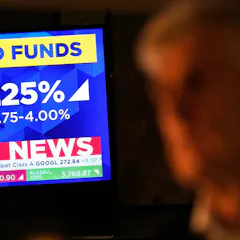
Even in the best of times, the Fed has a tough time interpreting the data and deciding how best to guide the US economy.

The unexpected jump strengthens the case for the Reserve Bank to cut the official cash rate in November.

Automation threatens manual jobs. But what does that mean for working-class young men. And how can policy stop them from being left behind?

Today, customers have more power than ever. But is that a good thing?
Top contributors
-

Professor of Economics, University of Nebraska Omaha
-
Professor of Management, Co-Director of the MIT Sloan Institute for Work and Employment Research, MIT Sloan School of Management
-
Professor of Economics, The University of Melbourne
-
Professor of Economics, University of Canberra
-
Laurie Carmichael Distinguished Research Fellow at the Centre for Future Work, Melbourne; and Professor Emeritus, Griffith Business School, Griffith University
-
Associate Professor of Business, Boston University
-
RBC Professor in Responsible Organizations and Full Professor, Concordia University
-
Dean of Business School, University of Southern Queensland
-
Scientia Professor of Economics, UNSW
-
Professor of Sociology and Canada Research Chair, University of Toronto
-
Associate Professor of Strategy and Organizational Theory, Mount Royal University
-
Sir John Bunting Chair of Public Administration, Australian National University
-
Adjunct Professor of Organizational Studies, Schulich School of Business, York University, Canada
-
Associate Professor of Human Resources and Management, McMaster University
-
Cadre en exercice, John Molson School of Business, Concordia University