

Insomnia and bad sleep can lead to high blood pressure and increase hormone levels and inflammation.
Articles on Insomnia
Displaying 21 - 40 of 100 articles
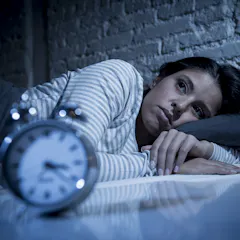
Globally, scientists predict each person could lose up to 58 hours of sleep a year by 2100 if planetary warming continues unchecked.
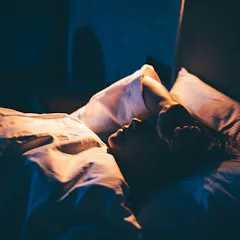
Opioids and other addictive drugs can alter the rhythmic activity of genes involved in sleep-wake cycles.

A good nights sleep is vital for our health, but are sleep retreats really the answer for the sleep deprived?

It’s normal to wake up several times during the night, even if you don’t remember it. But feeling sleepy during the day could be a sign there’s something else going on.

New research shows three minute exercise sessions while relaxing at night can increase sleep times by as much as 30 minutes – challenging common advice about avoiding activity before bed.
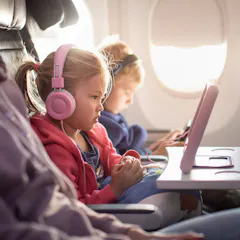
Around 1 in 4 children already have trouble getting to sleep, or getting back to sleep when they wake in the night. This can worsen when travelling internationally. But melatonin isn’t the answer.

Fancy retreats and suites with sleep butlers and pillow menus are becoming big business. But do you really need to leave home for some shuteye?
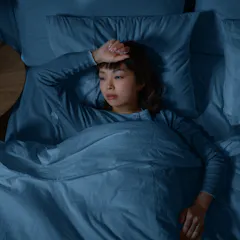
Wool, cotton, polyester? Here’s what we found when it comes to choosing the right textiles for sleep.
We now have the technology and knowledge to carry out real-time dream experiments with sleeping participants.

Sleep habits can be improved by making shifts in both daytime and evening routines.

Pets provide a source of comfort and intimacy for many owners drifting off to sleep. But according to new research, they may also disrupt your ability to fall or stay asleep.
Sleep is an essential part of life. What happens when we don’t get enough sleep and how do we ensure that we do?
Waking up regularly at night to go to the toilet is called nocturia – and it can have a variety of causes.

Whether you’re ascending to high altitudes for casual travel or for adventure tourism, there are specific strategies to help you acclimate and reduce the likelihood of altitude sickness.

Having both conditions at the same time increases your risk of dying prematurely. But it can be treated. Here’s what’s involved.
Depression, bipolar disorder and anxiety have all been linked to problems with sleep and a disrupted circadian rhythm.
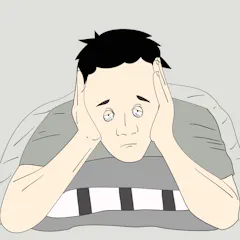
We envisage a future in which sleep is a routine target for reducing or preventing symptoms of mental illness, both in psychiatric settings and people’s homes

A growing body of research is finding a robust link between diet and sleep quality. But it’s not just the usual suspects like caffeine and alcohol that can get in the way of restful sleep.

How did you sleep last night? Our six-part series looks at why so many of us have insomnia, and what it’s costing us.
Top contributors
-

Honorary Affiliate and Clinical Psychologist at the Woolcock Institute of Medical Research, and Macquarie University Research Fellow, Macquarie University
-
Professor of Sleep Science, Northumbria University, Newcastle
-
Adjunct Senior Research Fellow, School of Psychological Sciences, The University of Western Australia
-
Associate Professor at Turner Institute for Brain and Mental Health, School of Psychological Sciences, Monash University
-
Associate Professor, Adelaide Institute for Sleep Health, Flinders University
-
Royal Holloway, University of London
-
Emeritus Professor of Psychology, Adelaide Institute for Sleep Health, Flinders University
-
Professor and Head of Paediatric Sleep Research, CQUniversity Australia
-
Senior Lecturer in Psychology, CQUniversity Australia
-
Associate Professor, Canada Research Chair in Mental Health and Intersectionality, University of British Columbia
-
Associate Professor of Sleep and Wellbeing, University of Sydney
-
Research Fellow, Senior Clinical Psychologist, Flinders University
-
Assistant Professor of Aging Studies, University of South Florida
-
Sleep Researcher, Appleton Institute, HealthWise Research Group, CQUniversity Australia
-
Lecturer, University of Cambridge; Anglia Ruskin University