

Universities and colleges won’t necessarily pay students to sleep. But they can offer other incentives that encourage them to close their eyes earlier.
Articles on Sleep health
Displaying all articles
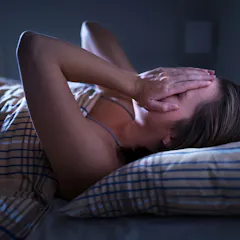
Never seem to get enough sleep? Why chasing ‘enough sleep’ to repay your ‘sleep debt’ might not be helping.

Because melatonin is sold as a dietary supplement rather than a drug in the US, there is little to no quality control over the wide array of product types.
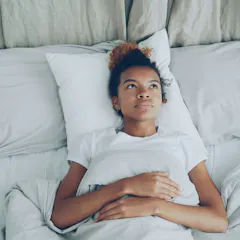
Research suggests there may be evolutionary reasons we don’t fully switch off when we’re sleeping in an unfamiliar environment.

Challenging the brain by exposing it to new situations, tasks and skills can improve its efficiency, much like strength training does for our muscles. But maximum efficiency requires optimal rest.

One night of Halloween treats won’t harm your kids’ health long term. But the sugar and excitement can disrupt their sleep – and yours.
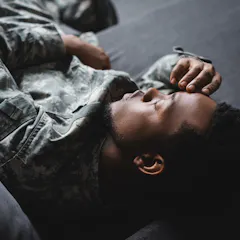
The military sleep method might work for soldiers, and even you. But shift the goalposts away from the two-minute target.
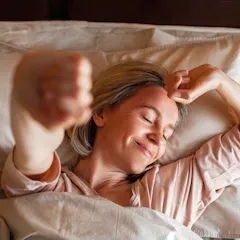
Your sleep habits are reflected in your skin’s health and appearance.

There’s not a lot of research on whether cutting down on caffeine makes our dreams more vivid. But that doesn’t mean we’re completely in the dark.
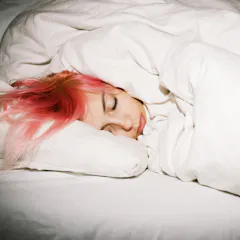
Studies have shown people who sleep more than average have a higher risk of health problems and death. But is sleeping a lot a symptom or a cause?
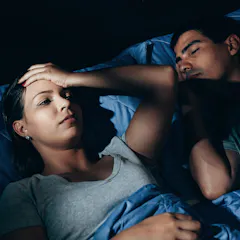
Who gets to sleep, and for how long, is a complex mix of biology, psychology and society. Here’s what we know so far.
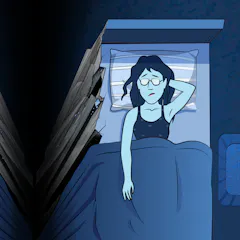
This arrangement can have benefits. But it doesn’t have to be permanent, and doesn’t have to mean the end of intimacy.

A new review looks at the safety and effectiveness of mouth taping during sleep for conditions such as sleep apnoea. The news isn’t so good.

It’s normal to wake up several times during the night, even if you don’t remember it. But feeling sleepy during the day could be a sign there’s something else going on.
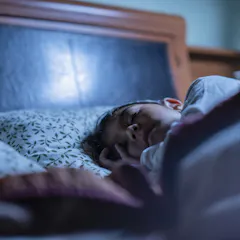
Less sleep and later bedtimes are linked to a section of the brain involved in emotion regulation suffering reduced growth, along with weaker connections to other brain areas.
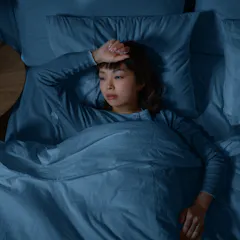
Wool, cotton, polyester? Here’s what we found when it comes to choosing the right textiles for sleep.
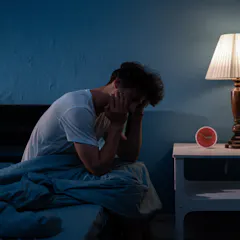
Waking up regularly at night to go to the toilet is called nocturia – and it can have a variety of causes.

Studies show college athletes sleeping less than 7 hours per night are almost twice as likely to be injured when compared with athletes sleeping more than 8 hours.
Top contributors
-

Sleep Researcher, Appleton Institute, HealthWise Research Group, CQUniversity Australia
-
Associate Professor of Neurology, University of Pittsburgh
-
Honorary Affiliate and Clinical Psychologist at the Woolcock Institute of Medical Research, and Macquarie University Research Fellow, Macquarie University
-
PhD candidate studying menopause and sleep, University of Sydney
-
Associate Professor of Science & Medicine, Bond University
-
Associate Professor of Sleep and Wellbeing, University of Sydney
-
Assistant Professor of Psychology, Colorado State University
-
Research Associate, Sleep Health, Flinders University
-
Research Fellow in Sleep Health, Flinders University
-
Associate Professor, Adelaide Institute for Sleep Health, Flinders University
-
Research Fellow, Senior Clinical Psychologist, Flinders University
-
Associate Professor in Clinical Sleep Health, Flinders University
-
Postdoctoral Research Fellow, College of Medicine and Public Health, Flinders University
-
Adjunct Clincal Associate Professor (Psychologist), Monash University
-
Research Fellow, Psychology, Monash University