
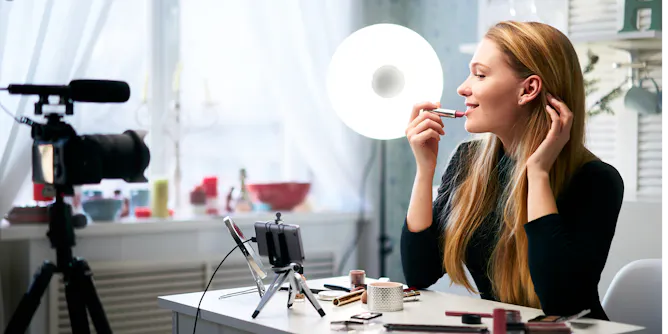
This strategy has been around since the birth of influencer marketing.
Articles on Influencers
Displaying 101 - 120 of 146 articles

During the global COVID-19 pandemic, people started moving into smaller cities, drawn by the possibility of more affordable and pleasant quality of life.

Liver King: scandal shows why more regulation is needed for TikTok and Instagram stars.
Some of the now-adult children of influencers are pushing back.

Those who feel disenfranchised from mainstream leaders are vulnerable to falling for the promises of online ‘leaders’ and ‘alt-moral entrepreneurs’.
Korea is an attractive destination for aspiring influencers, and the government supports these budding stars.

The booming child influencer industry is still largely unregulated – so parents and managers are starting to make their own rules to protect kids.

Sustainable fashion collaborations show that living an eco-friendly life can be fun - here’s how popular shows can help dismantle consumerism altogether.
This is something that has been going on for hundreds of years.
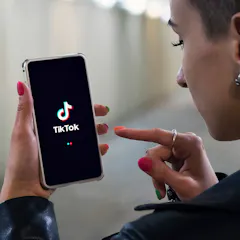
In today’s episode we take a look at how TikTok can be used as a tool to educate and has been a space for sharing information during major events in the last two years.

The beloved reality show is partnering with eBay to promote secondhand outfits instead of fast fashion.
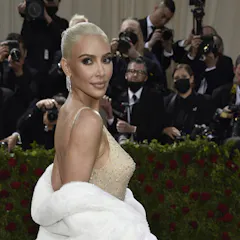
Influencers need to be aware that some of their followers may have unhealthy relationships with social media. Although it contrasts with their goals, influencers can help create healthy relationships.

In China, social media is being censored to reflect pro-Russian sentiment, making it impossible to gauge public opinion of Chinese people on the Russian invasion.

The vacuum created by a drop in public trust in mainstream platforms has given rise to new media players who don’t always play by the rules.
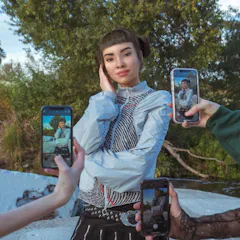
That impossibly beautiful model on Instagram might be just that. CGI influencers are already on social media, and Meta’s commercial interest means it shouldn’t be in charge of the ethical guidelines.
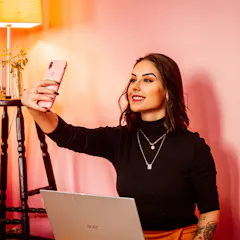
Influencers fill emotional and information needs. They are perceived as role models followers identify with, or whose example they want to follow.
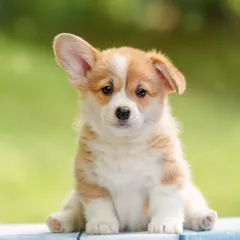
If sharing cute animal content is your love language, you’re not alone — you are part of a bigger cultural phenomenon called the cute economy.

Social influencers vie for public attention in a crowded market place. This makes the bold and the ruthless even more likely to opt for strategic dishonesty if it will further their interests.

With advances in technology, robots and artificial intelligence have increasingly more sophisticated encounters with humans.

Weight discrimination, like teasing, is common among youth and linked to eating disorders and depression. Youth’s health and well-being would be best supported by not focusing on their weight.
Top contributors
-

Lecturer, Learning & Teaching Innovation, Flinders University
-
Professor of Internet Studies & Director of Influencer Ethnography Research Lab, Curtin University
-
Professor of Internet Studies, Curtin University
-
Associate Professor of Advertising and Public Relations, University of Georgia
-
Professor, Management, University of Bath and Professor of Marketing, Concordia University
-
Senior Research Fellow in Public Health, The University of Queensland
-
Postdoctoral Research Associate, University of Virginia
-
Reader in Marketing, Cardiff University
-
Senior Lecturer in Marketing, Lancaster University
-
Professor of Marketing, Cardiff University
-
Principal Academic in Marketing, Bournemouth University
-
Reader (Associate Professor) in Sociology, City St George's, University of London
-
Assistant Professor - Faculty of Information and Media Studies, Western University
-
Senior Lecturer in Sociology, University of Essex
-
Reader in Digital Media Studies, Cardiff University