

Achieving a radically different tomorrow will require more than a purely technocratic approach. So now, imagine you are in the year 2050 …
Articles on Indigenous knowledge
Displaying 121 - 140 of 171 articles
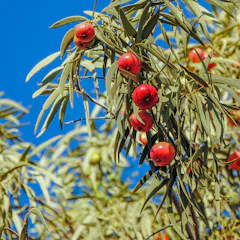
Our medicine, cosmetics and other everyday products contain compounds taken from nature. But Traditional Owners may not have given permission for the materials or their knowledge to be used.
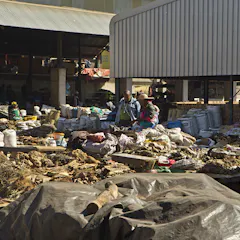
Communities who are the custodians of the knowledge associated with African traditional medicinal plants must derive a fair economic return from these natural resources.
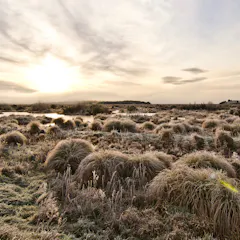
Western science often focuses on specific parts of complex ecosystems, but Indigenous knowledge systems consider all parts as interconnected and inseparable. This achieves better conservation results.

The desire of scholars and universities in Africa to fit into a model imposed from elsewhere may hinder development in Africa.
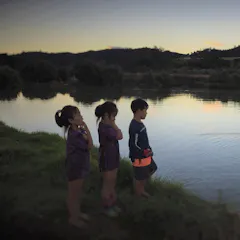
When our COVID-19 lockdowns end, we can’t afford to stop caring about collective well-being. NZ is well positioned to show the world how it’s done – if we listen to Māori and other diverse voices.

In a land-based early childhood program sustained and enriched by relationships with Indigenous Knowledge Holders, children learn that ‘water is us.’
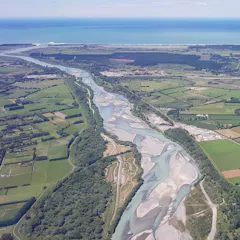
A new report on New Zealand’s lakes and rivers confirms that many freshwater ecosystems are in decline and warns that climate change will exacerbate existing threats.

Wild bees provide many lessons. Watching and learning from them may help keep honeybees safe and thriving.
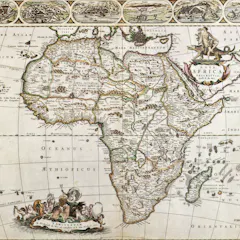
How African knowledge systems can be incorporated into higher education.

In the 1950s, the African yam was exploited by drugs firm Boots to produce cortisone. But South Africans fought back against the plundering of a plant that they used for traditional healing.
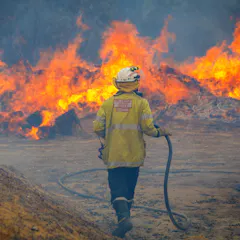
There is a real risk a national inquiry could get bogged down in politics, or not lead to real change. But we need more federal action on bushfires. Our old approaches are broken.
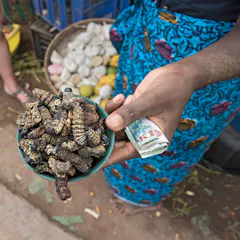
There needs to be more awareness of the benefits of insects as food, and support for farming and markets.

The ‘New Bradfield’ scheme seeks to revive a nation-building ethos supposedly stifled by bureaucratic inertia. But there are good reasons the scheme never became a reality.
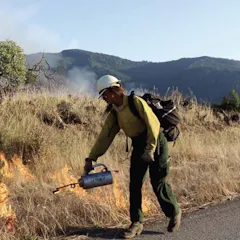
Instead of suppressing wildfire, the Karuk Tribe in the Pacific Northwest is using it as an integral part of its climate change management plan. Federal, state and local agencies are taking note.

There are memorial stones scattered along songlines throughout the Australian landscape, victims and transgressors transformed into rock following epic struggles to stand as cautionary tales.

A giant ocean fish swims into the heart of industrial Port Kembla looking for food. What if we take its presence, a few km from an ancient, living midden, as a symbol of both new and old ways to learn in the age of the Anthropocene?
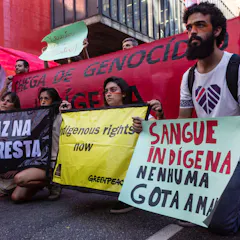
Indigenous peoples safeguard biodiversity better than any other group. But in 2018, 164 were killed defending the environment. It’s time for us to heed their knowledge, and protect their future.
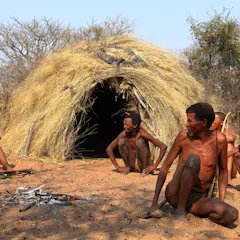
Modern western science must be stripped of the epistemological and methodological privileges it enjoys.
Mukurtu: an online dilly bag for keeping Indigenous digital archives safe
The Conversation71.5 MB (download)
Mukurtu - Warumungu word meaning 'dilly bag' or a safe keeping place for sacred materials - is an online system helping Indigenous people conserve photos, songs and other digital archives.
Top contributors
-

Research Associate, African Centre for Coastal Palaeoscience, Nelson Mandela University
-
Professor, North-West University
-
Professor, UNSW
-
Senior Scientia Lecturer (Research), UNSW
-
Associate Professor, Singapore Management University
-
Professor of Philosophy of Science, Durham University
-
Professor, University of Oxford
-
Founder of Msit No’kmaq
-
Associate professor in Vertebrate Palaeontology, University of the Witwatersrand
-
Professor of Environmental Geography, Royal Holloway, University of London
-
Research Associate, University of the Witwatersrand
-
Professor of Science, University of Technology Sydney
-
Distinguished Professor of Curriculum Studies, Stellenbosch University
-
Professor of Cross-cultural Management, Middlesex University
-
Professor, Environment and Development Sociology, The University of Queensland