
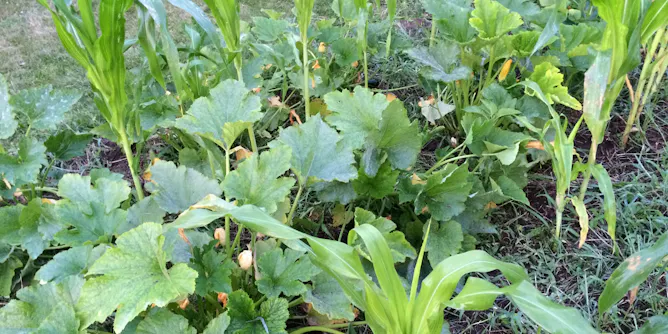
Indigenous food and medicine gardens, and traditional manikin (wild rice) harvesting offer hope – for the future health of humanity and the earth that sustains us.
Articles on Indigenous knowledge
Displaying 141 - 160 of 171 articles

To improve Indigenous health in Canada we need more Indigenous health professionals and more culturally competent health-care providers. We also need to listen properly to Indigenous stories.
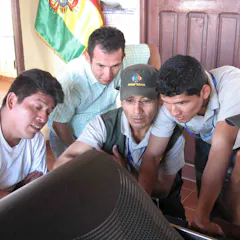
Science can’t just stay in the ivory tower. But what does impact really mean and how does it happen? A study of more than a decade of ecological fieldwork projects in Bolivia suggests a better way.

A double standard exists concerning the acceptance of Traditional Knowledge by practitioners of Western science.
Traditional Indigenous knowledge and science has aided the development of modern scientific knowledge, and including Indigenous people in science is essential to its future.

Universities play a major role in procuring the human and intellectual resources needed for fulfilling the various goals of the UN’s Agenda 2030.
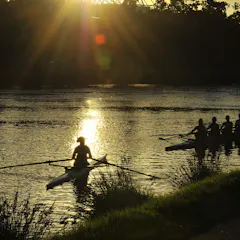
New legislation has recognised the Yarra River as a single, living entity. But what does that mean in practice?
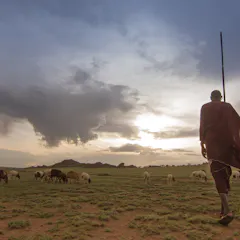
After decolonisation and independence a new conservation document was needed, one that looks after the needs of the people. That’s what the Maputo Convention aims to do.

Why don’t people evacuate their homes when warned of impending storm danger? To save lives, resiliency plans must understand how locals in climate-vulnerable places assess risk.

Critical decolonisation means accepting risk of error. It means considering whether indigenous knowledge systems might contain truths that western science hasn’t accessed.
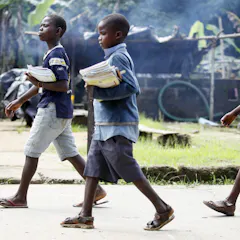
Schools that have supportive strategies in place can offer buffers. They can promote positive outcomes – for pupils and teachers.

Phrases like “knowledge production” conceal the fact that knowledge answers to something beyond itself and beyond us. To produce knowledge is to find out about something.
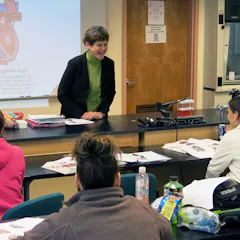
Native American scholars joined in the global March for Science. Their science blends seamlessly with beliefs.

How do you teach empathy? Can it be in a way that foregrounds ancient, indigenous knowledge and practices? Design thinking might hold the answers.

It’s important that South African teachers, lecturers and professors develop curricula that build on the best knowledge skills, values, beliefs and habits from around the world.

There are a few questions that can be posed and unpacked if universities are to move towards genuine decolonisation.

There is broad acknowledgement that the way science is taught and practised in Africa is not socially inclusive.
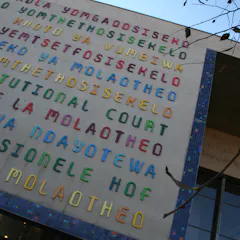
Universities pay too little attention to the knowledge and experiences that students bring to their institutions from different cultures and backgrounds.

Knowledge is power. If you own it, you can control those without it. Since so much knowledge about Africa doesn’t sit on the continent, it’s apparent that Africa lacks power in this regard.
Decolonisation of the curriculum doesn’t have to mean the destruction of Western knowledge, but it’s decentring. Such knowledge should become one way of knowing rather than the only way.
Top contributors
-

Research Associate, African Centre for Coastal Palaeoscience, Nelson Mandela University
-
Professor, North-West University
-
Professor, UNSW
-
Senior Scientia Lecturer (Research), UNSW
-
Associate Professor, Singapore Management University
-
Professor of Philosophy of Science, Durham University
-
Professor, University of Oxford
-
Founder of Msit No’kmaq
-
Associate professor in Vertebrate Palaeontology, University of the Witwatersrand
-
Professor of Environmental Geography, Royal Holloway, University of London
-
Research Associate, University of the Witwatersrand
-
Professor of Science, University of Technology Sydney
-
Distinguished Professor of Curriculum Studies, Stellenbosch University
-
Professor of Cross-cultural Management, Middlesex University
-
Professor, Environment and Development Sociology, The University of Queensland