

Tobacco use is the leading cause of preventable disease and early death among Indigenous Australians, with smoking responsible for about one in every five deaths. Among Indigenous Australians, tobacco…
Articles on Indigenous health
Displaying 221 - 240 of 262 articles
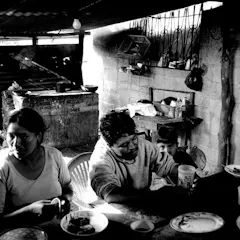
Indigenous people are estimated to comprise 4.5% of the total global population. They are often overrepresented in HIV data and recognise themselves as being particularly vulnerable to HIV. In Canada…
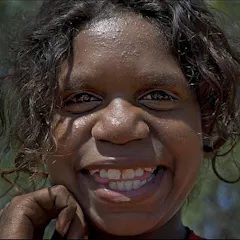
We’ve recently seen some encouraging improvements in closing the gap on Indigenous disadvantage: better educational outcomes, higher child immunisation rates, more health checks, and a 35% drop in the…
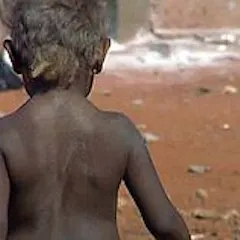
Vintage medical textbooks are filled with diagnoses unfamiliar to contemporary doctors – wandering wombs, blackwater fever, biliousness and other historic curios. Acute rheumatic fever has become one of…
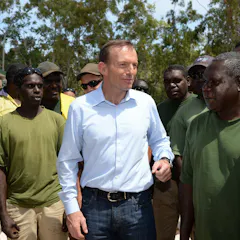
Despite prime minister Tony Abbott’s apparent passion for Indigenous affairs, last week’s federal budget – his government’s first – shows he has followed a well-trodden political path. This path leads…
Indigenous Australians in the Northern Territory are three times as likely to develop dementia than non-Indigenous people…
A tool used to screen a person’s risk of depression has been modified for older Indigenous Australians who live in the Kimberley…
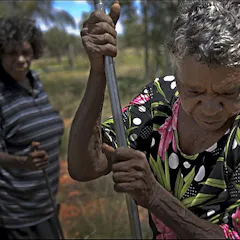
Think of Aboriginal health and you’ll probably recall messages of large gaps in life expectancy, increasing rates of chronic diseases such as diabetes, kidney disease and asthma. Or that the last ten years…
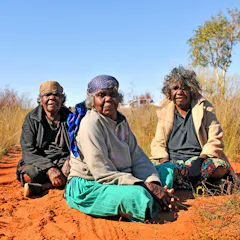
Despite efforts to close the gap, Indigenous Australians continue to suffer two-and-a-half times the burden of disease than the total Australian population, with most of the health gap caused by preventable…
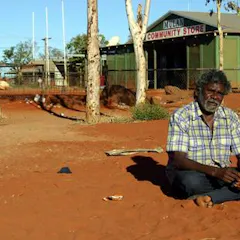
The National Disability Insurance Scheme (NDIS) presents an overwhelming opportunity to revolutionise the care and support given to Indigenous people. But the equity of the scheme is already at risk, with…
Aboriginal people living in remote communities have much worse health status and longevity than other Australians. And this imbalance will not be remedied until governments work with Aboriginal leaders…

Young children living in remote Indigenous communities have long been known to suffer from iron deficiency and anaemia at many times the rates found among other Australian children. Now a new report shows…
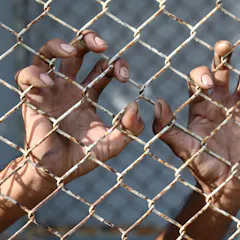
Every two years, the Productivity Commission releases a report on the level of Indigenous disadvantage in Australia. These reports make for fairly bleak reading: most indicators show no change, and in…
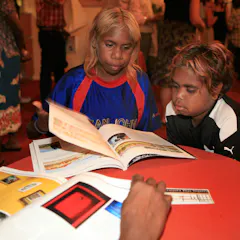
High stress among Indigenous children in urban areas is linked to poorer physical health and more parental concern about behavioural issues, a new study has found. Of 344 participating children, 51% had…
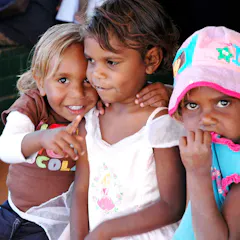
Providing subsidised fruit and vegetable scheme to low-income Indigenous families in northern New South Wales improves children’s health and significantly reduces antibiotic use, a new study has found…
The recent death of the lead singer of Yothu Yindi, is a high-profile example of an event all too common in Aboriginal Australia. Older Aboriginal Australians (40 to 60 years old) are more than 15 times…
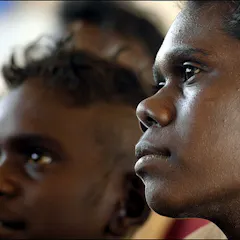
How can anti-smoking campaigns be targeted more effectively at Australia’s Indigenous youth? It’s a good question, and one that, as yet, has proven difficult to answer. Almost half of all Aboriginal and…
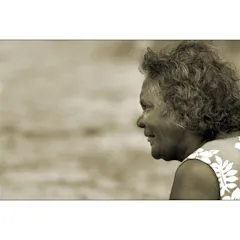
Doctors should be able to provide subsidised “prescriptions” for healthy food to people in remote Aboriginal communities, says an Indigenous nutrition expert. Professor Kerin O'Dea, Professor of Nutrition…
A community-initiated drinking awareness campaign in Indigenous communities is working, according to the latest results from…
Results from a vaccination program for newborns, first introduced for Aboriginal babies in the Northern Territory, indicate…
Top contributors
-

Director of POCHE Centre for Indigenous Health, The University of Queensland
-
Team Lead, Healthy Skin and Acute Rheumatic Fever Prevention, The Kids Research Institute Australia
-
Purple House Medical Advisor. Honorary ANU., Australian National University
-
Associate Professor, Indigenous Studies, UNSW ; Macquarie University
-
ARC Research Fellow in Indigenous Health, Disability and Community Development, University of Sydney
-
Honorary Enterprise Professor, School of Population and Global Health, and Department of General Practice and Primary Care, The University of Melbourne
-
Professor, Public Health Policy, The University of Queensland
-
Scientia lecturer, UNSW
-
Associate Director of Research and Senior Fellow, Yardhura Walani, National Centre for Aboriginal and Torres Strait Islander Wellbeing Research, Australian National University
-
Senior Lecturer in Social Research and Policy, UNSW
-
Professor of Indigenous Health, Executive Director, Carumba Institute, Queensland University of Technology
-
Professor of Economics and Public Policy, ANU College of Arts and Social Sciences, Australian National University
-
Associate Professor in Public Health, The University of Queensland
-
Professor and Head Clinical Research Domain, Baker Heart and Diabetes Institute
-
Head of Diabetes Clinics, Baker Heart and Diabetes Institute