
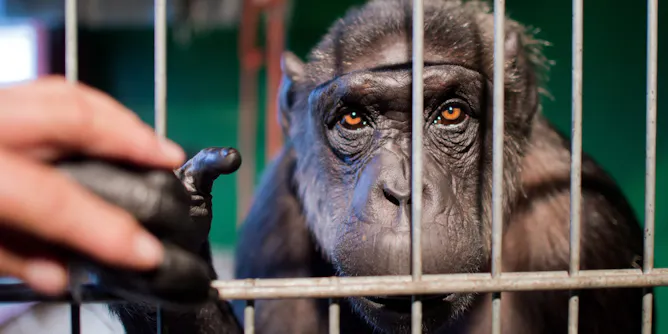
Shareable online images of chimpanzees, elephants and other animals are threatening their conservation and welfare.
Articles on Illegal wildlife trade
Displaying 41 - 60 of 60 articles
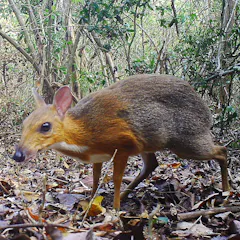
This diminutive deer isn’t the only fantastical life form discovered in Vietnam. But hunting and habitat destruction threaten many with extinction.

New report reveals big cats are kept in awful conditions. But the link to poaching in the wild is not clear cut.
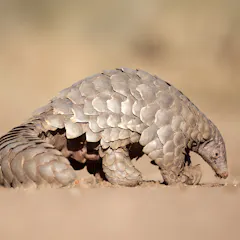
Pangolins are one of the most trafficked wild mammals in the world.

One gram of songbird meat is estimated to sell for the equivalent of one gram of marijuana.
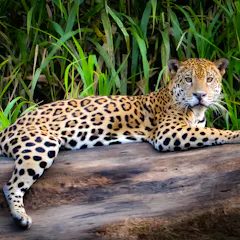
Stories of substitution and surrogates are all too common in the wildlife trade, especially when it comes to medicines derived from animal parts.
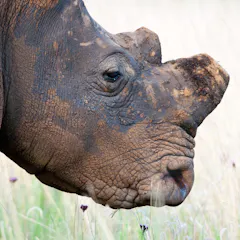
Saving the rhino means tackling demand for its horn.
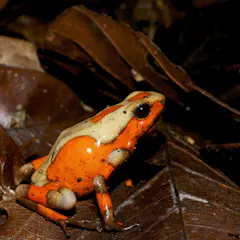
With their jewel-like colours, Colombia’s poison frogs are coveted by collectors. Does naming their species help protect them or make them a target for trophy hunters?

Beluga sturgeon found their migration route blocked by Europe’s largest hydroelectric dam.
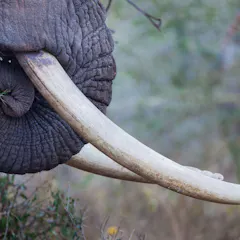
Should trade in ivory be banned or not? There may be a solution.
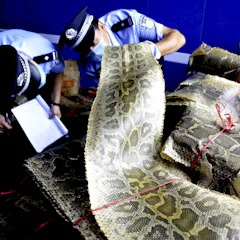
This multi-billion pound industry increasingly involves organised crime groups, who see wildlife as a low risk route to profit.

An ivory ban in the US had a series of unintended consequences.
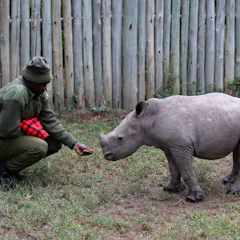
Local and indigenous communities remain mostly excluded from real benefits, and conservation often comes at a huge cost to them.
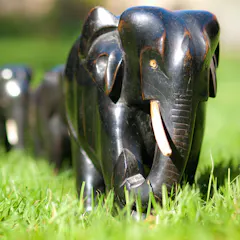
Ivory from illegally-poached elephants can easily be mistaken for antique.
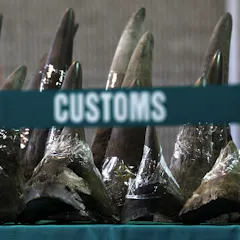
Rhino horn trade continues to be a highly lucrative business across the world.
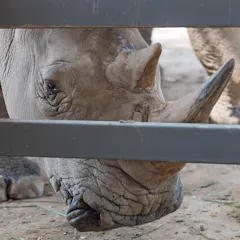
Organised crime always looks for new ways to make money. And zoo animals are an easy target.
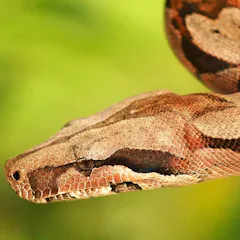
Keeping non-native reptiles as pets is against the law – with good reason. Alien species traded on the black market can potentially establish themselves in the wild if they are released or escape.
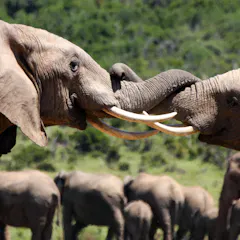
The ivory trade is a very contentious issue and will be debated at CITES. It will revolve around maintaining or lifting the ban on trade. But the human element is likely to be ignored.
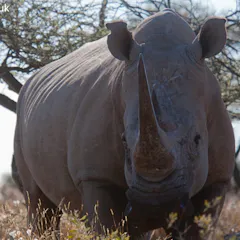
The CITES conference on international wildlife trade could determine whether these animals have a viable future.
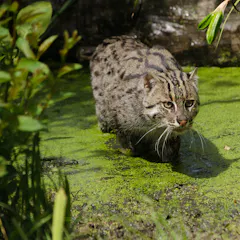
Many scientific names have changed since China’s ‘protected species list’ was last updated in 1989.
Top contributors
-

Lecturer in the School of Applied Sciences, Edinburgh Napier University
-
Senior Research Fellow, Oxford Martin Programme on the Wildlife Trade, University of Oxford
-
Research Fellow in Conservation Marketing, University of Oxford
-
Director of the Wildlife Crime Research Hub, Australian Research Council Industry Laureate Fellow, Adelaide University
-
Visiting Research Fellow, Manchester Metropolitan University
-
Postdoctoral Scholar in Fisheries and Wildlife, University of Stirling
-
Associate Lecturer in Biodiversity Conservation and Ecology, UCL
-
Visiting Research Fellow, Manchester Metropolitan University
-
Chief research officer: Global Risk Governance Programme, Public Law Department, Faculty of Law, University of Cape Town
-
Postdoctoral Research Fellow, University of Cape Town
-
Principal Lecturer in Ecotourism, Anglia Ruskin University
-
Tasso Leventis Professor of Biodiversity, University of Oxford
-
Senior Researcher in National Institute for Environmental Studies (NIES) & Visiting Researcher in ICCS, University of Oxford
-
Professor of Criminology, Northumbria University, Newcastle
-
Professor of International Politics, University of Sheffield