
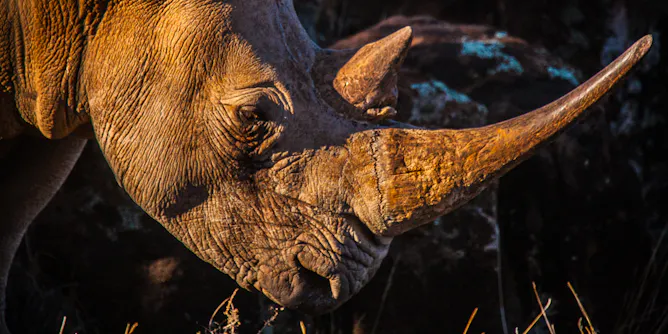
Exporting rhino horn could generate funds for conservation – but also lead to more poaching.
Articles on CITES
Displaying 1 - 20 of 50 articles
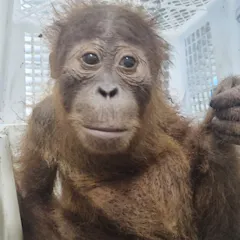
Emerging digital tools can help authorities prioritize inspections and rapidly identify illicit goods by linking online monitoring, legal references and on-the-ground investigations.

Sharks have had a tough time since the 1970s, when overfishing, habitat loss and a growing trade in their fins began to cut their populations. ‘Jaws’ didn’t help.

Refugee testimonies help shed light on the way wild animals are being captured and traded.
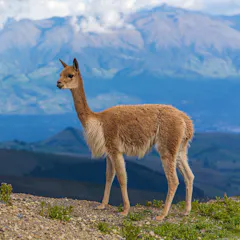
A global convention to control wildlife trade across 184 countries has encouraged conservation action but hasn’t entirely stopped illegal sales.

The first comprehensive overview of trade in Australian reptiles and frogs worldwide shows more species should be listed for monitoring under the international convention on wildlife trade.
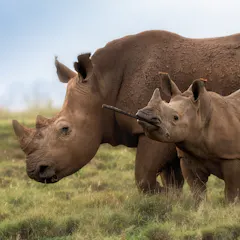
In South Africa, huge stockpiles of rhino horn are kept, even though there’s a global ban on trading it.
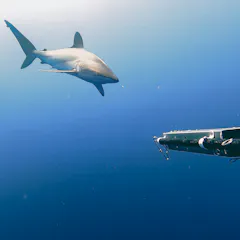
Open ocean sharks are globally threatened with extinction. Knowing where they are helps us protect them. Here, new research into silky sharks reveals priorities for conservation.

Most wildlife is trafficked openly, while dark web markets sell animals, plants and fungi as drugs. But this could change if there’s a clampdown on open trade.
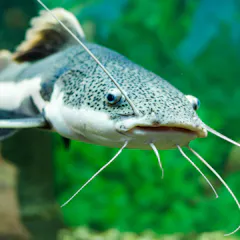
Trade in exotic pets online is far more prevalent and diverse than previously thought. Threatened species, invasive species and banned imports are all for sale.
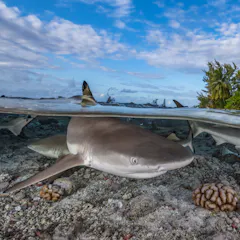
Over 100 shark and ray species were recently added to an international treaty, known as the CITES list, to protect them from the threat of unsustainable and illegal trade.
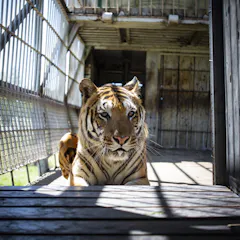
Tigers exist in South Africa because they’re being intensively farmed for commercial trade in live individuals or their body parts.
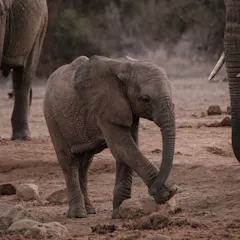
The findings suggest that poaching rates are lower where there is strong national governance and levels of local human development are higher.
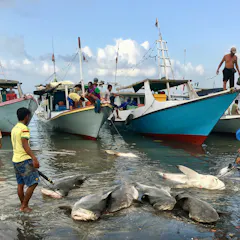
Countries have voted to limit the international shark trade, but this fails to account for the diversity in fishing contexts around the world.
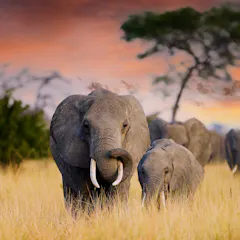
Japan was one of the world’s largest ivory markets – research explains why the country is no longer a key destination for the product.
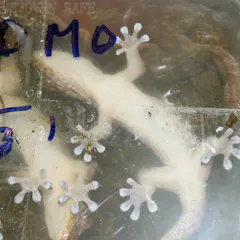
Tackling this global problem requires an international effort – particularly by rich nations where the demand for exotic pets is increasing.

International proposals to ban the trade of polar bear parts undercut Inuit rights, knowledge and decision-making.
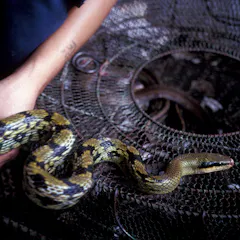
We analysed the legal systems regulating the wildlife trade in China. Here’s what we found.
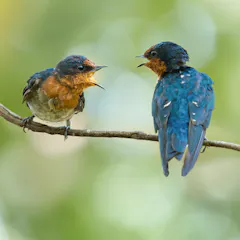
A public debate recently erupted among global taxonomists. Strongly-worded ripostes were exchanged. A comparison to Stalin was floated. But eventually, they worked it out.
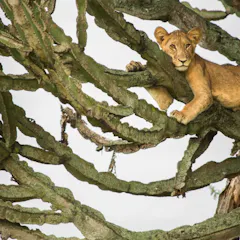
New science shows that estimates of the African lion numbers are underpinned by weak methods. But several new studies from Kenya and Uganda show that lions can be counted robustly.
Top contributors
-

Research Associate, Department of International Relations, University of the Witwatersrand; Chief Research Officer, Good Governance Africa; Managing Director, Harvey Economics Pty Ltd.
-
Visiting Professor, University of Kent
-
Professor and Chair, Southwestern Environmental Science and Policy, Northern Arizona University
-
Director of the Wildlife Crime Research Hub, Australian Research Council Industry Laureate Fellow, Adelaide University
-
Lecturer in the School of Applied Sciences, Edinburgh Napier University
-
Postdoctoral research fellow, Adelaide University
-
Principal Scientist, Center for International Forestry Research – World Agroforestry (CIFOR-ICRAF)
-
Senior Lecturer, Mathematics, The University of Queensland
-
Ph.D. student at the Invasion Science & Wildlife Ecology Group, Adelaide University
-
Professor of International Relations, London School of Economics and Political Science
-
Scientist with the Center for International Forestry Research, Centre for International Forestry Research
-
Professor, Conservation Ecology & Entomology, Stellenbosch University
-
Senior research associate, University of KwaZulu-Natal
-
Postdoctoral Researcher in Timber Forensics, Adelaide University
-
Postdoctoral research fellow, Northumbria University, Newcastle