

A regional permafrost map can’t tell a builder if a particular foundation or road will survive as temperatures rise. Engineers need to see beneath the surface to find the weaknesses.
Articles on Ice melt
Displaying 1 - 20 of 41 articles

Scientific discoveries can bring a sense of awe and wonder, and give people an emotional boost.

The warning lights from the cryosphere have been flashing red for several years and governments and policymakers ignore this at their peril.
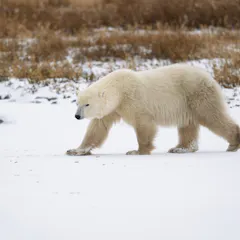
Polar bears are expected to become extinct but there are some signs their DNA is changing and they are adapting to new temperatures.
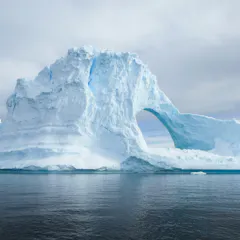
The plans could also unintentionally harm fragile polar ecosystems.
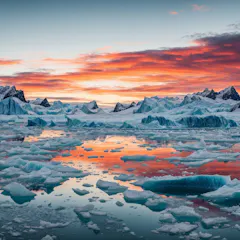
Understanding the evolution of purple algae could help us to protect glaciers.
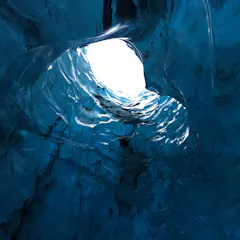
Researchers simulated thousands of scenarios of an ancient pathogen being released into modern ecosystems. In the worst cases, up to one-third of host species were destroyed.
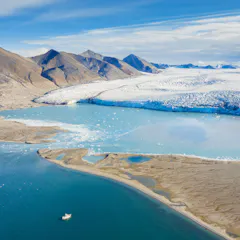
To fully understand the extent of climate-related dangers the Arctic – and our planet – is facing, we must focus on organisms too small to be seen with the naked eye.
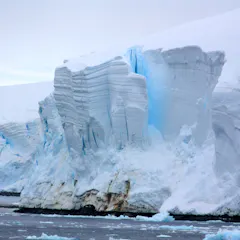
Seafloor landforms reveal that ice sheets can collapse at 600 metres per day.
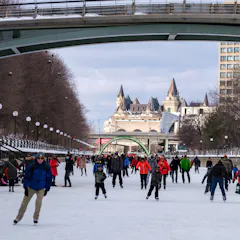
Erratic weather patterns occurring due to climate change may become a more significant factor affecting the season start and ice-building processes in the future.
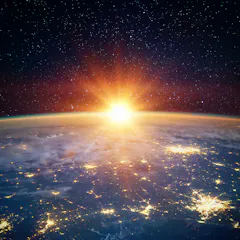
The length of a day has critical impacts on our technologies, navigation, and more.
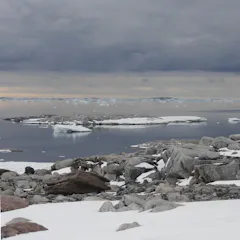
This seemingly one-off heatwave may be a harbinger for the future under climate change.
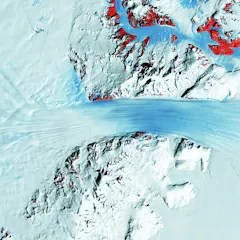
A massive Antarctic ice shelf is showing signs of cracking and could trigger worldwide flooding.

A particularly stormy winter has pushed perennial sea ice into the Arctic melt zone.

Australia must treble its emissions reduction targets and reach net-zero emissions by 2035. Without this and other radical global action, the chance to hold warming to well below 2°C will pass us by.
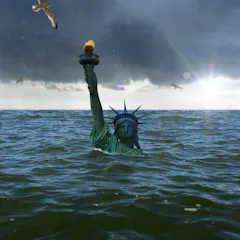
Cultures worldwide are awash with tales of great floods. What can they tell us about the reality of a wetter world?
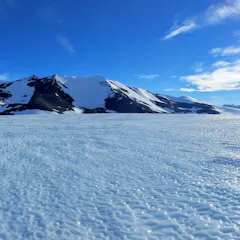
Our research shows the Antarctic could be closer to a tipping point than previously thought.
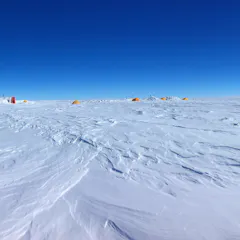
Some 58 metres of sea level rise is locked up in Antartica’s ice sheets, and it’s melting faster than expected.

Sea levels could rise by two metres by 2100, sparking a refugee crisis unlike anything the world has ever seen.

A new report predicts that one-third of the ice in the Himalayas will melt, even if we contain global warming to 1.5C. So what does that mean for the flood-prone valleys below?
Top contributors
-

Professor of Polar Geodesy and ARC Laureate Fellow, University of Tasmania
-
Associate Professor in Physical Geography, University of Southampton
-
Senior Lecturer, School of Geography, Planning, and Spatial Sciences, University of Tasmania
-
Pro Vice-Chancellor of Research, University of Technology Sydney
-
Professor of Glaciology and Earth Observation, University of Bristol
-
Director, Ikigai Research, University of Tasmania
-
Professor in Biodiversity and Conservation, The University of Queensland
-
Research Fellow, Exeter Climate Systems Group, University of Exeter
-
Professor of Physical Oceanography, Bangor University
-
Professor of Ocean and Climate Change, Australian National University
-
Assistant Professor, School of Earth and Environment, The University of Western Australia
-
Senior Research Fellow in Antarctic and island conservation science, Queensland University of Technology
-
Researcher, ANU College of Physical and Mathematical Sciences, Australian National University
-
Palaeoclimatologist, Australian Antarctic Division
-
ARC Future Fellow, IMAS and ACE CRC, University of Tasmania